
The first rule at Assateague is simple: do not approach the ponies. They look gentle, grazing near your cooler or nosing through beach plum thickets, but these are feral horses with teeth and hooves and a taste for unattended sandwiches. You access the Virginia portion through Chincoteague National Wildlife Refuge, driving past pine and myrtle scrub until asphalt gives way to sand parking and the long, unbroken strand unfolds—barrier beach in its purest form, no boardwalks or umbrellas for rent.
“This is the only Atlantic beach where feral horses share the shoreline with swimmers, protected under federal wildlife law.”
 Credit: Flickr
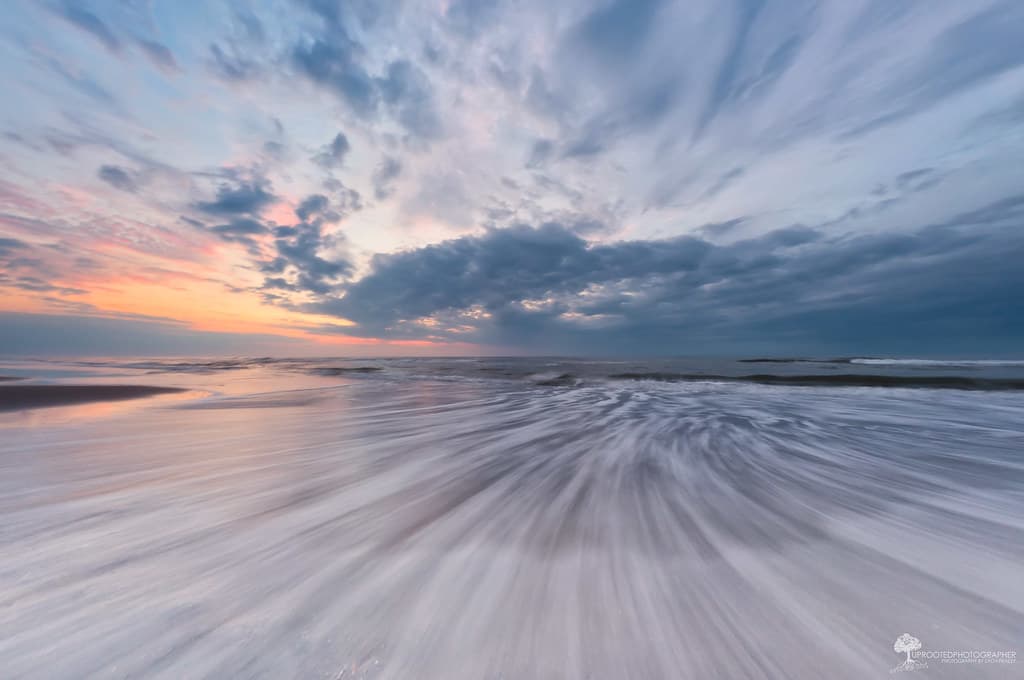
Sunrise Rush | Assateague Island, VA
The water runs cold even in July, the surf choppy and muscular, better for bodysurfing than lazy floating. Sanderlings sprint along the foam line. Bottle-nosed dolphins surface offshore most mornings. Behind you, the dunes rise in tufts of sea oats and American beachgrass, sheltering piping plovers and nesting terns that ranger patrols monitor with quiet vigilance.
Come at dawn or late afternoon when the ponies move between maritime forest and beach, when the light goes amber and slanted, and you'll understand why Marguerite Henry set her children's novel here. The horses are descendants of colonial-era stock, small and shaggy and wholly unbothered by your presence. They own this sand. You're simply visiting their eighteen miles of wilderness, where the beach belongs to hoofprints and shell fragments and the insistent pull of tide.


