
The boat cuts across Wachapreague Channel at dawn, and within fifteen minutes you're stepping onto an island that hasn't seen permanent human habitation since the 1930s. Hog Island Beach unfurls along the eastern flank of this narrow barrier, where the Atlantic meets dunes crowned with beach grass and stands of loblolly pine that somehow survive the salt. Ospreys nest in skeletal trees, and ghost crabs leave hieroglyphics across sand the color of raw honey.
“One of the last privately accessible yet uninhabited barrier islands on the Virginia coast, protected by its boat-only threshold.”
 Credit: Flickr
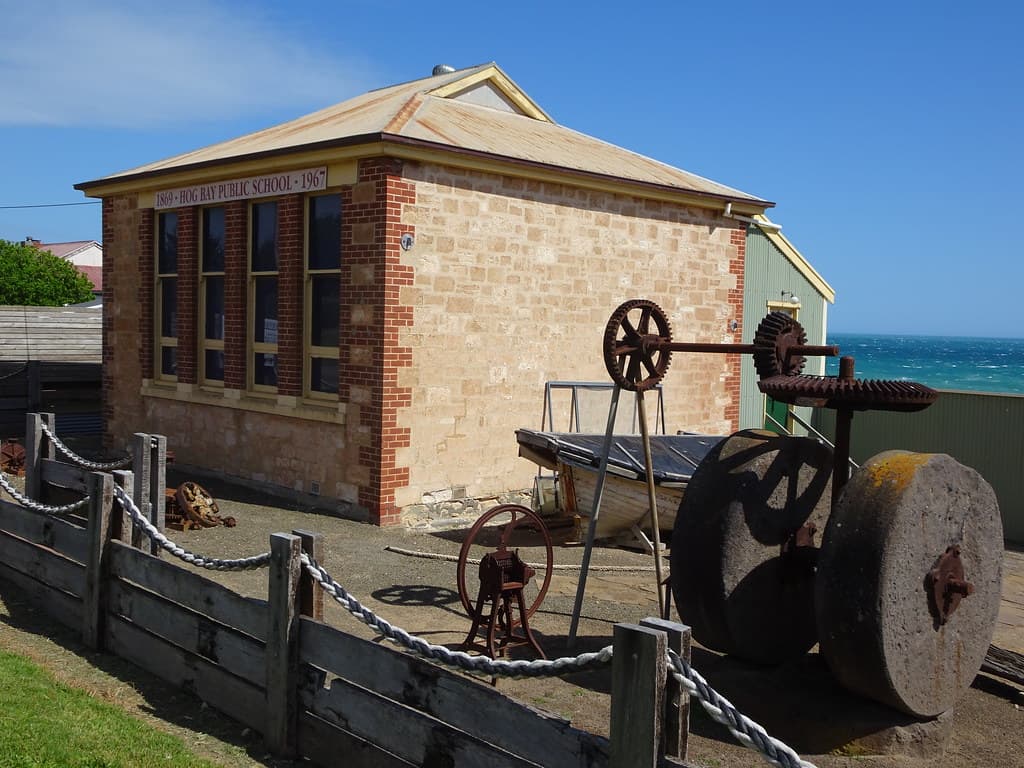
Penneshaw on Kangaroo island. This site had several schools on it. This building was erected in 1922. Now a National Trust Museum.
You walk for miles without encountering a single soul, just the occasional waterman checking crab pots in the shallows. The surf here runs calm most days, protected somewhat by offshore shoals, making the water accessible even when wind kicks up whitecaps farther out. Shells accumulate in tidal wrack lines—whelks, scallops, sand dollars bleached by sun.
The Nature Conservancy manages most of the island, preserving its role as critical nesting ground for piping plovers and loggerhead turtles. There are no facilities, no vendors, no lifeguards. You bring what you need and carry out what you brought. By afternoon, when the returning boat engine hums across the channel, you'll leave the island exactly as you found it: silent, windswept, and utterly unbothered by the twenty-first century.


