Counting the waves…
Counting the waves…

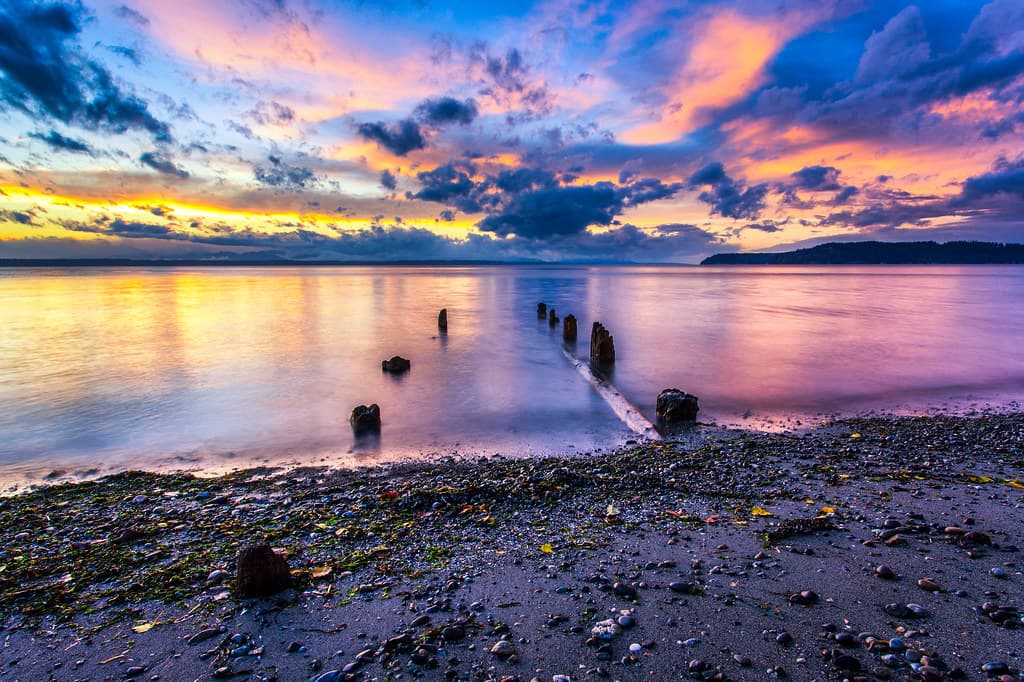
The trailhead at Meadowdale Beach Park gives no hint of the transformation ahead. You begin in suburban quiet—houses visible through the trees—but within ten minutes the Douglas firs thicken and the path switchbacks downward, following Lunds Gulch Creek as it gathers speed. Salmonberries crowd the understory in summer; in winter, banana slugs inch across the wet earth. At the bottom, the forest opens onto a narrow beach hemmed by sandstone bluffs. Driftwood—some logs thick as dining tables—litters the upper shore, bleached silver by salt and sun. The creek fans out across dark sand before merging with Puget Sound, creating shallow channels where children wade and dogs splash. At low tide, tidal pools appear among the rocks to the north, stippled with purple sea stars and green anemones. This is not a place for umbrellas or volleyball nets. You come for solitude, for the chance to watch a bald eagle ride thermals above the bluff, for the rhythm of small waves against stone. The climb back up—gaining 240 feet over a mile—reminds you why the beach stays quiet even on August weekends. Bring water. Bring sturdy shoes. The effort filters out everyone but those willing to work for their tide line.
Places, rentals, tours and events within walking and driving distance of Meadowdale Beach.
Photos
Swimming at Meadowdale Beach is possible but requires caution. The water is typically cold year-round (50-55°F), and currents can be strong, especially during tide changes. There are no lifeguards on duty. The beach is better suited for wading and tide pooling than serious swimming. Check tide tables before visiting, as high tide significantly reduces beach access. The rocky shoreline and driftwood can create hazards. Most visitors prefer beachcombing, picnicking, and wildlife watching over swimming at this location.
Meadowdale Beach offers year-round beauty, with each season providing different experiences. Summer (June-September) brings the most reliable weather for picnics and longer beach time, though it can be busier on weekends. Spring and fall offer excellent wildlife viewing and fewer crowds. Winter visits reward hardy visitors with dramatic storm-watching opportunities and solitude. Visit during low tide for the best tide pooling and maximum beach area. Weekday mornings typically offer the most peaceful experience regardless of season.
Meadowdale Beach requires a moderate hike to access. Park at the Meadowdale Beach Park trailhead lot off 156th Street SW in Edmonds (free parking, limited spaces). From the lot, it's approximately 0.9 miles downhill through forest to reach the beach—an easy to moderate hike taking 20-30 minutes. The return is uphill and more strenuous. Parking fills quickly on sunny weekends, so arrive early. No vehicle access to the beach itself exists. Bring water and wear sturdy shoes for the trail.
Meadowdale Beach has minimal amenities—only vault toilets near the beach (no running water). There are no food vendors, restaurants, or lodging at the beach itself. Pack everything you need, including water, snacks, and lunch. The nearest restaurants and grocery stores are in Edmonds, about 10-15 minutes away by car. A picnic shelter exists but serves first-come, first-served. Given the hike required, bring reusable water bottles and pack out all trash to preserve this hidden gem's natural beauty.
Meadowdale Beach is exceptional for wildlife viewing due to its protected creek estuary. Lund's Gulch Creek flows onto the beach, attracting salmon during spawning season (typically fall). Birdwatchers frequently spot herons, eagles, cormorants, and various shorebirds. Harbor seals often rest on offshore rocks, especially at low tide. The tide pools contain sea stars, anemones, crabs, and small fish. The wooded trail to the beach offers chances to see deer, woodpeckers, and other forest creatures, making this a nature lover's destination.