Counting the waves…
Counting the waves…
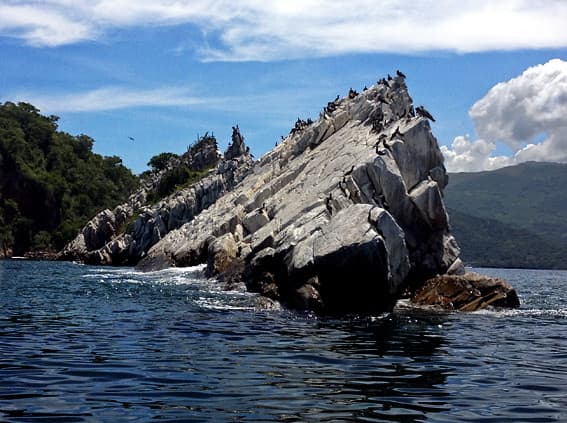
The island announces itself as a brown ridge breaking the horizon between Guanta's industrial port and the open Caribbean. Your boat navigates between channel markers—this corridor funnels shipping traffic, and the captain keeps one eye on the radar—until the beach reveals itself as a crescent of tan sand bordered by drought-resistant shrubs that cling to volcanic rock. You anchor in four meters over a sandy bottom where stingrays bury themselves, leaving only their eyes and spiracles visible. Wade ashore and the sand crunches differently than mainland beaches—coarser, mixed with fragments of coral and conch shell worn smooth by decades of wave action. A concrete foundation marks where someone once built something, now reclaimed by salt and wind. Shade comes only from the boat or a ragged stand of mangroves on the leeward shore. The snorkeling runs along the western dropoff where the shelf plunges to fifteen meters. Schools of blue tang drift in formation, and if you time it right—early morning, incoming tide—eagle rays cruise the channel, their wings undulating like slow-motion birds. TheCurrentPulls stronger here than at the Lechería islands; respect it. By noon, the heat drives everyone back to the boats, where coolers and canopies provide the only refuge.
Places, rentals, tours and events within walking and driving distance of Playa Isla Borracha.
Photos
Swimming conditions at Playa Isla Borracha generally depend on weather and sea conditions. As an offshore island location, currents can vary, so it's advisable to check local conditions before swimming. The island setting typically offers calmer waters in sheltered coves. Always inform your boat operator of your plans, swim in groups, and avoid venturing too far from shore. Since this is a relatively remote island beach, there are no lifeguards on duty, so exercise caution and assess conditions carefully before entering the water.
The best time to visit Playa Isla Borracha is during Venezuela's dry season, typically from December through April, when you'll find calmer seas, better visibility for snorkeling, and more reliable weather. This period offers optimal conditions for boat access and beach activities. The island tends to be less crowded during weekdays and outside major Venezuelan holidays. Early morning visits often provide the calmest waters and best snorkeling conditions. Avoid the rainy season (May-November) when seas can be rougher and boat access more challenging.
Playa Isla Borracha requires boat access from Guanta or nearby Puerto La Cruz. You can arrange transportation through local tour operators, boat rental services, or fishermen who offer island trips from Guanta's marina area. The boat journey typically takes 20-40 minutes depending on weather and vessel type. It's recommended to book tours in advance during peak season or arrange private boat charters through your hotel. Some operators offer day trips that include multiple island stops. Always confirm the return time and ensure your operator is licensed and equipped with safety gear.
Playa Isla Borracha is an uninhabited island with no permanent facilities, restaurants, or accommodations on-site. Visitors must bring all necessary supplies including food, water, snacks, and beverages for their day trip. Pack a cooler with refreshments and consider bringing beach umbrellas or sun shelters. Most tour operators offer packages that include meals and drinks. For overnight stays, you'll need to arrange accommodations in Guanta, Puerto La Cruz, or Lechería, where you'll find hotels, guesthouses, and restaurants ranging from budget to mid-range options for exploring the area.
Playa Isla Borracha's offshore island location in Guanta's marine corridor provides excellent snorkeling opportunities with typically clearer waters than mainland beaches. The surrounding waters host diverse marine life including tropical fish, coral formations, and occasional sea turtles. The island's position along the marine corridor means it benefits from nutrient-rich currents that support healthy ecosystems. Visibility is generally best during the dry season and early morning hours. Bring your own snorkeling gear or confirm with tour operators if equipment is provided. The relatively undeveloped nature keeps underwater environments pristine.