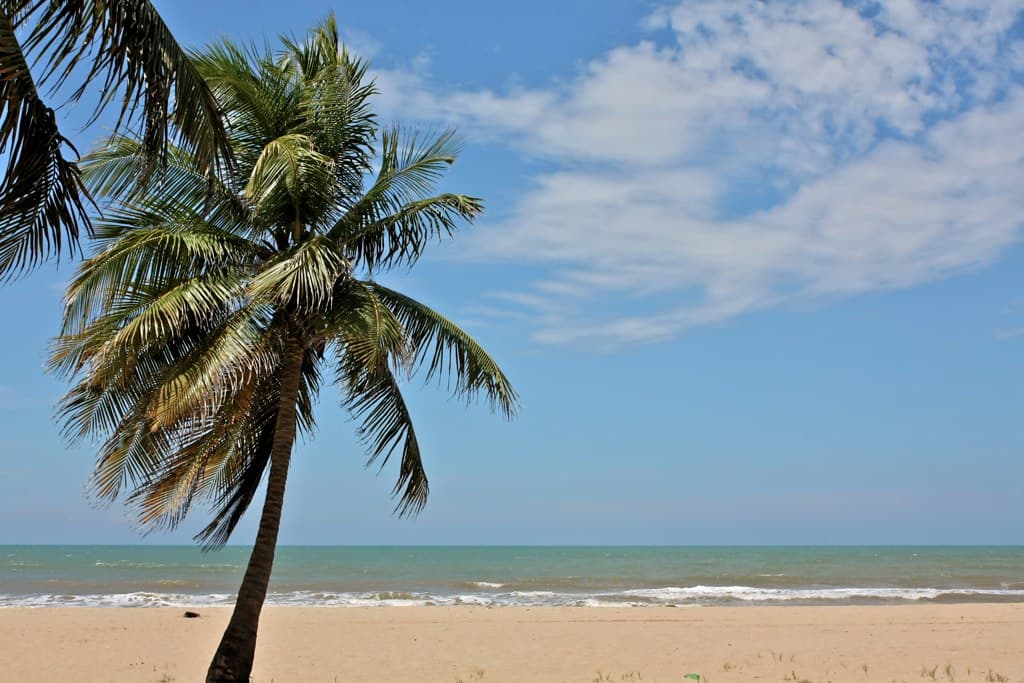
Counting the waves…
Counting the waves…
The boat ride through the mangroves takes twenty minutes from the village landing, following a channel barely wider than the pirogue itself. Branches scrape the gunwales while crabs scatter up the roots. Then the mangroves open and the beach appears: a curved sand spit maybe sixty meters long, backed by dense vegetation and fronting water that shifts from chocolate to olive depending on recent rains. Your captain beaches the bow and says he'll return in three hours. The motor sound fades, and what's left is wind in the mangroves and water lapping sand. This is transitional habitat where freshwater meets salt, where lagoon becomes channel becomes something else entirely. The sand holds tracks from the night before—raccoon prints, bird scratchings, the drag marks where something entered or left the water. Herons work the shallows, stabbing at finger mullet. Behind the beach, the mangrove wall is impenetrable, a tangle of aerial roots and overlapping branches that hums with mosquitoes and unseen birds. When the wind drops, the heat becomes physical, pressing down like a hand. You swim in water the temperature of bathwater, visibility maybe an arm's length. Small fish nibble your legs. The bottom is mud, not sand, soft enough that your feet sink to the ankles. Across the channel, more mangroves, more beach, an endless repetition of water and vegetation under a sky that builds thunderheads every afternoon. The isolation is complete—for three hours, this beach belongs to you and whatever animals consider it home.
Places, rentals, tours and events within walking and driving distance of Playa Caño Madre Casañas.
Photos
As a lagoon-channel beach, water conditions are generally calmer than open ocean, though currents can occur where channels flow. Safety depends on specific channel dynamics, water depth, and weather conditions. Since this is a hidden location requiring boat access with minimal infrastructure, no lifeguards or safety services are likely present. Always assess conditions carefully before entering the water and never swim alone. If visiting with a boat operator or local guide, ask their advice about safe swimming areas. The remote nature means self-reliance and caution are essential.
Plan your visit during Venezuela's dry season (December-April) for optimal weather and less-crowded conditions. The lagoon-channel setting makes sunset viewing particularly spectacular, with water reflections enhancing the experience. Since boat access is required, calm weather is essential for safe navigation, making dry season especially important. The beach remains obscure year-round, ensuring solitude whenever you visit. Coordinate with boat operators during morning hours to arrange transport, allowing full day enjoyment. Weekdays typically offer more authentic experiences with fewer local visitors than weekends.
This beach requires boat access, making it more challenging to reach than road-accessible beaches. From Tacarigua de la Laguna village, you'll need to arrange boat transportation through local operators or fishermen who know the lagoon's channel systems. The beach is located along a lagoon channel (caño), which are waterways connecting different parts of the wetland system. No road access exists to this specific location. Hiring a knowledgeable boat operator is essential both for navigation and safety. Expect the journey to be part of the adventure in reaching this hidden destination.
No facilities exist at the beach itself due to its remote, boat-access-only nature. All accommodation and dining are in Tacarigua de la Laguna village, where you'll find basic posadas and local eateries serving Venezuelan coastal cuisine at budget-friendly prices. Plan this as a day trip from the village, bringing your own food, water, and supplies since nothing is available on-site. Boat operators may offer guidance about what to bring. The experience is about pristine nature rather than amenities, so come prepared for a rustic, self-sufficient outing in an undeveloped lagoon environment.
This lagoon-channel beach is distinguished by its exceptional remoteness and boat-access requirement, ensuring it remains absent from typical beach indexes. Located along a caño (channel) within the Laguna de Tacarigua wetland system, it offers a genuine wilderness experience. The channel setting creates unique scenic qualities, especially at sunset when light reflects off the calm waters. Bird watching opportunities abound in this undisturbed habitat. The beach represents authentic coastal Venezuela that few tourists experience, appealing to adventurous travelers seeking pristine environments. Its hidden nature and access challenge preserve its untouched character and ecological integrity.