Counting the waves…
Counting the waves…
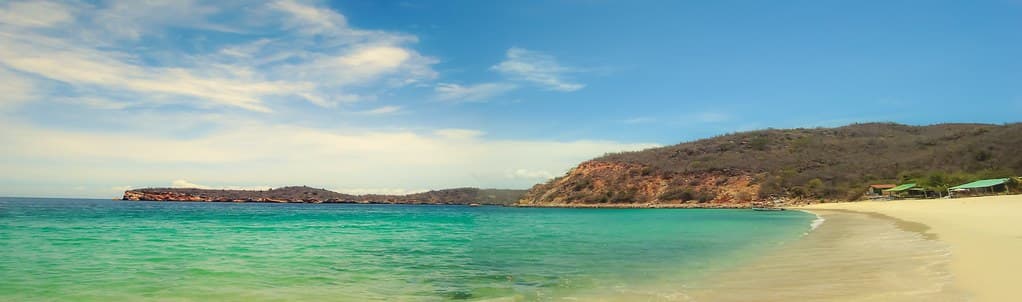
You'll land on this half-moon of blonde sand where the Mochima fishing fleet rests, their hulls painted cobalt and lime, creaking against mooring lines. The shore curves gently, backed by ramshackle village houses with corrugated roofs and doorways strung with hammocks. Pelicans plunge into the shallows with audible slaps, emerging with silvery catches, while frigatebirds wheel overhead in lazy spirals. The water transitions from jade at your ankles to deep sapphire beyond the headlands, calm enough that you can see sand dollars resting on the bottom ten feet down. Fishermen haul plastic crates of pargo and mero onto the beach each afternoon, their hands scaled and sun-darkened, calling out prices to villagers who gather with empty buckets. The scent of grilled fish and garlic drifts from open-air comedores perched on stilts above the tide line. By late afternoon, children cannonball off the concrete pier while their mothers wade knee-deep, washing clothes in the saltwater. The mountains behind the village glow terracotta as the sun drops, casting long shadows across the sand where stray dogs sleep and abandoned flip-flops mark high tide. This is Venezuela's Caribbean coast without pretense—just a working waterfront that happens to be achingly beautiful.
Places, rentals, tours and events within walking and driving distance of Playa Mochima.
Photos
Yes, Playa Mochima is generally considered safe for families and swimmers. As the main village beach, it's well-frequented and typically has calmer waters suitable for children. The sandy bottom makes entry easy and safe. However, always supervise children closely and be aware that conditions can change with weather and tides. The beach's popularity means other people are usually around, adding a safety factor. Check local conditions upon arrival and follow any posted warnings or advice from locals regarding currents or jellyfish.
Playa Mochima can be visited year-round, making it extremely versatile. Venezuela's dry season (December to April) typically offers the best weather with sunny skies, calm seas, and minimal rainfall—ideal for swimming and boat trips. The wet season (May to November) still sees many pleasant days with fewer crowds and lower prices. Weekdays tend to be quieter than weekends. Being the main village beach, it has good infrastructure regardless of season, though some boat services may be limited during rough weather periods.
Playa Mochima is accessible by road and boat. By land, travel to Mochima village from Cumaná (approximately 35-40 km) or Puerto La Cruz via the coastal highway. The beach is located right in the village, making it easily walkable from accommodations. Some visitors arrive by boat as part of tours from nearby coastal towns. Public transportation (por puestos or buses) runs regularly from major cities to Mochima village. The boat access tag indicates it's also a departure point for trips to surrounding beaches and islands.
As the main village beach, Playa Mochima offers the best range of services in the area. Mochima village has various guesthouses, posadas, and small hotels at different price points. Beachfront and village restaurants serve fresh seafood, Venezuelan specialties, and international options. Beach vendors often sell snacks, drinks, and local treats. The village has small shops for basic supplies. Accommodations range from budget-friendly rooms to more comfortable options with air conditioning. Booking ahead during peak season (December-April and holidays) is advisable.
Playa Mochima serves as the primary beach for Mochima village and acts as the main hub for the region. It's the most accessible beach with direct road access and offers the most developed infrastructure including accommodations, restaurants, and boat services. The beach serves as a launching point for boat tours to surrounding beaches, coves, and islands in Mochima National Park. Its central location, family-friendly atmosphere, and reliable amenities make it the natural gathering point for both locals and tourists exploring the Sucre coast.