Counting the waves…
Counting the waves…

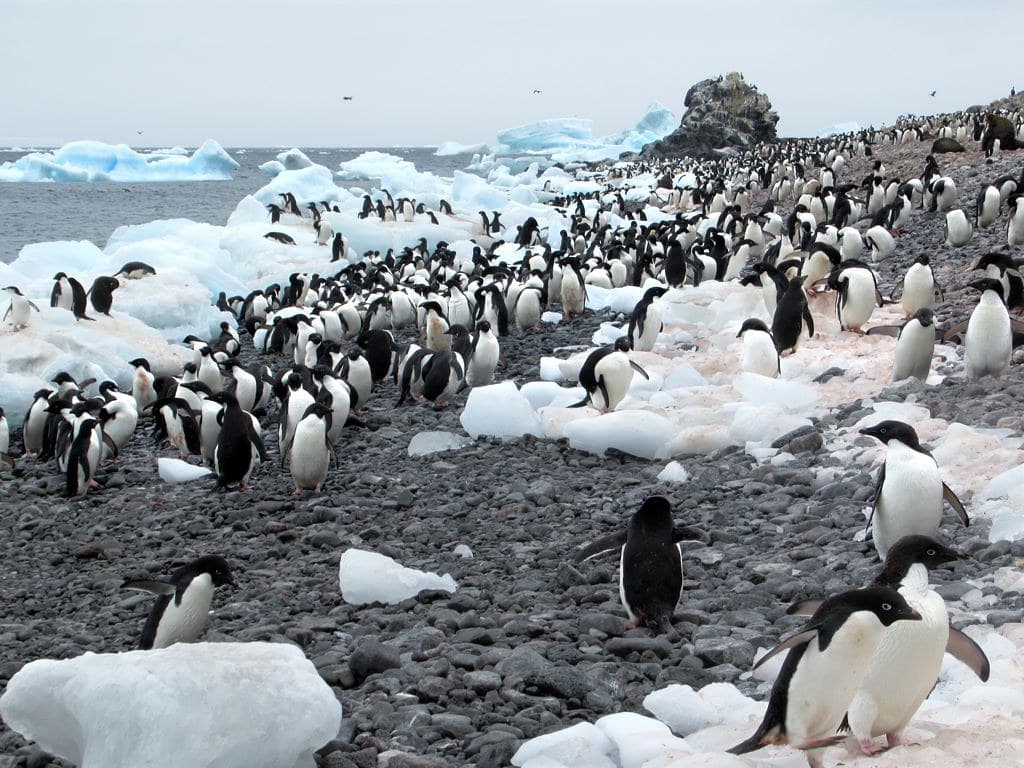
The beach at Base Petrel exists in a realm of extremes, where summer temperatures hover just above freezing and twenty-hour daylight paints the shore in perpetual amber. Your first step onto the pebble strand announces your arrival with a hollow rattle; centuries of wave action have rounded each stone into smooth ovals of grey, black, and rust-streaked volcanic rock. The Weddell Sea laps at your boots with water so cold it seems to hum, while behind you, the red-and-white buildings of Argentina's scientific station stand as the only vertical interruption in a landscape ruled by ice and stone. Dundee Island's position at the entrance to Antarctic Sound places you in the migration corridor for Adélie and gentoo penguins. You'll watch them porpoise through the surf just meters away, their tuxedoed bodies slicing through swells that carry fragments of brash ice from calving glaciers upstream. The beach offers no amenities—no changing rooms, no lifeguards, certainly no beach bars—only the raw geometry of continent meeting ocean. Your visit depends entirely on ship-based expeditions or Argentine military flights, making this among the least accessible coastlines on Earth. The pebbles shift and clatter beneath your weight as you walk, each step a small conversation with a shore that sees perhaps a hundred human visitors each austral summer, if that many.
Places, rentals, tours and events within walking and driving distance of Playa Base Petrel.
Photos
Swimming is not recommended at Playa Base Petrel due to extreme Antarctic conditions. Water temperatures remain near freezing year-round, and exposure can lead to hypothermia within minutes. The beach is primarily visited as part of scientific expeditions or specialized Antarctic cruises. If you do enter the water, it should only be with proper polar survival gear, medical supervision, and as part of an organized polar plunge activity with safety protocols in place.
The Antarctic summer season from November through March offers the best conditions, with December to February being optimal. During these months, temperatures are relatively milder (though still well below freezing), sea ice is more navigable, and wildlife is most active. Late December through January provides nearly 24 hours of daylight. However, access depends entirely on weather conditions and ice coverage, which can change rapidly. Most visitors arrive during organized expedition cruises operating in this narrow window.
Access to Playa Base Petrel requires boat transportation as part of an Antarctic expedition cruise or scientific mission. The beach is located near Base Petrel on Dundee Island in the Antarctic Sound region. Most visitors depart from Ushuaia, Argentina, on specialized ice-strengthened vessels. The journey involves crossing the Drake Passage, which takes approximately two days each way. Access is highly weather-dependent, and landings are never guaranteed due to ice conditions, winds, and wildlife protection protocols established under Antarctic Treaty guidelines.
There are no tourist accommodations or restaurants at Playa Base Petrel. The only infrastructure is the Argentine scientific research station, Base Petrel, which is reserved exclusively for scientists and support personnel. Visitors arrive on expedition cruise ships that provide all meals and lodging aboard the vessel. Ships typically offer full-board service with dining rooms and cabin accommodations. Day visits to the beach area may occur via zodiac landings, but tourists always return to their ship for all amenities, meals, and overnight stays.
Playa Base Petrel's location near the Antarctic Sound offers exceptional opportunities to witness tabular icebergs and dramatic ice formations calving from nearby ice shelves. The beach provides access to one of Argentina's research stations, offering insight into Antarctic scientific operations. Its position on Dundee Island places it at a geographic crossroads where the Weddell Sea meets the Antarctic Peninsula region. The pebble beach itself is surrounded by stunning glacial landscapes, and the area often hosts penguin colonies and seal populations during the summer season.