Counting the waves…
Counting the waves…

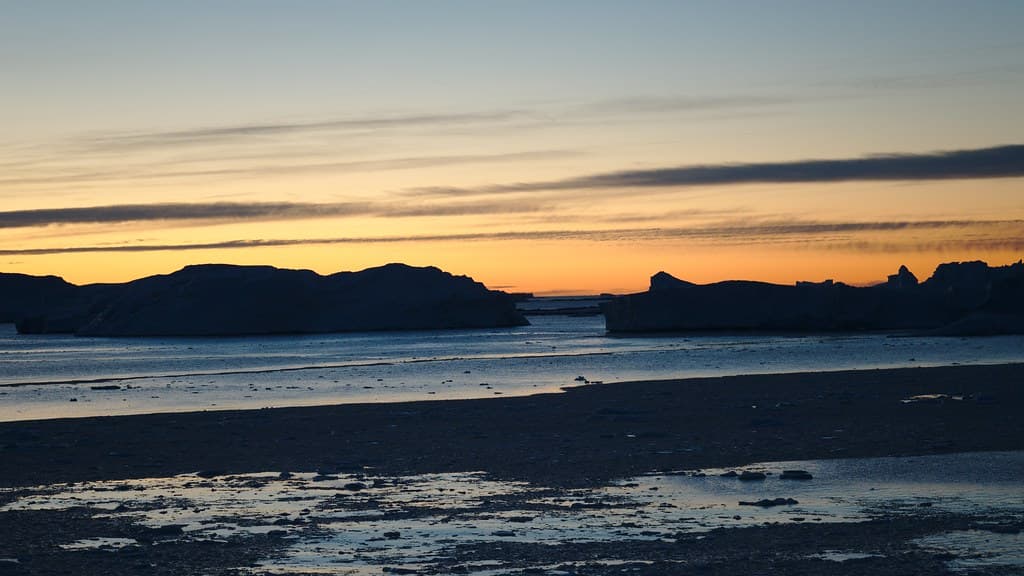
The pebbles beneath your boots click and shift—charcoal basalt, frost-split granite, each stone polished by the relentless churn of Antarctic waves. Playa Islote Barry sprawls along a protected sector of Marguerite Bay, its shoreline a band of dark rock between the turquoise-walled research station and the slate-grey swells. Icebergs the size of minivans drift offshore, their edges glowing cobalt where the sun cuts through compressed millennia. You disembark from the zodiac onto slick stones, steadying yourself as the bow scrapes the beach. Weddell seals lounge twenty meters away, their breath rising in lazy plumes. The base—a cluster of red-roofed buildings clinging to the rocky island—hums faintly with generators. Beyond, the Antarctic Peninsula's peaks rise like broken teeth, their glaciers calving into the bay with distant thunder. This is the seventh continent stripped to essentials: stone, ice, sky. No sand castles, no umbrellas. You crouch to examine a kelp holdfast tangled in the tide line, its rubbery strands frozen mid-twist. A skua circles overhead, eyeing your parka for scraps. The cold needles through your layers, sharp and clean, and when you exhale, your breath joins the fog rolling in from the pack ice.
Places, rentals, tours and events within walking and driving distance of Playa Islote Barry.
Photos
Swimming at Playa Islote Barry is extremely dangerous and not permitted. Antarctic waters in Marguerite Bay maintain near-freezing temperatures that cause hypothermia within minutes of immersion. The remote island location far from comprehensive medical facilities increases risk significantly. The beach serves as a landing area for scientific station support and rare expedition visits only. Wildlife protection regulations under the Antarctic Treaty prohibit activities that disturb the pristine environment. Strong currents, unpredictable weather, and presence of wildlife like leopard seals add additional hazards. All visitors must follow strict safety protocols and remain dry during shore visits.
The best visiting window for Playa Islote Barry is during the peak Antarctic summer from December to February, though access remains extremely limited year-round. Base San Martín operates seasonally or with reduced winter staff, affecting visitation possibilities. Late January and February typically offer the most reliable ice conditions in Marguerite Bay, though this area experiences more challenging ice than the northern Peninsula. Very few expedition cruises include this remote southern location in their itineraries. Weather patterns are particularly unpredictable, and sea ice can block access even during optimal months, making any visit highly dependent on conditions.
Reaching Playa Islote Barry requires booking one of the rare expedition cruises that venture to the deep Antarctic Peninsula's Marguerite Bay area, departing from Ushuaia, Argentina. The journey involves several days crossing the Drake Passage and navigating southward along the Peninsula, typically requiring longer expeditions of 14-21 days. Access to the island beach requires zodiac transfer from the expedition ship, subject to ice conditions and weather. Only specialized operators with ice-strengthened vessels include this remote destination. All travel must comply with Antarctic Treaty regulations, and landings require favorable conditions rarely guaranteed in this challenging region.
No tourist food or accommodation exists at Playa Islote Barry. Base San Martín is a remote Argentine research station that houses only scientific personnel during operational periods and may be unmanned during winter months. The station offers no public facilities or services to visitors. All expedition tourists must stay aboard their ships, which provide complete dining, lodging, and amenities for the entire Antarctic journey. Visits to the island beach and base area are brief, typically lasting only an hour or two when conditions permit, before all passengers return to their vessel for meals, sleeping quarters, and continued expedition activities.
Playa Islote Barry's uniqueness stems from its remote southern location in Marguerite Bay, visited by very few expedition ships compared to northern Peninsula destinations. Its island setting provides distinctive isolation and pristine wilderness character. The beach offers access to one of the furthest south Argentine bases, giving visitors a sense of true Antarctic remoteness. The surrounding waters and ice formations are particularly dramatic and scenic. Because so few expeditions reach this hidden location, those who visit experience exceptional solitude and untouched Antarctic landscapes. The challenging access makes it a bucket-list destination for serious Antarctic explorers seeking beyond-the-ordinary experiences.