Counting the waves…
Counting the waves…
A refined fusion of water purity, environmental stability, and communal vibrancy for Elsehul Beach.
View MethodologyAnalyzed via live sensors and environmental data.
Wave height, wind, and atmospheric stability.
Live footfall and crowd balance metrics.
Community reviews and curated sentiment.
“You step from the zodiac onto black volcanic sand, and the noise hits first—thousands of Antarctic fur seals barking, sparring, nursing pups in a sheltered bay beneath tussock-grass headlands. Expedition ships anchor…”
Limited recent visitor reports — live OBI telemetry is your best guide for current conditions.
Elsehul sits tucked into South Georgia's northwest shoulder, a crescent of charcoal sand hemmed by cliffs draped in blonde tussock grass that shivers in the katabatic winds. You arrive by zodiac, timing your landing between swells that slap the beach with metronomic force. The moment you vault onto shore, you're no longer the observer—you're a tolerated guest in a fur seal metropolis, where bulls patrol territories no larger than a parking space and pups wobble on flippers still learning their purpose.
The air tastes of brine and guano. Kelp lies in rust-colored tangles along the tide line, and the cliffs echo with the guttural protests of seals who regard your presence with indifference bordering on contempt. Expedition leaders enforce a five-meter buffer, but the seals ignore such niceties, often waddling directly into your path. In the austral summer, the beach becomes a nursery; in shoulder seasons, the colony thins but never empties.
 Credit: Unsplash
a sandy beach with a body of water in the background
 Credit: Unsplash
sea waves crashing on shore during daytime
Pups nursing at tide line
Steep paths above seal colonies
Scavengers patrol kelp wrack zones
Prime Visitation
Best Weather | Less Crowds
Where it is
Elsehul Beach
Elsehul, Antártida e Islas del Atlántico Sur, Argentina
-54.016400°, -37.986600°
Weather
Loading…
Swell
—
Temp
Warm · Restorative
UV Index
Moderate
Wind
—
Tidal State
Last known
Max Sunlight
—
Ideal Shade
—
Jan - Dec (Peak)
Mar - Nov (Off-season)
Best Weather | Less Crowds
Select a category to load nearby places.
Unlock restaurants, luxury stays and curated maritime experiences within 2km
Swimming at Elsehul Beach is extremely dangerous and not advised. The Southern Ocean waters around South Georgia remain near freezing temperatures throughout the year, causing rapid hypothermia. Strong currents and unpredictable weather add additional hazards. The beach is home to potentially aggressive Antarctic fur seals, particularly during breeding season, which can pose serious threats to humans entering the water. Elsehul is visited exclusively for wildlife observation and photography from shore. All activities should be conducted under strict expedition guide supervision.
The optimal visiting period for Elsehul Beach is during South Georgia's austral summer, from November through March, when expedition vessels can safely navigate the region. December to February provides the best weather conditions, longest daylight hours, and peak wildlife viewing opportunities. This period coincides with penguin breeding cycles and seal activity. The sheltered cove nature of Elsehul can make it accessible when other exposed beaches are not, though weather remains highly variable. All visits depend on favorable sea conditions for zodiac landings.
Elsehul Beach is reached exclusively by zodiac boat from expedition cruise ships, as indicated by its boat access designation. There is no airstrip or permanent human settlement on South Georgia. Visitors must book passage on specialized Antarctic expedition cruises, typically departing from Ushuaia, Argentina, or the Falkland Islands. The sheltered cove location makes Elsehul a preferred landing site when weather permits zodiac operations. All landings require advance permits and are guided by experienced expedition staff who assess conditions before each approach.
No food services or accommodations exist at or near Elsehul Beach. South Georgia has no hotels, restaurants, or tourist infrastructure. All visitors are accommodated aboard expedition cruise ships, which serve as floating hotels providing all meals, lodging, and facilities. Shore visits to Elsehul are brief excursions, usually lasting one to three hours. Visitors should not bring food ashore due to strict biosecurity protocols protecting South Georgia's fragile ecosystem. All waste must be returned to the ship.
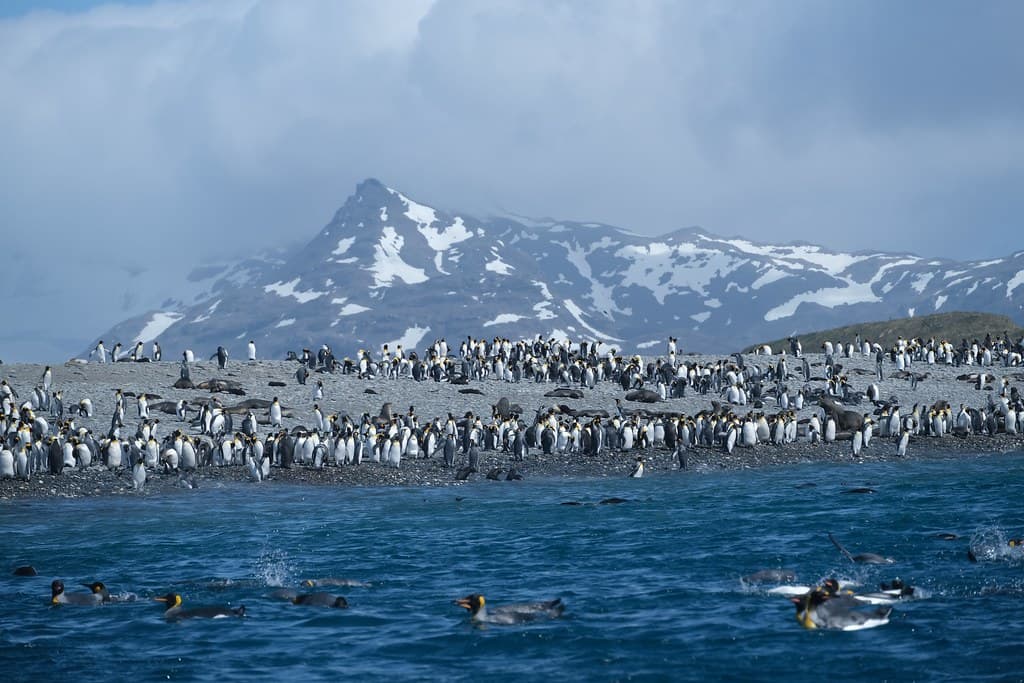
Elsehul Beach's sheltered cove configuration makes it a preferred landing site when weather conditions prevent access to more exposed locations. The northwest coast position offers some protection from prevailing winds and swells. The beach provides excellent opportunities to observe fur seals, macaroni penguins, and other wildlife in a relatively compact area. Its proximity to other northwest coast sites allows expedition operators to build flexible itineraries. The scenic backdrop of surrounding cliffs and the intimate cove setting make Elsehul particularly photogenic and memorable.
Photos