Counting the waves…
Counting the waves…
A refined fusion of water purity, environmental stability, and communal vibrancy for Right Whale Bay Beach.
View MethodologyAnalyzed via live sensors and environmental data.
Wave height, wind, and atmospheric stability.
Live footfall and crowd balance metrics.
Community reviews and curated sentiment.
“You step from the Zodiac onto smooth stones still wet from the last wave, and the air hits you—salt, guano, the musk of elephant seal harems stretching along the tideline. A hundred thousand king penguins trumpet inland…”
Limited recent visitor reports — live OBI telemetry is your best guide for current conditions.
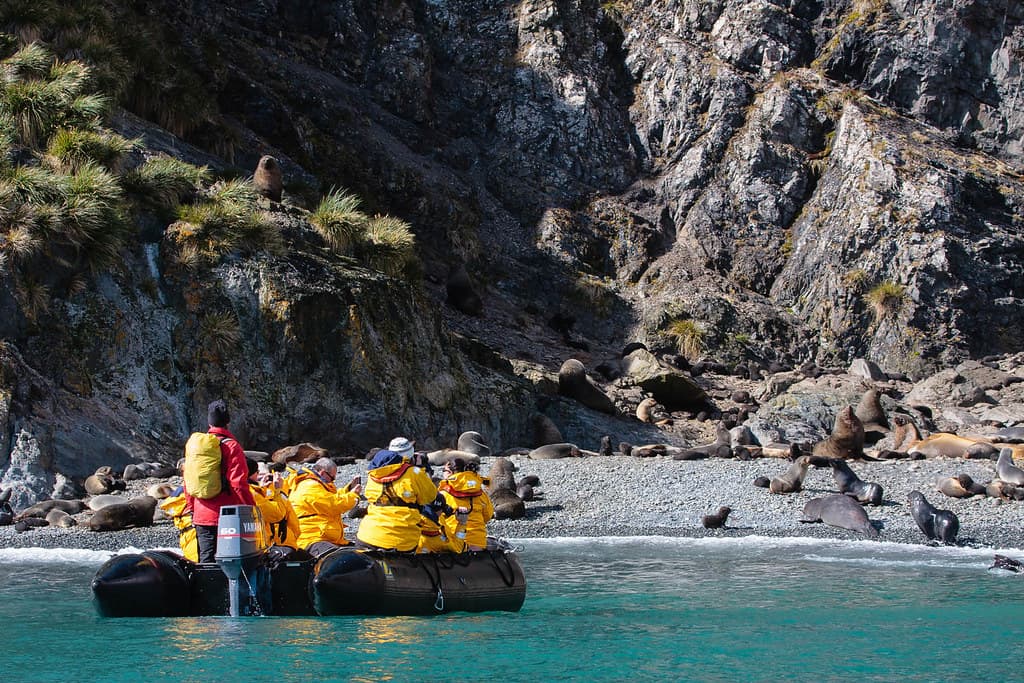
Right Whale Bay curves beneath steep, tussock-covered slopes that tumble toward the Scotia Sea, its grey pebble beach a narrow stage for one of the planet's densest concentrations of marine megafauna. You arrive by expedition vessel, transferring to rigid inflatables that nose onto the strand between bull elephant seals—multi-ton beachmasters who snort and rear, their chest shields scarred from territorial combat. The stones shift and clatter underfoot, rounded by centuries of Southern Ocean swells.
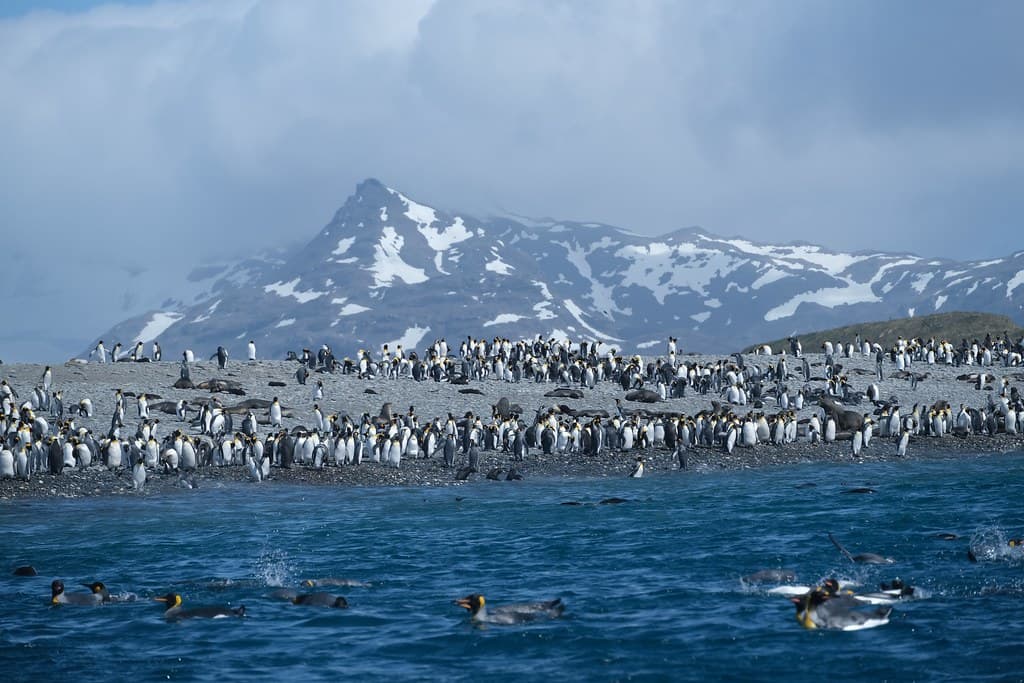
King penguins mass at the shoreline in tight huddles before launching into the breakers, their orange auricular patches brilliant against black-and-white plumage. Fur seals haul out near meltwater streams that carve braided channels across the beach, while giant petrels patrol the wrack line for carrion. The bay takes its name from the right whales that once calved here; today you might spot humpbacks breaching offshore, their flukes dark against the pewter horizon.
 Credit: Unsplash
a sandy beach with a body of water in the background
 Credit: Unsplash
sea waves crashing on shore during daytime
Capture colonies at water's edge
Climb for glacier valley views
Photograph elephant seal beachmasters sparring
Prime Visitation
Best Weather | Less Crowds
Where it is
Right Whale Bay Beach
Right Whale Bay, Antártida e Islas del Atlántico Sur, Argentina
-54.012800°, -37.684500°
Weather
Loading…
Swell
—
Temp
Warm · Restorative
UV Index
Moderate
Wind
—
Tidal State
Last known
Max Sunlight
—
Ideal Shade
—
Jan - Dec (Peak)
Mar - Nov (Off-season)
Best Weather | Less Crowds
Select a category to load nearby places.
Unlock restaurants, luxury stays and curated maritime experiences within 2km
Swimming is not recommended at Right Whale Bay Beach. The water temperatures in South Georgia are extremely cold year-round, typically near freezing, posing severe hypothermia risk within minutes. The beach is primarily visited for wildlife observation rather than water activities. Additionally, Antarctic fur seals and elephant seals can be aggressive if approached, and the remote location means emergency medical assistance is unavailable. Visitors should maintain safe distances from wildlife and stay on shore under expedition guide supervision.
The best time to visit Right Whale Bay Beach is during the austral summer months from November to March, when South Georgia is accessible to expedition vessels and weather conditions are most favorable. December through February offers the warmest temperatures and longest daylight hours. This period coincides with peak wildlife activity, including penguin breeding seasons and seal pupping. Sea ice is typically minimal during these months, allowing safer navigation. Weather remains unpredictable year-round, so flexible itineraries are essential.
Right Whale Bay Beach is accessible only by expedition cruise ship via zodiac landing. There are no regular ferry services or flights to South Georgia. Most visitors join multi-day Antarctic or sub-Antarctic expeditions departing from Ushuaia, Argentina, or Port Stanley, Falkland Islands. The voyage to South Georgia typically takes two to three days across the Southern Ocean. Landings at Right Whale Bay depend on weather and sea conditions, which can change rapidly. All visits require expedition operator permits and experienced guides.
There are no restaurants, hotels, or any commercial facilities at Right Whale Bay Beach. South Georgia is uninhabited except for a small British Antarctic Survey research station and museum staff at Grytviken, located elsewhere on the island. All visitors stay aboard their expedition cruise ships, which provide all accommodations, meals, and amenities. Day visits to the beach are brief, typically lasting one to three hours. Visitors must bring all necessary supplies with them and practice strict environmental protocols.
Right Whale Bay Beach stands out for its dramatic northern coast scenery and high concentration of diverse wildlife in a relatively compact area. The bay typically hosts large colonies of king penguins, fur seals, and elephant seals simultaneously, making it exceptional for wildlife photography. The beach's name reflects its history as a former whaling location. The surrounding mountains and glaciers provide stunning photographic backdrops. Its location on the exposed northern coast offers different geological features and scenery compared to more sheltered southern bays.
Photos