Counting the waves…
Counting the waves…
A refined fusion of water purity, environmental stability, and communal vibrancy for Grytviken Beach.
View MethodologyAnalyzed via live sensors and environmental data.
Wave height, wind, and atmospheric stability.
Live footfall and crowd balance metrics.
Community reviews and curated sentiment.
“You step onto wave-worn stones beside corrugated relics of the Southern Ocean's whaling past, where the salt-sharp wind carries the bark of fur seals and the creak of the derelict Petrel. This is South Georgia's most…”
Limited recent visitor reports — live OBI telemetry is your best guide for current conditions.
The pebbles beneath your boots rattle with every step along Grytviken Beach, a narrow strand where the bones of industrial whaling—rust-streaked tryworks, listing boats, storage tanks bleeding orange oxide—press against the tussock grass. You stand at the edge of King Edward Cove, the wind slicing off the glaciers that tumble into the bay, while elephant seals lounge indifferent to the human history surrounding them. Ernest Shackleton's grave rests a short walk inland; his presence haunts this place where so many polar expeditions began and ended.
The beach itself offers no soft sand or gentle lapping waves. Instead, rounded stones shift underfoot as frigid swells surge and retreat, carrying kelp fronds and the occasional leopard seal hauled out to rest. Between the Norwegian whalers' church and the South Georgia Museum—housed in the old whaling manager's villa—this shoreline serves as an open-air gallery of abandonment, where nature methodically reclaims every riveted seam and wooden beam.
 Credit: Unsplash
a sandy beach with a body of water in the background
 Credit: Unsplash
sea waves crashing on shore during daytime
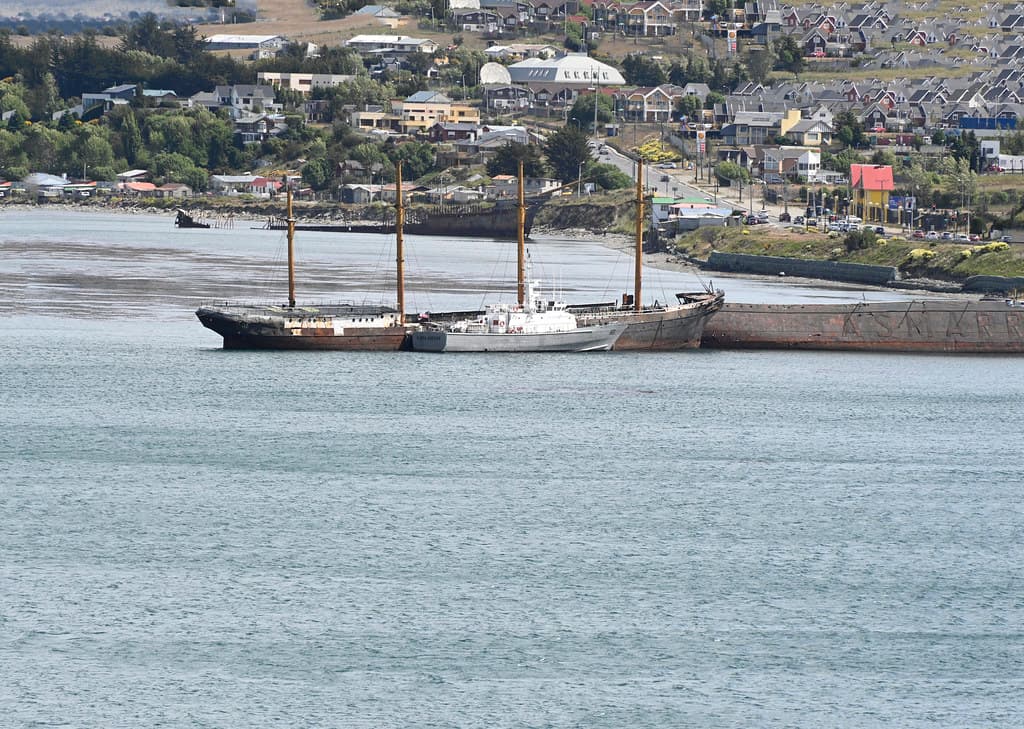
Iconic hull against mountain backdrop
Shackleton's grave overlooks cove
Elephant seals sprawl near shore
Prime Visitation
Best Weather | Less Crowds
Where it is
Grytviken Beach
Grytviken, Antártida e Islas del Atlántico Sur, Argentina
-54.281500°, -36.508600°
Weather
Loading…
Swell
—
Temp
Warm · Restorative
UV Index
Moderate
Wind
—
Tidal State
Last known
Max Sunlight
—
Ideal Shade
—
Jan - Dec (Peak)
Mar - Nov (Off-season)
Best Weather | Less Crowds
Select a category to load nearby places.
Unlock restaurants, luxury stays and curated maritime experiences within 2km
Swimming is not safe at Grytviken Beach under any circumstances. Water temperatures remain near or below freezing year-round, creating immediate hypothermia danger. The beach serves as a working landing area for research station operations and tourist Zodiac transfers, making it unsuitable for recreational activities. Antarctic fur seals and elephant seals frequently occupy the shoreline and can be aggressive when approached. Visitors should focus on coastal walks and photography while maintaining required wildlife distances. Always wear appropriate cold-weather clothing and follow expedition staff safety guidelines during shore visits.
The optimal visiting season is November through March during South Georgia's austral summer when expedition cruises operate regularly. December through February provides the best conditions with milder temperatures (though rarely above 10°C), longer daylight, and peak wildlife activity. This period offers the most reliable weather for landing operations and exploring the historic Grytviken settlement. King penguins, seals, and seabirds are particularly active during these months. However, sub-Antarctic weather remains unpredictable year-round, so prepare for sudden changes including snow, rain, or strong winds.
Grytviken Beach is accessible only via expedition cruise ships that include South Georgia in their Antarctic or sub-Antarctic itineraries. Most voyages originate in Ushuaia, Argentina, requiring approximately two days crossing the Drake Passage and Scotia Sea. Upon arrival, passengers transfer to shore using Zodiac inflatable boats from ships anchored in King Edward Cove. All visits require advance booking through licensed tour operators who hold proper South Georgia government permits. There are no commercial flights, ferries, or independent travel options to reach this remote location.
Grytviken Beach itself has no tourist accommodation or dining facilities. All visitor lodging and meals are provided aboard expedition cruise ships anchored in King Edward Cove. The adjacent Grytviken settlement contains a small British Antarctic Survey research station (not open for tourist accommodation), the South Georgia Museum with a small gift shop, and a Norwegian Church. Day visitors can explore the historic whaling station ruins and cemetery, including Ernest Shackleton's grave, before returning to their ship. No overnight stays ashore are available for tourists.
Grytviken Beach provides access to South Georgia's most significant historic settlement and best-developed visitor site. The adjacent former whaling station features the South Georgia Museum, Norwegian Church, and Ernest Shackleton's grave, creating unique cultural attractions unavailable elsewhere on the island. The protected cove location often allows landings when rougher sites are inaccessible. Abundant wildlife including fur seals, elephant seals, and king penguins frequent the area. The combination of dramatic mountain scenery, industrial heritage, and accessibility makes Grytviken the most Instagram-worthy and family-friendly destination on South Georgia.
Photos