Counting the waves…
Counting the waves…

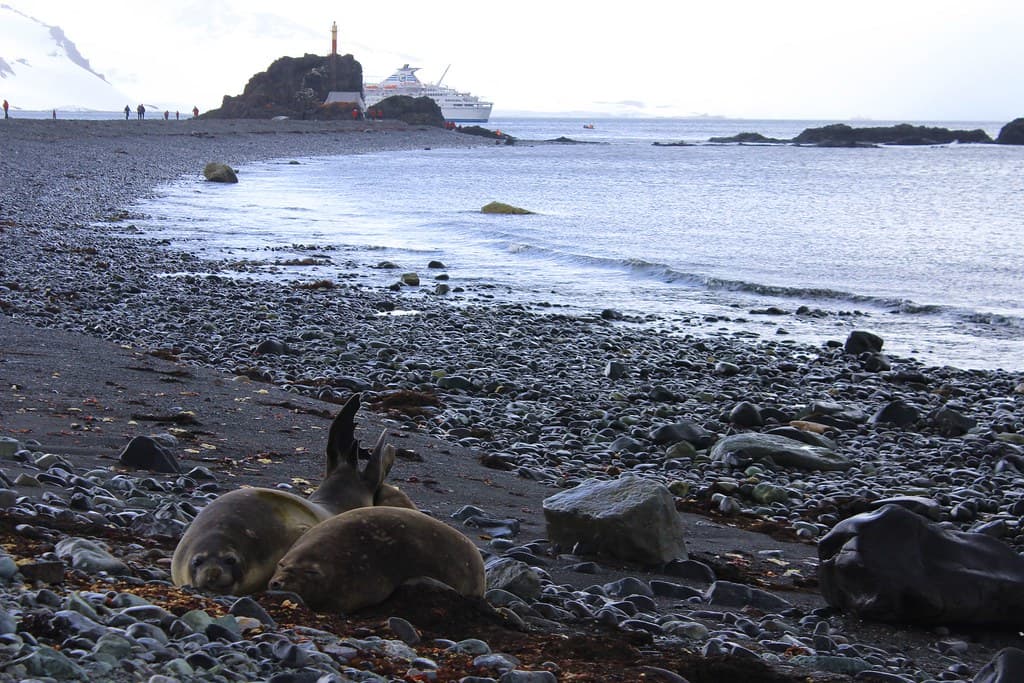
The inlet curves into King George Island like a question mark, sheltered enough that you can hear the individual stones shift with each surge. Gray-brown pebbles—offspring of volcanic eruptions and millennia of freeze-thaw cycles—slope gently into water so cold it stings your fingertips even through insulated gloves. Chinstrap penguins porpoise offshore, their black-and-white bodies threading between bergy bits calved from nearby glaciers. You've arrived as part of an expedition cruise; no pier exists here, no infrastructure beyond the occasional research station visible across the bay. The beach itself remains unaltered, a study in minimalism. Lichen crusts the larger boulders in shades of burnt orange and chartreuse, the only vegetation hardy enough to endure the katabatic winds that funnel down from the island's interior ice cap. The air tastes of salt and ozone, sharpened by proximity to the Drake Passage. Time moves differently here. You stand long enough to watch skuas harass a penguin colony on the adjacent rocks, long enough for your cheeks to go numb, long enough to understand that this beach exists on geological time, indifferent to the few humans granted brief passage. When the expedition leader signals, you reluctantly board the Zodiac, pebbles clattering one final time beneath your retreat.
Places, rentals, tours and events within walking and driving distance of Martel Inlet Beach.
Photos
Swimming is not recommended at Martel Inlet Beach due to extremely cold Antarctic waters that remain near freezing year-round, typically between -2°C to 2°C. Exposure can cause hypothermia within minutes. The remote location means emergency medical assistance is limited to expedition ship facilities. Additionally, strong currents, ice hazards, and unpredictable weather conditions create significant risks. Visitors should enjoy the beach from shore and follow all safety protocols established by expedition leaders.
The optimal visiting window is during the Antarctic summer from November to March, with December to February offering the mildest conditions and longest daylight hours. During this period, temperatures hover around 0°C to 5°C, sea ice is minimal, and wildlife is most active. January and February provide the best weather stability for boat landings. The shoulder months of November and March see fewer visitors but more variable conditions and shorter days.
Martel Inlet Beach is accessible only via expedition cruise ships or research vessel operations, as there are no commercial flights or public transportation to this remote Antarctic location. Visitors must travel by Zodiac boat from a ship anchored in Admiralty Bay. The journey typically begins with a flight to Ushuaia, Argentina, followed by a 2-day Drake Passage crossing. Landings depend on weather and sea conditions, and require permits under the Antarctic Treaty System.
No commercial accommodations, restaurants, or facilities exist at Martel Inlet Beach. All visitors stay aboard expedition cruise ships that provide meals, lodging, and amenities. The only structures nearby are scientific research stations on King George Island, which are not open to tourists. Visitors must be completely self-sufficient through their expedition operator. Day visits are typically limited to a few hours on shore before returning to the ship for all basic needs.
Martel Inlet Beach offers exceptional seclusion within the protected waters of Admiralty Bay, creating a sheltered environment surrounded by dramatic glacial landscapes. Its pebble shoreline and location within this significant scientific research hub make it a privileged landing site. The inlet setting provides opportunities to observe ice formations, seals, and seabirds in a relatively calm environment. Its position away from main tourist routes means visitors often experience pristine wilderness conditions with minimal human impact.