Counting the waves…
Counting the waves…
A refined fusion of water purity, environmental stability, and communal vibrancy for Rookery Bay.
View MethodologyAnalyzed via live sensors and environmental data.
Wave height, wind, and atmospheric stability.
Live footfall and crowd balance metrics.
Community reviews and curated sentiment.
“You'll share Rookery Bay with kelp gulls and the occasional Magellanic penguin, not crowds. The wind off the South Atlantic carries salt and the calls of seabirds as you walk sand the colour of straw, hemmed by tussock…”
Limited recent visitor reports — live OBI telemetry is your best guide for current conditions.
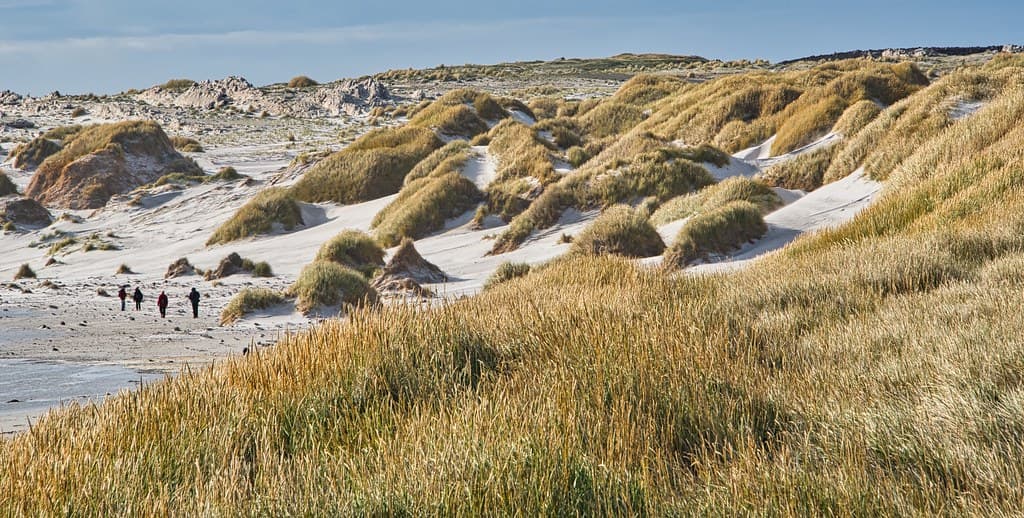
The beach curves quietly three kilometers east of Stanley, where the Falklands capital gives way to moorland and sheep track. You'll walk onto sand that crunches underfoot—crushed shell and quartz—while the bay opens east toward the open ocean. The water holds the grey-green hue of cold currents, and strands of bull kelp lie coiled along the tideline like abandoned rope. On clear days the light is sharp, almost crystalline; when the weather turns, mist rolls in fast and blurs the headlands into soft charcoal smudges.
This is a beach for walking, not lounging. The wind rarely stops, and temperatures hover between four and fourteen degrees Celsius even in the austral summer. You'll spot oystercatchers probing the sand with vermillion beaks, and if you're patient near the rocks at low tide, Magellanic penguins waddle ashore to rest between fishing runs. The silence here feels immense, broken only by wave-wash and bird call—no music, no vendors, no beach umbrellas.
 Credit: Unsplash
a sandy beach with a body of water in the background
 Credit: Unsplash
sea waves crashing on shore during daytime
Magellanic colonies near rocks
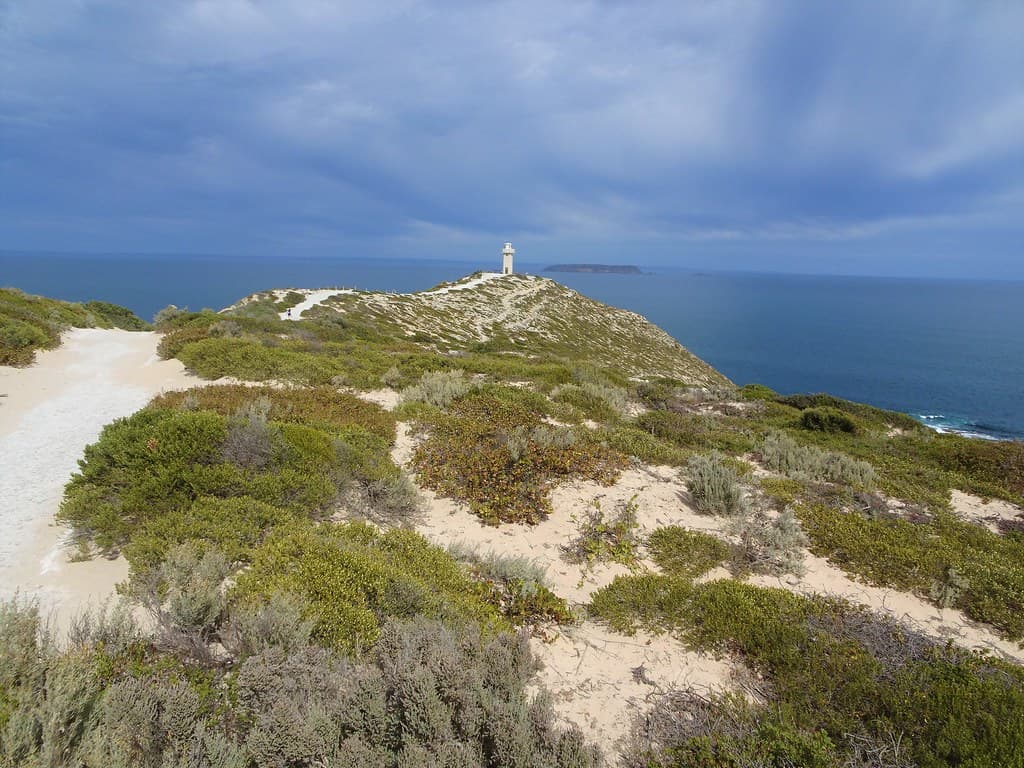
Tussock grass and headland trails
Oystercatchers and kelp gulls
Prime Visitation
Best Weather | Less Crowds
Where it is
Rookery Bay
Stanley, Antártida e Islas del Atlántico Sur, Argentina
-51.706200°, -57.748900°
Weather
Loading…
Swell
—
Temp
Warm · Restorative
UV Index
Moderate
Wind
—
Tidal State
Last known
Max Sunlight
—
Ideal Shade
—
Jan - Dec (Peak)
Mar - Nov (Off-season)
Best Weather | Less Crowds
Select a category to load nearby places.
Unlock restaurants, luxury stays and curated maritime experiences within 2km
Swimming at Rookery Bay is not recommended due to frigid water temperatures throughout the year, typically ranging between 2-9°C (36-48°F), which pose serious hypothermia risks even during summer months. The bay's relatively sheltered position offers some protection from strong currents found in more exposed areas, but cold water danger remains significant. Most visitors enjoy Rookery Bay for coastal walks, bird watching, and beachcombing rather than water activities. If you do wade, wear appropriate footwear and thermal protection, and never venture in alone or beyond shallow depths.
The optimal period to visit Rookery Bay is during the austral summer months from November through March, when temperatures are mildest (averaging 8-13°C) and daylight extends longest. December and January typically offer the most favorable conditions with less extreme wind and more stable weather, though Falklands weather remains unpredictable year-round. Wildlife activity peaks during these months. Spring (October-November) and autumn (March-April) provide quieter experiences but cooler temperatures. Winter months (June-August) bring harsh conditions with strong winds and limited daylight, suitable only for hardier visitors.
Rookery Bay is located east of Stanley and accessible by walking, cycling, or driving from the town center. The journey typically takes 30-60 minutes on foot depending on your exact starting point and pace, following coastal roads or paths. Vehicle access is available with informal parking near the bay. The route is straightforward enough for independent exploration without requiring guided tours or special permissions. Local maps and GPS help with navigation. The proximity to Stanley makes Rookery Bay ideal for spontaneous half-day excursions or evening walks during long summer days.
Rookery Bay itself has no facilities, restaurants, or accommodation. All services are located in nearby Stanley, which offers several guesthouses, bed and breakfasts, small hotels, pubs, cafés, and restaurants serving traditional fare and local seafood. Given the short distance from town, visitors typically stay in Stanley and visit Rookery Bay as a brief excursion, returning to town for meals and overnight stays. Bring water and snacks for your beach visit. Stanley's compact size means all amenities are within easy reach for exploring Rookery Bay and other nearby coastal areas.
Rookery Bay offers a quieter, less-visited alternative to busier Stanley beaches, providing a more secluded coastal experience despite its proximity to the capital. The bay's eastern location gives it different exposure and character compared to harbour-side coves, with distinct bird populations that appeal to wildlife observers. Its name suggests historical seabird colonies, though current wildlife varies seasonally. The combination of accessibility and tranquility makes it ideal for visitors seeking peaceful coastal walks without traveling far from Stanley. It represents authentic local coastal scenery without heavy tourist traffic or development.
Photos