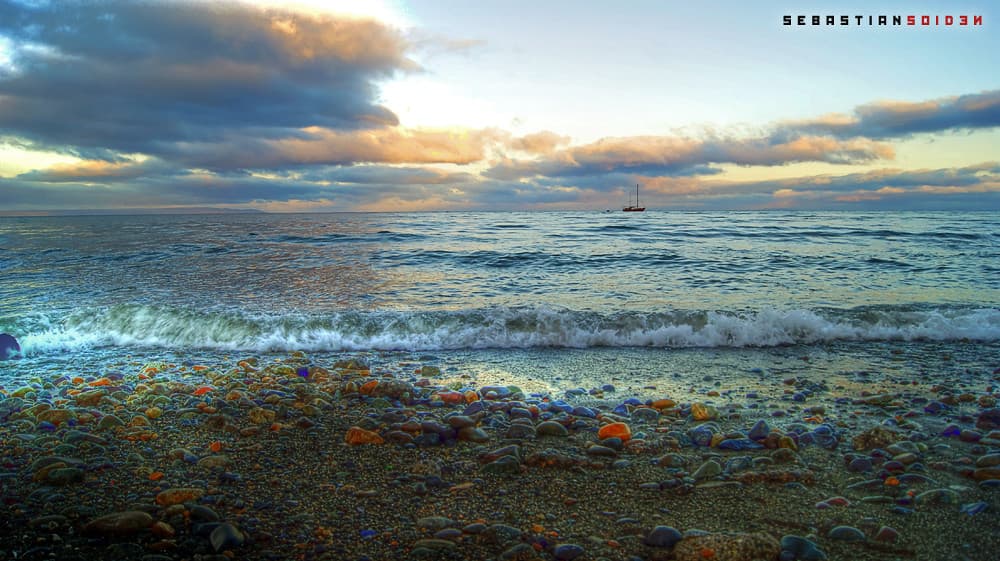
Counting the waves…
Counting the waves…
The beach stretches in a sweeping arc where the South Atlantic yields to the Strait of Magellan, a geographic hinge point that changed maritime history. Pebbles crunch and shift beneath your weight, ranging from smooth ovals the size of plums to larger cobbles marked with quartz veins. The shoreline here is restless—waves arrive from different angles as ocean swells meet strait currents, creating a constantly shifting pattern of foam and retreat. Behind you, the Patagonian steppe extends in tones of olive and ochre, dotted with wind-carved shrubs that grow sideways rather than upward. Before you, the strait narrows westward between visible landmasses, the passage that promised access to the Pacific and the spice routes beyond. On clear afternoons, Tierra del Fuego's northern coast appears as a dark line across the water. The air carries the iodine scent of exposed kelp beds and the mineral smell of wet stone. This beach sees few footprints beyond those of researchers, occasional fishermen, and the rare traveler who understands that some places matter more for what they represent than for amenities or comfort. Elephant seals occasionally haul out on the upper beach, their massive forms incongruous among the stones. The light here is particular—filtered through southern latitudes, it renders colors with unusual clarity even as the wind blurs the horizon with salt spray and distance.
Places, rentals, tours and events within walking and driving distance of Playa Cabo Vírgenes.
Photos
Swimming at Playa Cabo Vírgenes is not safe or recommended. The beach experiences extremely cold water temperatures year-round, powerful currents from the meeting of Atlantic waters and the Strait of Magellan, and frequently harsh weather conditions. The pebble composition and strong waves add to the hazardous conditions. This beach is designed for observation, photography, and appreciating the dramatic landscape rather than water recreation. Visitors should maintain caution near the shoreline as waves can be unpredictable and the remote location means emergency services are far away.
Playa Cabo Vírgenes can be visited throughout the year, though summer (December-March) provides the most comfortable weather with temperatures around 10-20°C and longer daylight hours ideal for exploration and photography. September through April coincides with the penguin breeding season at the nearby colony, making it an excellent time for combined visits. Spring and autumn offer fewer crowds while maintaining reasonable weather. Winter (June-August) brings harsh winds and cold, though the dramatic scenery remains impressive for hardy travelers willing to brave the elements.
Playa Cabo Vírgenes is located approximately 130 kilometers south of Río Gallegos, the capital of Santa Cruz Province. Access requires a rental car or organized tour, as public transportation doesn't operate to this remote area. Take Provincial Route 1 south from Río Gallegos; the road becomes gravel partway. The journey takes approximately 2-3 hours depending on road conditions. Upon arrival at the Cabo Vírgenes reserve, you'll pay an entrance fee. Roads can be challenging, particularly in adverse weather, so check conditions beforehand and allow adequate travel time.
Accommodation and dining facilities do not exist at Playa Cabo Vírgenes itself. Río Gallegos, 130 kilometers north, serves as the base for most visitors, offering hotels, hostels, restaurants, and supplies. Some rural estancias in the surrounding area provide authentic Patagonian lodging experiences. The reserve has a visitor center with basic facilities and possibly limited refreshments during peak season. Visitors should plan as day-trippers, bringing their own food, water, and emergency supplies. The remote nature of this location requires thorough preparation before departure from Río Gallegos.
Playa Cabo Vírgenes holds landmark status as it marks Argentina's Atlantic entrance to the Strait of Magellan, one of the world's most historically important maritime passages. This geographic position makes it the southernmost point of mainland Atlantic Argentina. The beach offers views across the strait to Chilean territory, representing a tangible border between ocean and strait, Atlantic and Pacific watersheds. Its combination of geographic significance, dramatic coastal scenery, proximity to a major penguin colony, and historic lighthouse creates a unique destination where natural beauty meets exploration history.