Counting the waves…
Counting the waves…
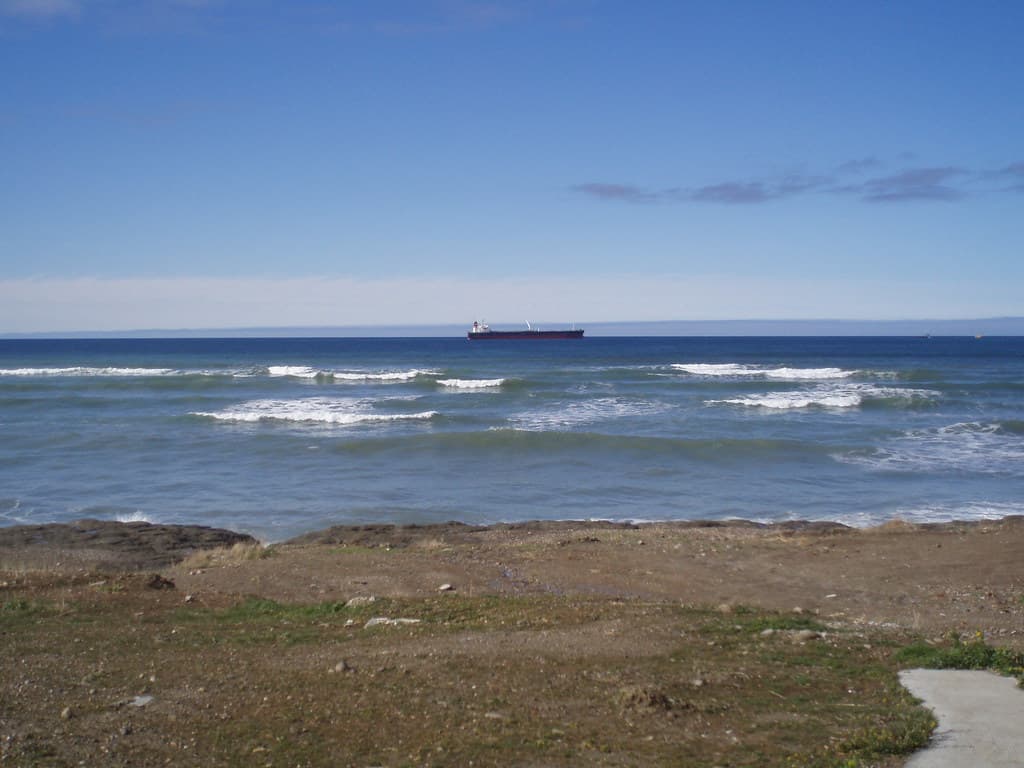
The northern beach unfolds where the city's ambition finally exhausts itself, buildings giving way to industrial yards and then to nothing but shore. You'll notice the shift immediately—fewer people, less noise, pebbles larger and less sorted by tides. Oil storage tanks rise inland, their cylindrical forms stark against low Patagonian scrub. It's an honest landscape, industrial and natural elements coexisting without pretense. The walk north along the waterline reveals Caleta Olivia from its backside, away from the monument and promenade. Gulls cluster on exposed rocks at low tide, and occasionally you'll spot cormorants diving in the shallows. The pebbles here resist comfortable sitting—too large, too angular—so you'll keep moving, boots crunching rhythmically as you put distance between yourself and urban sounds. This stretch serves as a kind of buffer zone, neither fully developed nor entirely wild, useful primarily for solitude and unobstructed gulf views. The wind arrives unfiltered, pushing whitecaps across grey-green water that changes color with each cloud passage. By the time you've walked thirty minutes north, the city has shrunk to a smudge of buildings against empty steppe. You'll turn back eventually, returning to pavement and people, but the northern reach offers something the central beaches can't: the sense that Patagonia extends infinitely in all directions, indifferent to the small city clinging to its edge.
Places, rentals, tours and events within walking and driving distance of Playa Norte Caleta Olivia.
Photos
Swimming at Playa Norte Caleta Olivia should be approached with caution due to typical Patagonian coastal conditions. Cold water temperatures year-round make swimming uncomfortable without wetsuits. The pebble beach can be uneven and slippery, making entry and exit from the water challenging. Currents and wave conditions vary and should be assessed before entering the water. The northern location means it may be less patrolled than central beaches, so supervision and safety are your responsibility. Wading and enjoying the shoreline are generally safer options than swimming for most visitors to this stretch.
Playa Norte Caleta Olivia can be visited throughout the year, with summer (December to March) providing the most favorable weather conditions. The beach's less crowded nature makes it appealing any time, offering peaceful coastal experiences regardless of season. Strong winds are characteristic of Patagonia year-round, so windproof clothing is advisable. The northern beach position may offer different lighting conditions than southern beaches, particularly beneficial for morning photography. Being an urban beach, access isn't restricted by season, allowing spontaneous visits whenever you're exploring Caleta Olivia's coastline.
Playa Norte Caleta Olivia is located in the northern section of Caleta Olivia's urban coastline and is accessible via the coastal road network. From the city center, head north along the waterfront following coastal routes. You can reach it by car, taxi, or on foot depending on your starting point. While it's described as somewhat hidden, it remains part of the urban infrastructure with road access. Local residents can provide specific directions to this northern beach stretch. Being within city limits, it doesn't require special vehicles or extensive travel planning like remote Patagonian beaches.
Playa Norte Caleta Olivia benefits from its location within the urban area of Caleta Olivia, providing access to city accommodations and restaurants. Hotels, hostels, and rental options throughout town serve as bases for visiting this northern beach. While the immediate beach area may be residential without beachfront restaurants, the city center's dining establishments are within reasonable distance. Grocery stores and markets in town allow visitors to prepare picnics for beach outings. The urban setting ensures basic services, ATMs, and shops are accessible, making it convenient for travelers of all budgets.
Playa Norte Caleta Olivia is considered hidden because it's located away from the main tourist waterfront areas where most visitors concentrate. Its northern position means it receives less foot traffic than central beaches, offering a more secluded experience despite being urban. The beach may be less prominently signed or featured in basic tourist information, making it known primarily to locals. This hidden quality provides travelers seeking authentic local experiences a quieter alternative to obvious tourist beaches. Its scenic pebble coastline rewards those who venture beyond the main waterfront to explore Caleta Olivia's complete coastal character.