Counting the waves…
Counting the waves…
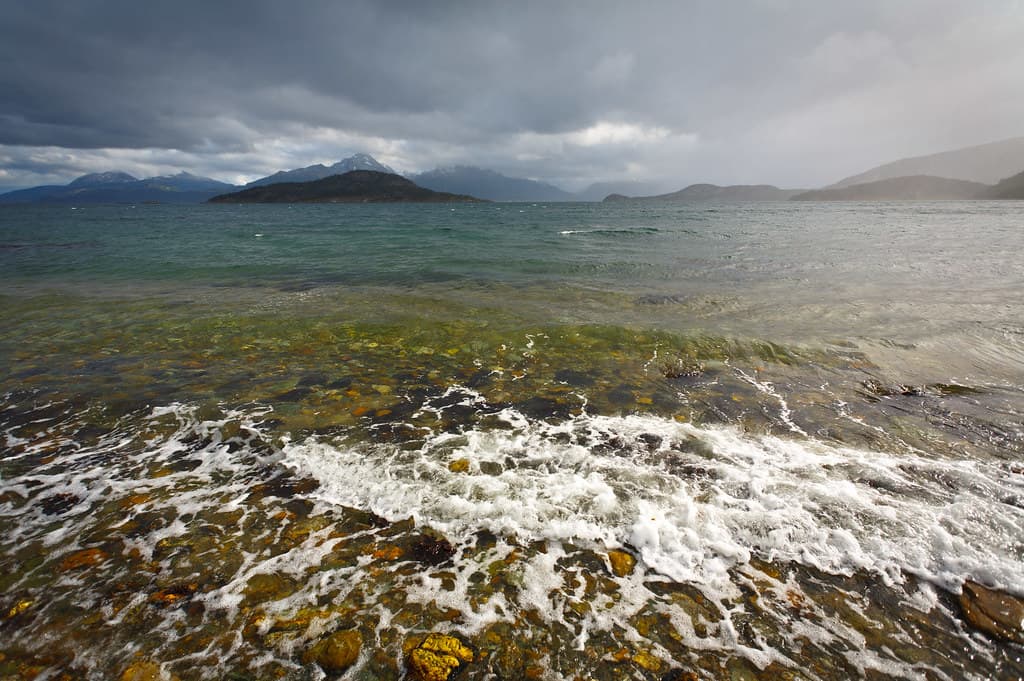
You drag your kayak onto a sliver of gray sand mixed with smooth pebbles, each stone cool and damp under your palm. Isla Redonda sits within the Lapataia sector of Tierra del Fuego National Park, a nearly perfect circle of land thick with coihue and ñire. The water here is sheltered by surrounding islands and headlands, so even when wind scours the outer Beagle Channel, this cove remains glassy, reflecting the slopes above in flawless detail. The beach curves gently around the island's eastern flank, no more than fifty meters long. Behind it, the forest begins abruptly: moss-covered trunks, ferns dripping from the last rain, a understory so dense you can't see more than a few meters in. The air smells of wet earth and decomposing leaves, a green scent cut by the iodine tang of kelp drying on the tide line. You spot a Magellanic woodpecker working a dead snag, its drumming the only sound besides the lap of wavelets on stone. This is the kind of beach that doesn't announce itself. There's no sign, no trail, no fire ring left by previous visitors. Isla Redonda exists as a coordinate on a nautical chart, a landmark for paddlers threading the park's intricate coastline. You sit on a driftwood log, pull out a thermos, and watch the light shift as clouds move east. The solitude is earned—by paddle strokes, by cold water, by the willingness to navigate without a guide. And that's exactly what makes it worth finding.

Places, rentals, tours and events within walking and driving distance of Playa Isla Redonda.
Photos
Swimming is not recommended due to extremely cold Beagle Channel waters that remain at 4-9°C (39-48°F) year-round, creating serious hypothermia risk. The beach is within protected parkland but lacks any lifeguard services or emergency facilities. Currents can be unpredictable, and weather conditions change rapidly. Most visitors enjoy the beach for its scenic beauty, photography, and wildlife observation rather than water activities. If you enter the water, specialized thermal protection is mandatory and you should never swim alone. The remote location means rescue would take considerable time.
Austral summer (December-February) offers the best conditions with temperatures of 10-15°C, extended daylight, and calmer seas for boat access. This period also provides optimal wildlife viewing opportunities within the park ecosystem. Shoulder seasons (November and March) offer fewer crowds and reasonable weather. Winter months (June-August) bring extreme cold, limited daylight, and frequently closed boat services. Being within national park boundaries, some seasonal restrictions may apply. Check with park authorities and tour operators regarding access schedules, as services are weather-dependent and may have reduced frequency outside peak season.
Reaching this island requires booking a boat tour or charter from Ushuaia, as it's only accessible by water. Some Beagle Channel tours that explore the national park coastline may include stops near Isla Redonda, though it's not on all standard itineraries. The journey from Ushuaia typically takes 1-2 hours depending on route and conditions. Confirm specifically that your chosen tour visits this location, as many operators focus on other islands. All trips are subject to weather cancellation. You may also need to pay Tierra del Fuego National Park entrance fees.
The island is uninhabited with absolutely no facilities, services, or infrastructure. All visitors must stay in Ushuaia, where full accommodation ranging from hostels to hotels is available. Pack all necessary supplies including food, water, and appropriate clothing for your island visit. Most boat tours operate as day trips without meal service included. Some operators may provide basic refreshments onboard. Since the island is within national park territory, observe all park regulations regarding waste and environmental protection. Plan your entire logistics from Ushuaia with same-day return.
This island beach's location within Tierra del Fuego National Park boundaries provides enhanced environmental protection and relatively pristine conditions. The park designation means stricter regulations on visitor impact and potentially unique wildlife viewing opportunities compared to non-protected areas. The island's position in the Beagle Channel offers perspectives on the park's marine ecosystems that mainland coastal access points cannot provide. Being part of Argentina's southernmost national park adds historical and conservation significance. The protected status ensures minimal development, maintaining authentic wilderness character and potentially better chances for observing native species in their natural habitat.