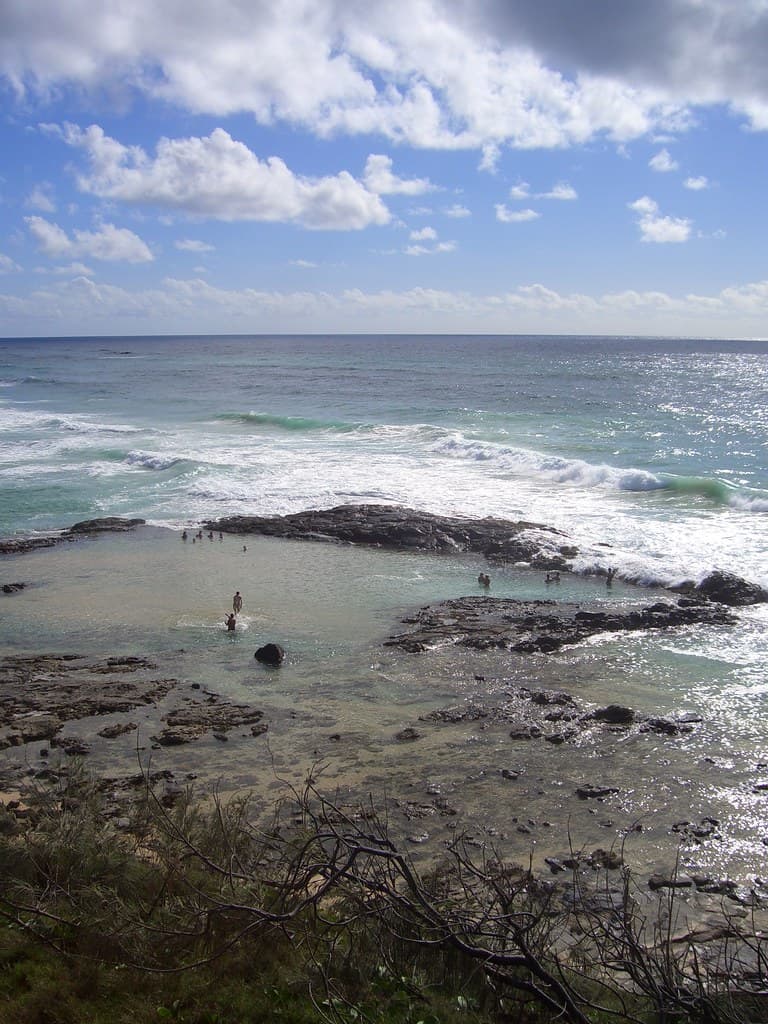
Counting the waves…
Counting the waves…
Bulwer clings to the northwest tip of Moreton Island with the quiet resignation of a place that never wanted crowds anyway. The beach here stretches along the protected western shore, where Moreton Bay's shallow waters lap against blonde sand in shades of mint and sapphire. You'll find the rusted skeleton of the Mirabooka a short wade offshore, its iron ribs worn smooth by decades of tide and home now to schools of bream that dart through the wreckage. The township itself—a scattering of weatherboard cottages and a general store—exists primarily for the island's barge operations, but that utilitarian edge is precisely the point. You won't find resorts or beach clubs. Instead, you get uninterrupted sight lines across to the Glass House Mountains on clear mornings, and seagrass beds where dugongs feed at dawn if you're patient and still. Snorkeling the wrecks requires only mask and fins; the water rarely exceeds two meters even at high tide. Between swims, you'll notice how the beach transforms with the light—burnished copper at sunrise, washed pale by midday glare, then glazed lavender as the sun drops behind the mainland. The 4WD track south toward Middle Road cuts through banksia scrub thick with honeyeaters, but most visitors stay close to the water, where the only sounds are kite calls and the slow creak of mooring chains.
Places, rentals, tours and events within walking and driving distance of Bulwer Beach.
Photos
Bulwer Beach offers generally calm, sheltered swimming conditions due to its protected bay location on Moreton Island's western side. The waters are typically shallow and gentle, making it suitable for families. However, as with all Queensland beaches, be aware of marine stingers during summer months (November-May) and consider wearing protective clothing. There are no lifeguard patrols, so swim at your own risk and stay within your comfort zone. The beach is also popular for snorkeling around the nearby Tangalooma Wrecks area.
Bulwer Beach is accessible year-round, with each season offering different experiences. Winter (June-August) provides mild, dry weather ideal for beach activities and whale watching offshore. Spring and autumn offer pleasant temperatures with fewer crowds. Summer (December-February) brings warmer water perfect for swimming and snorkeling, though occasional afternoon storms and marine stingers are more common. Weekdays are generally quieter than weekends. Since Moreton Island requires ferry access, plan around weather conditions and check ferry schedules in advance regardless of season.
Bulwer Beach is only accessible via vehicle ferry to Moreton Island from the mainland. Regular ferry services operate from Port of Brisbane to Bulwer (the island's only township). You'll need a 4WD vehicle with appropriate permits to drive on the island's sand tracks. Once at Bulwer, beach access is straightforward with informal parking areas near the shore. Advance ferry bookings are essential, especially during peak periods. Alternatively, some tour operators offer day trips to Moreton Island that include Bulwer area visits.
Bulwer is a small settlement with limited amenities. There's a general store selling basic supplies, fuel, and takeaway food, plus a casual café. Accommodation options include the Bulwer Island Holiday Park with camping sites and basic cabins. More extensive facilities are found at Tangalooma Resort on the island's opposite side. Given the remote location, visitors should bring sufficient food, water, and supplies from the mainland. The nearest major shopping and dining options are back in Brisbane, approximately 90 minutes away including ferry time.
The Tangalooma Wrecks are not visible from Bulwer Beach itself, as they're located on the island's eastern side near Tangalooma Resort, while Bulwer sits on the western coast. However, Bulwer serves as a good base for visiting the wrecks via 4WD across the island (approximately 13km drive on sand tracks). Many visitors stay in Bulwer for its quieter atmosphere while making day trips to snorkel at the famous wrecks. The western bay waters near Bulwer offer their own snorkeling opportunities with good visibility and marine life.