Counting the waves…
Counting the waves…

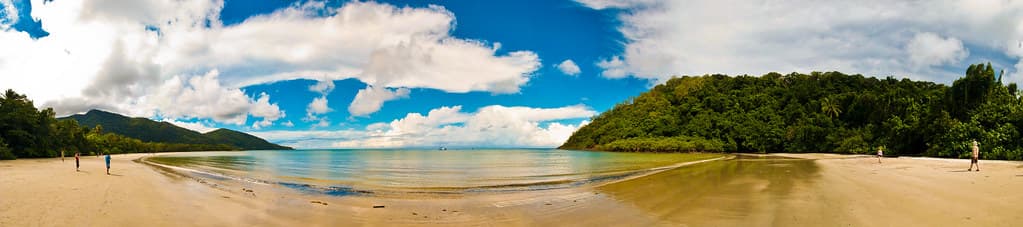
The forest ends abruptly here. One moment you're beneath a canopy thick enough to block noon sun, the next your feet sink into sand the color of crushed seashells. Cape Tribulation earned its ominous name in 1770 when Captain Cook's Endeavour struck reef nearby, but today the only tribulation is deciding whether to face the jungle or the ocean. You'll find pandanus palms leaning over the high-tide mark, their roots exposed like arthritic fingers. The beach stretches in a gentle arc, framed by granite headlands cloaked in vines and fan palms. Box jellyfish patrol these waters from November through May, so most swimmers stick to the stinger season's cooler months or wear protective suits. The sand itself is coarse underfoot, mixed with fragments of coral and pumice that's drifted across the Pacific. This is one of the planet's few places where two World Heritage environments collide. Walk north at low tide and you'll spot crabs the size of dinner plates scuttling between rocks. Look up and you might catch a tree-kangaroo's silhouette or hear the guttural boom of a cassowary moving through morning mist. The reef lies three kilometers offshore—close enough to reach by kayak, distant enough to keep the shore wild.
Places, rentals, tours and events within walking and driving distance of Cape Tribulation Beach.
Photos
Swimming at Cape Tribulation Beach requires caution year-round. Box jellyfish are present during stinger season (November to May), making protective stinger suits essential. Saltwater crocodiles inhabit the area, so always obey warning signs and avoid swimming near creek mouths or murky water. Strong currents and rip tides occur, particularly during rough weather. There are no patrolled swimming areas or lifeguards. Many visitors prefer to wade in shallow water or enjoy the beach's scenery rather than swimming. Always check local conditions and follow safety advice from tour operators or accommodation providers.
Cape Tribulation is accessible year-round, with each season offering different experiences. The dry season (May to October) brings sunny weather, lower humidity, and minimal rainfall, making it ideal for beach visits and rainforest walks. The wet season (November to April) features afternoon storms, lush vegetation, and requires stinger suits for swimming. Winter months (June to August) offer the most comfortable temperatures. Roads can become challenging during heavy wet season rains. Wildlife viewing is excellent year-round, though some tour operators reduce services during the wettest months of January and February.
Cape Tribulation is approximately 110km north of Cairns, requiring a 2-2.5 hour drive via the scenic Captain Cook Highway through Port Douglas and Mossman. The road becomes narrow and winding after the Daintree River crossing, requiring a cable ferry (operates 6am-midnight, small fee applies). A 4WD is recommended but not essential in dry conditions. Free parking is available at Cape Tribulation Beach's main access points. The road is sealed to Cape Tribulation village. Many visitors join organized tours from Cairns or Port Douglas to avoid driving the challenging route.
Cape Tribulation village offers limited but adequate amenities. Accommodation ranges from eco-lodges and rainforest resorts to backpacker hostels and camping grounds, with most properties emphasizing environmental sustainability. Several cafes and restaurants serve meals, including the Whet Restaurant and Beach House cafes, though options are modest compared to larger towns. No major supermarkets exist; the general store stocks basic supplies at premium prices. Many accommodations include meal plans. Visitors often stock up on supplies in Mossman or Port Douglas before arriving. Book accommodation well ahead during peak season.
Cape Tribulation is the only place where two UNESCO World Heritage sites—the Daintree Rainforest and Great Barrier Reef—meet directly. The ancient rainforest literally extends to the beach's edge, with dense vegetation visible from the sand. While you're standing on the beach in the rainforest, the Great Barrier Reef lies offshore in the Coral Sea, though it's not visible from shore as the reef system is several kilometers out. This unique convergence of ecosystems creates extraordinary biodiversity. Snorkeling and diving tours depart from nearby locations to experience the reef itself.