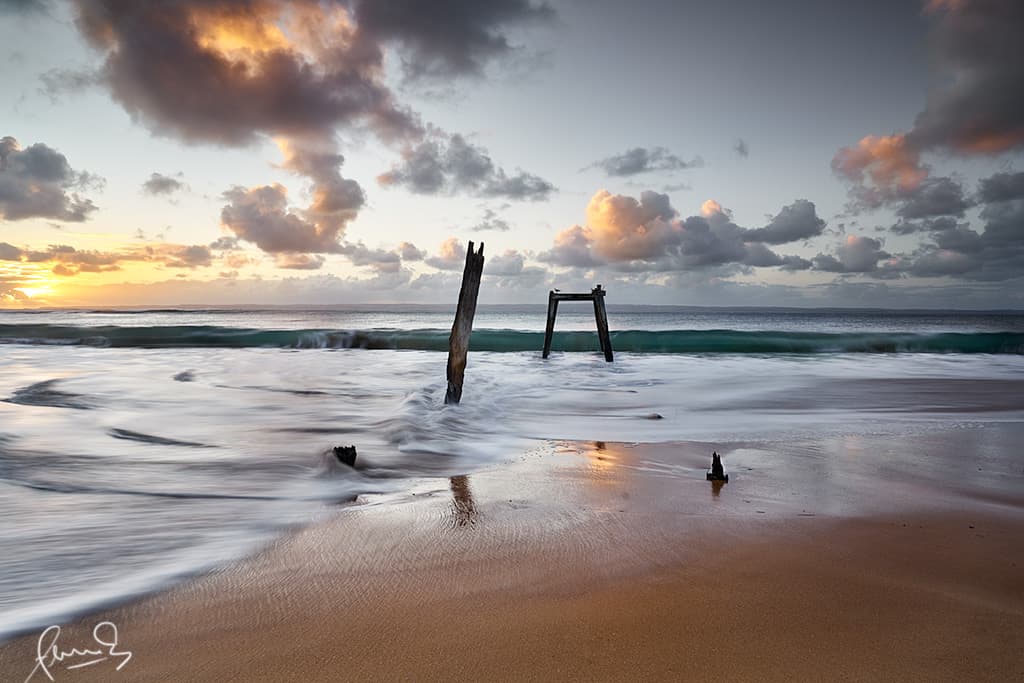
Counting the waves…
Counting the waves…

The moment you step onto Myall Beach, humidity wraps around you like a second skin. Behind the strand, the Daintree Rainforest rises in a dense wall of ferns, palms, and vines—trees that have stood for 135 million years. Ahead, the Coral Sea rolls in with consistent sets, its foam leaving trails of broken coral and seed pods on the sand. The beach curves gently north toward Cape Tribulation, a headland Captain Cook named after his ship struck reef here in 1770. You'll notice the warning signs immediately: box jellyfish from November through May, saltwater crocodiles year-round. Locals swim anyway, carefully, scanning the shallows before wading in. Most visitors come for the scenery, not the swim—this is a place to walk barefoot at low tide, when the sand firms up and tide pools reveal blue soldier crabs scuttling sideways in battalions. The only sounds here are organic: waves, wind through pandanus leaves, the guttural boom of a cassowary if you're lucky. There's no kiosk, no lifeguard tower, no lineup of umbrellas. Just a single boardwalk threading through the rainforest and a carpark shaded by massive trees. This is what Queensland's coast looked like before development—raw, layered, gloriously untamed.
Places, rentals, tours and events within walking and driving distance of Myall Beach.
Photos
Swimming at Myall Beach requires caution year-round. Marine stingers (box jellyfish and irukandji) are present in tropical waters from November to May, making swimming dangerous during these months. Crocodiles also inhabit the area, as the beach is where rainforest meets reef. There are no stinger nets or lifeguards on duty. If you do enter the water during stinger season, wear a full-body stinger suit. Always observe warning signs, never swim alone, and stay close to shore. The beach is better suited for walking and wildlife watching than swimming.
The dry season from May to October offers the best conditions for visiting Myall Beach, with lower humidity, minimal rainfall, and reduced marine stinger risk. Temperatures range from 17-26°C, making it comfortable for beach walks and rainforest exploration. The wet season (November-April) brings heavy rainfall, high humidity, and dangerous marine stingers, though the landscape is lush and green. Wildlife viewing, particularly cassowaries, is possible year-round. June to August sees the most visitors, so consider visiting during shoulder months (May or September-October) for fewer crowds.
Myall Beach is accessed via Cape Tribulation Road, approximately 30 minutes north of the Daintree River ferry crossing and 2 hours north of Port Douglas. The road is sealed but winding through rainforest. Free parking is available at the Myall Beach car park at the end of Myall Beach Road. A short walking track leads from the car park through coastal rainforest to the beach. The road is suitable for 2WD vehicles in dry conditions, though 4WD is recommended during wet season due to potential flooding and road closures.
Cape Tribulation village, about 5 minutes' drive from Myall Beach, offers several dining options including cafés, restaurants, and the general store with basic supplies. Accommodation ranges from camping grounds and budget hostels to eco-lodges and rainforest resorts, most within 10 minutes of the beach. Facilities at Myall Beach itself are minimal—there are no shops, cafés, or facilities directly on the beach. The nearest fuel is at Cow Bay, 25km south. It's advisable to bring water, snacks, and supplies, especially if planning extended beach time or rainforest walks.
Myall Beach is one of the best locations in Australia to spot endangered cassowaries in their natural habitat, as the rainforest meets the beach here. These large, flightless birds are most active during early morning and late afternoon. While sightings aren't guaranteed, the area's dense rainforest provides ideal cassowary habitat. If you encounter one, maintain at least 5 meters distance, never feed them, and move away slowly—they can be dangerous if threatened. The beach's walking tracks through coastal forest also increase your chances of spotting these remarkable birds.