Counting the waves…
Counting the waves…

The sand beneath your feet shifts from bone-white to amber as you trace the shoreline near the Cathedrals, where wind and tide have carved the island's silica cliffs into fluted columns that catch the morning light. This stretch of K'gari—once Fraser Island—sits within walking distance of the main resort precinct, yet the beach unfolds in relative solitude, framed by she-oaks that lean landward and dunes stippled with coastal banksia. The coloured sands themselves tell a 700,000-year story: iron oxides stain the cliff face in bands of terracotta, burnt sienna, and pale gold, each layer a chapter in the island's slow accumulation. You can stand at the base and run your fingers along the stratification, feeling the cool, compressed grains that have withstood cyclones and king tides. The water here is calm enough for a morning float, the waves breaking gently over sandbars that shift with the lunar cycle. Beyond the visual drama, this is K'gari at its most accessible—no four-wheel-drive creek crossings required, no bone-rattling inland tracks. You simply follow the beach from the accommodation zone, passing the occasional walker or couple sharing a thermos at sunrise. The forest presses close, and if you linger past midday, you might spot a white-bellied sea eagle riding the thermals above the headland.
Places, rentals, tours and events within walking and driving distance of Cathedrals Beach.
Photos
Swimming at Cathedrals Beach requires caution due to strong currents, unpredictable tides, and the presence of sharks and marine stingers. K'gari's ocean beaches generally lack lifeguard patrols and protective nets. Most visitors prefer to wade in shallow water or enjoy the beach scenery rather than swimming. The freshwater lakes and streams on K'gari offer safer swimming alternatives. Always check current conditions, never swim alone, and stay between the red and yellow flags if lifeguards are present during peak seasons.
Cathedrals Beach can be visited year-round, with each season offering distinct experiences. April to October (dry season) provides milder temperatures, less humidity, and minimal rainfall, making it ideal for beach exploration and photography. November to March brings warmer weather but higher humidity and occasional tropical storms. Wildlife viewing is excellent during winter months when humpback whales migrate along the coast. Regardless of season, mornings typically offer calmer conditions and better lighting for viewing the colored sands that characterize this area.
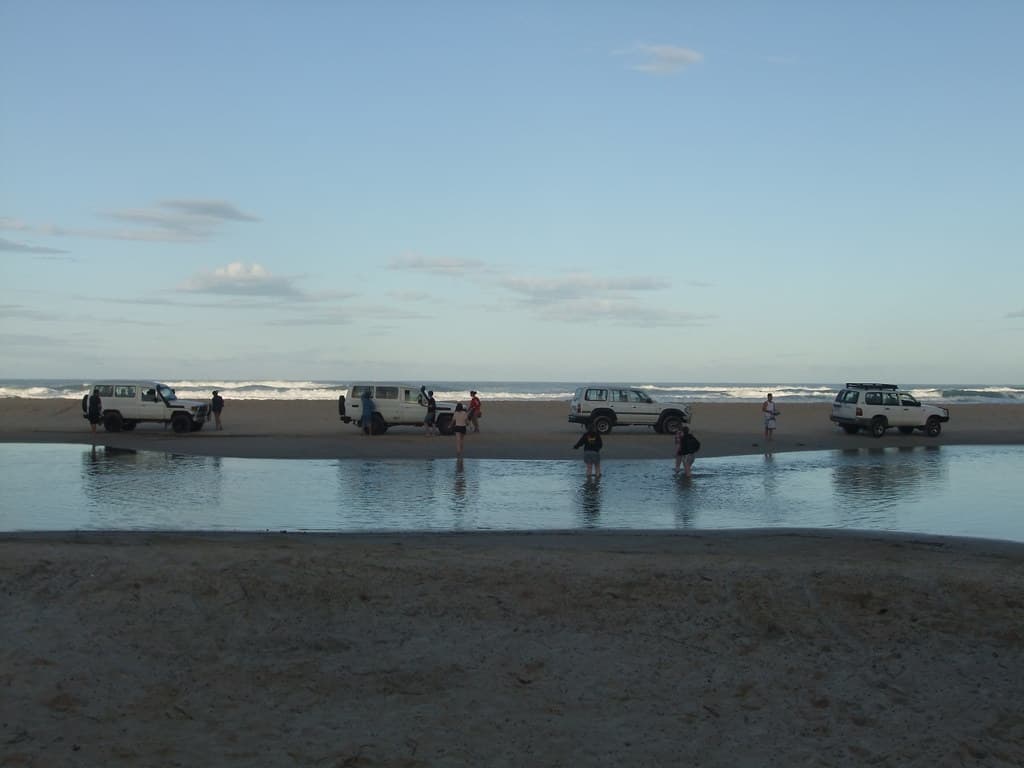
Cathedrals Beach is accessible by 4WD vehicle only, as all K'gari roads are unsealed sand tracks. Visitors must take the vehicle barge from either River Heads or Inskip Point on the mainland. A vehicle permit is required for K'gari access. Beach driving regulations apply—stay below the high-tide line and watch for soft sand. Parking is informal along designated beach access points. Most visitors stay at nearby Eurong or Happy Valley, using these as bases to explore Cathedrals Beach and surrounding areas by 4WD.
The Eurong Beach Resort, located near Cathedrals Beach and the colored sands, offers accommodation, a restaurant, general store, and fuel supplies. Happy Valley also provides camping facilities, a small shop, and basic amenities. Many visitors stay at campgrounds requiring permits through Queensland Parks and Wildlife Service. Facilities are limited island-wide, so bringing supplies from the mainland is recommended. The general stores stock essentials but have limited fresh produce. Several tour operators offer guided stays with meals included for those preferring organized experiences.
The colored sands near Cathedrals Beach, also known as The Pinnacles or Rainbow Sands, are striking cliff formations displaying over 70 natural colors ranging from cream and yellow to red, brown, and ochre. These ancient sand formations were created through mineral leaching over thousands of years. The vibrant cliffs rise from the beach, creating dramatic photographic opportunities, especially during golden hour. A short walk from the Eurong area provides viewing access. The sands' colors intensify after rain when the surface is wet, making them particularly spectacular.