Counting the wavesβ¦

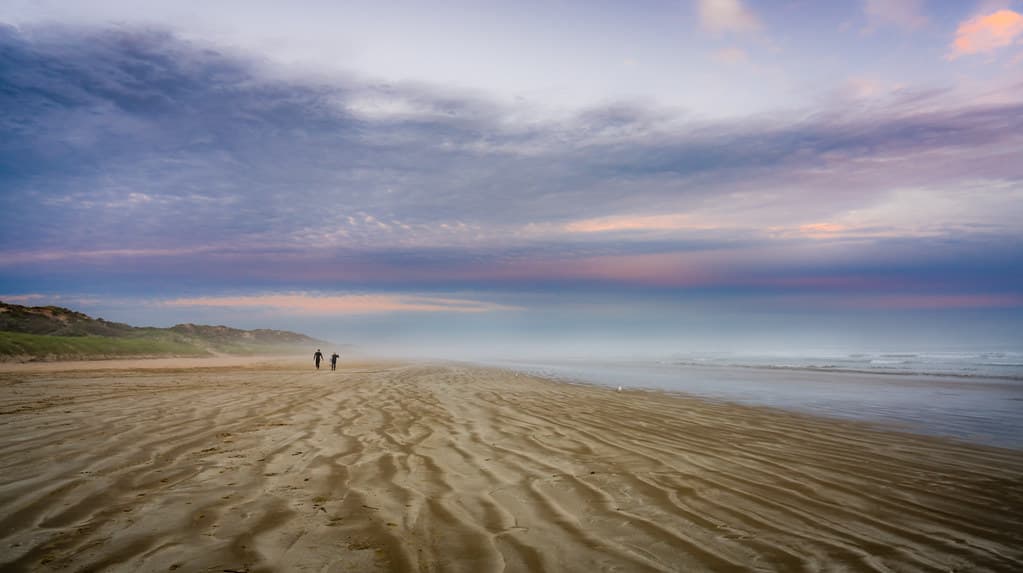
Stand at the water's edge and you're balancing on one of Australia's most volatile meeting points: the Murray River, after draining half a continent, squeezes through a narrow mouth to collide with the Southern Ocean. The resulting dynamics shape Goolwa Beach into a textured playground of sandbars, channels, and rips that shift with each tide. Surfers know this unpredictability wellβthe beach breaks can serve up hollow lefts one morning and wind-chopped mush by noon. The sand itself is firm and pale, wide enough at low tide to accommodate a convoy of four-wheel-drives heading toward the Murray Mouth. Gulls work the foam line, stabbing for pipis while kite surfers harness the relentless westerlies that funnel down the river valley. The backdrop is all scrubby dunes and the skeletal silhouettes of she-oaks bending inland, their branches pruned by salt and wind. Beyond the surf, the beach carries historical weight: this is the tail end of the Murray-Darling system, a river network that has sustained Indigenous Ngarrindjeri communities for millennia. The Mouth itself is a engineering flashpoint, dredged continuously to prevent siltation. Walk east and you'll reach the rock groynes near Goolwa Barrage; walk west and the strand unfurls toward the Coorong's lagoons, where pelicans glide over water the colour of tarnished silver.
Places, rentals, tours and events within walking and driving distance of Goolwa Beach.
Photos
Goolwa Beach is situated near the Murray River mouth and features ocean surf conditions that can be challenging. The beach is popular with experienced surfers but swimming conditions vary significantly with tides, currents, and river flow. Strong rips and currents can occur, particularly near the river entrance. There's no patrolled swimming area with lifeguards, so visitors should exercise caution. Check local conditions before entering the water and always swim with others. Families with young children may prefer calmer nearby beaches.
Goolwa Beach is accessible year-round, with each season offering different experiences. Summer (December-February) brings warm weather ideal for beach activities, though it can be crowded. Autumn and spring offer mild temperatures and good surf conditions with fewer visitors. Winter provides dramatic coastal scenery and whale watching opportunities offshore (June-September). Surfers find consistent waves throughout the year. The beach faces south, so it can be exposed to strong winds, particularly in afternoon sea breezes during summer months.
Goolwa Beach is located approximately 85 kilometers south of Adelaide, about a 90-minute drive via the South Eastern Freeway and Victor Harbor Road. From Goolwa township, follow Barrage Road south toward the Murray Mouth. There's a car park at the beach with direct access to the sand. The beach is also accessible via a scenic walking trail along the Coorong. Public transport options are limited; driving is the most practical option. The road is sealed and suitable for regular vehicles.
While the beach itself has limited facilities, Goolwa township (about 5 kilometers away) offers numerous cafes, restaurants, pubs, and accommodation options including hotels, motels, holiday parks, and vacation rentals. The town has supermarkets and shops for supplies. At the beach, you'll find basic facilities like toilets but no food vendors. Pack your own refreshments or plan to return to town for meals. Several beachfront and river-view accommodations are available in Goolwa, providing easy access to the beach.
Yes, Goolwa Beach sits directly adjacent to the Murray River mouth, where Australia's longest river system meets the ocean. This unique geographical feature creates distinctive coastal scenery and is a significant landmark. The river mouth's position can shift due to sand movement and water flows. The nearby barrages control water flow from the Murray. This location offers excellent opportunities for photography, birdwatching, and observing the dynamic interaction between river and ocean environments, making it particularly special among South Australian beaches.