Counting the waves…
Counting the waves…

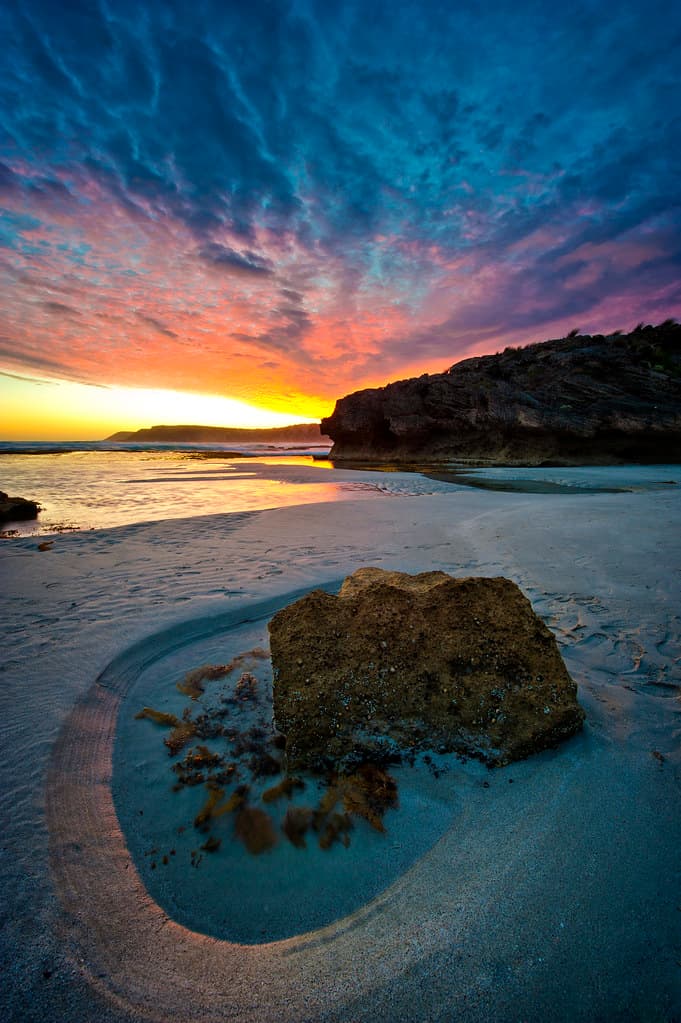
The gravel track from South Coast Road deteriorates into sand ruts before depositing you at a car park ringed by weathered eucalypts. Step over the low dunes and the Southern Ocean announces itself: swells that have traveled unbroken from Antarctica pile onto the shore in sets that shake the ground beneath your feet. The sand is coarse and flecked with shells, the color of raw honey in afternoon light. Surfers shoulder their boards down to the southern end where a bombie breaks on the reef, while the rest of the beach stretches north in a sweep of uninterrupted sand. Salt spray mists the air. Banksias lean inland, sculpted by prevailing westerlies. Between sets, the hiss of retreating foam and the cry of Pacific gulls are the only soundtrack. This is Kangaroo Island stripped to its essentials—no lifeguards, no kiosks, no mobile signal. Bring everything you need in a cooler. The rip currents are serious; most visitors walk rather than wade. At low tide, rock platforms emerge at the southern headland where New Zealand fur seals bask, unbothered. Stay until dusk and watch the light turn the breaking waves to hammered bronze.
Places, rentals, tours and events within walking and driving distance of Pennington Bay Beach.
Photos
Pennington Bay Beach is generally not recommended for casual swimming due to strong currents, unpredictable rips, and powerful surf conditions. The beach is unpatrolled, meaning no lifeguards are on duty. It's popular with experienced surfers who understand ocean conditions, but families and inexperienced swimmers should exercise extreme caution. Always check conditions before entering the water, never swim alone, and stay close to shore if you do venture in. The remote location means emergency services may take longer to arrive if needed.
Pennington Bay Beach can be visited year-round, with each season offering different appeal. Summer (December-February) provides warmer weather ideal for beach walks and photography, though winds can be strong. Winter months bring consistent swells that attract surfers. Spring and autumn offer milder conditions with fewer visitors. The beach faces south, so it's often windier and cooler than north-facing beaches. Early mornings typically offer calmer conditions and better wildlife viewing opportunities. Check weather forecasts before visiting, as conditions can change rapidly on Kangaroo Island.
Pennington Bay Beach is located approximately 15 kilometres south of Parndana on Kangaroo Island. Access requires a vehicle, preferably with good clearance, as you'll drive along Penneshaw-Brownlow Road and then Pennington Bay Road. The final stretch is an unsealed gravel road that can become rough, especially after rain. A small parking area is available near the beach access point. There's no public transportation to this beach, so hiring a car or joining a tour from Kingscote or Penneshaw is necessary. Allow about 30 minutes' drive from Parndana.
Pennington Bay Beach has no facilities—no toilets, showers, shops, or food outlets at the beach itself. It's essential to bring all supplies, including water, food, and sun protection. The nearest services are in Parndana, about 15 kilometres away, where you'll find a general store and limited dining options. For accommodation, Parndana offers basic lodging, while more extensive options are available in Kingscote or Penneshaw. Several farms and holiday houses in the area offer accommodation with advance booking. Always carry out all rubbish to preserve this pristine environment.
Pennington Bay Beach is excellent for wildlife watching, particularly seabirds and marine life. The beach and surrounding dunes are nesting habitat for hooded plovers, an endangered shorebird species. Seals occasionally haul out on the beach, and dolphins are sometimes spotted in the bay. The rock pools at either end of the beach host various marine creatures during low tide. Kangaroos and wallabies often graze near the beach access areas, especially around dawn and dusk. Remember to observe all wildlife from a respectful distance and never approach or feed animals.