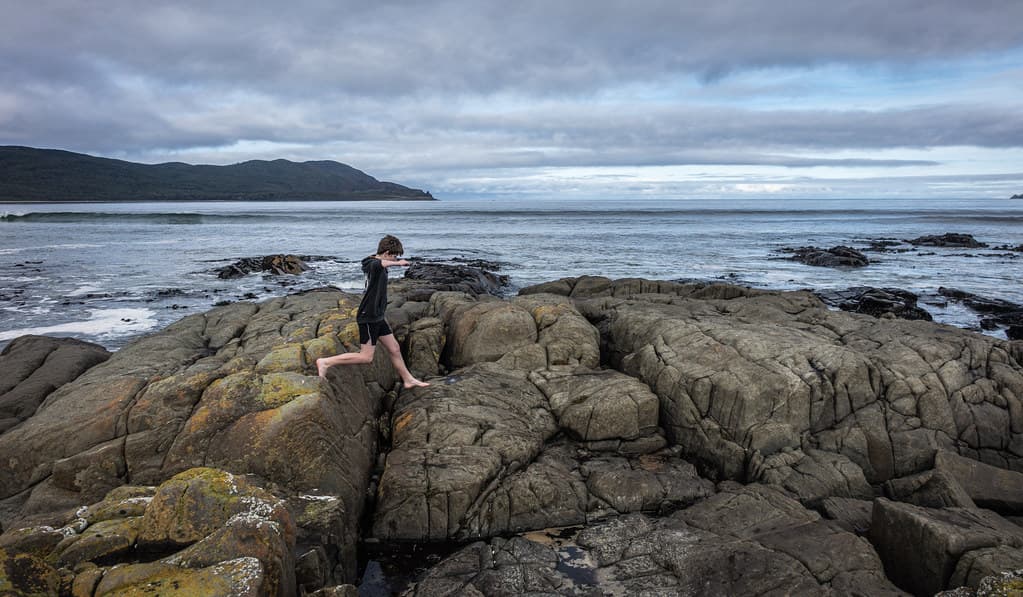
Counting the waves…
Counting the waves…

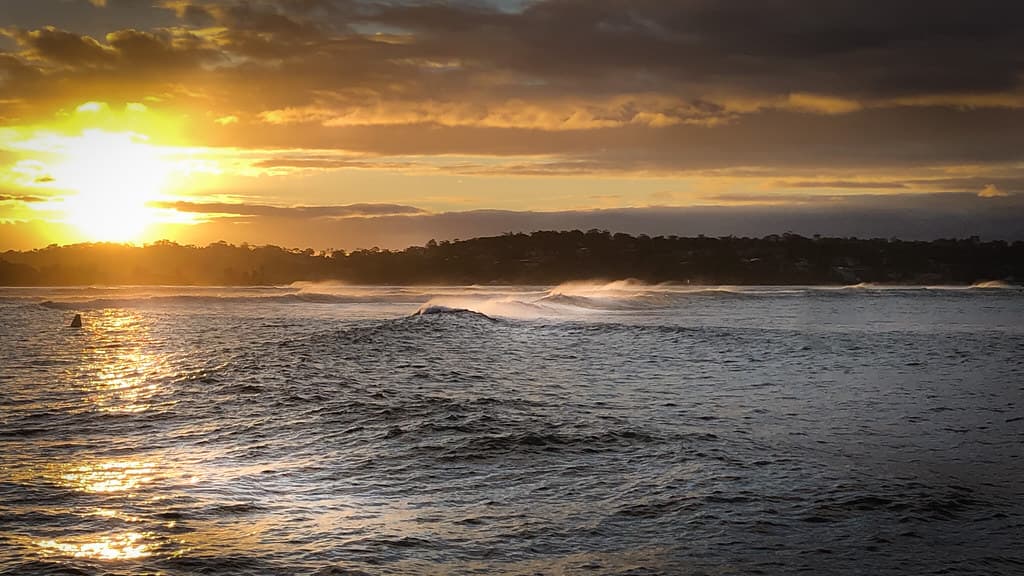
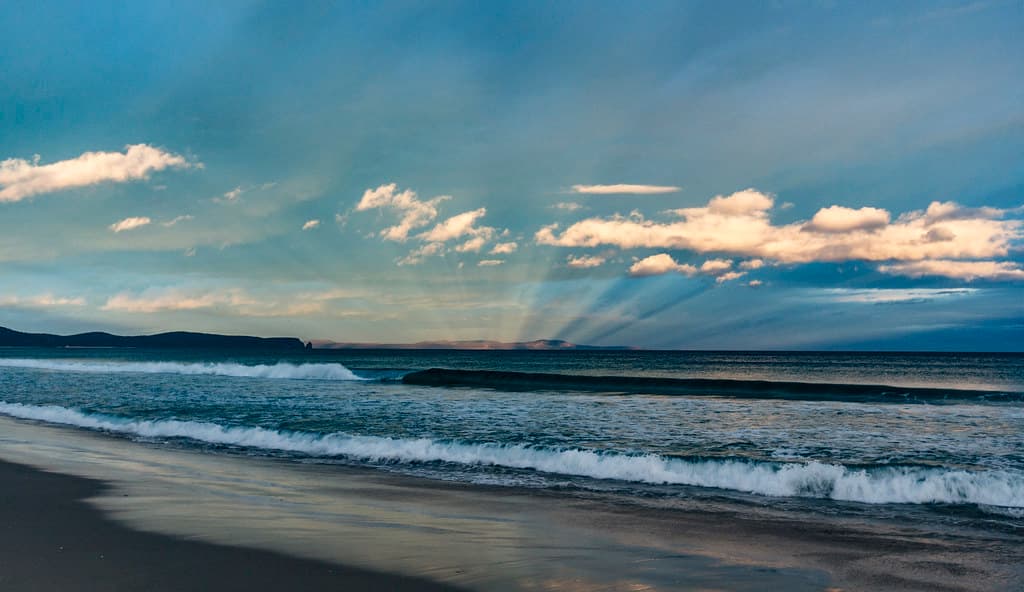
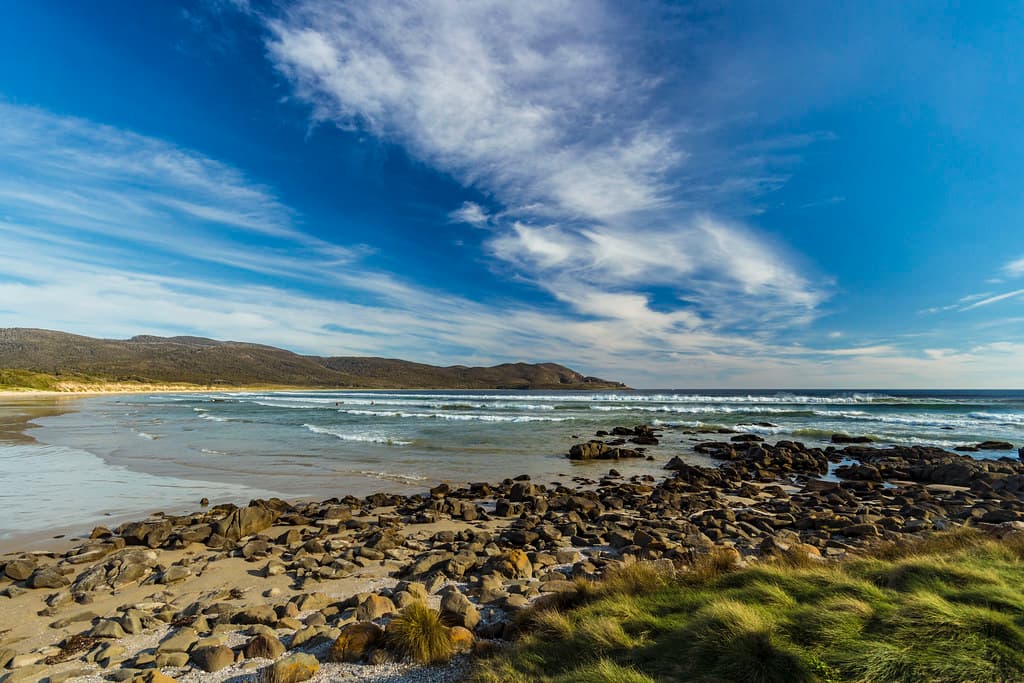
The sand beneath your feet is almost impossibly fine, squeaking as you walk the long crescent that bends toward distant headlands. Cloudy Bay earns its name not from grey skies but from the white quartz grains that shimmer in the light, creating an opalescent glow even on overcast days. The water here is bracing—this is Tasmania, after all—and the waves roll in with a rhythmic insistence born of their uninterrupted journey from Antarctica. You'll want to time your visit with the tide charts tucked in your pocket. At low tide, the beach doubles in width, revealing tidal pools where your children can crouch and peer at stranded starfish and darting translucent shrimp. The dunes behind you shelter hardy coastal grasses that hiss in the constant breeze, and if you're lucky, you might spot a white-bellied sea eagle tracing lazy circles overhead. The drive here takes you through the island's patchwork of farmland and eucalyptus forest, past the Neck—that narrow land bridge with views that make you pull over whether you planned to or not. Pack a thermos of something hot, bring layers for the wind, and prepare to have this stretch of coastline largely to yourself, even in the height of summer when the rest of Tasmania fills with tourists.
Places, rentals, tours and events within walking and driving distance of Cloudy Bay Beach.
Photos
Cloudy Bay Beach has strong currents and cold waters typical of Tasmania's southern coast, making swimming conditions challenging even for experienced swimmers. There are no lifeguards on duty, and the beach is often exposed to Southern Ocean swells. The water temperature remains cold year-round (12-16°C). Most visitors prefer paddling in the shallows or walking along the extensive white sand shoreline. Always check conditions before entering the water, never swim alone, and supervise children closely near the water's edge.
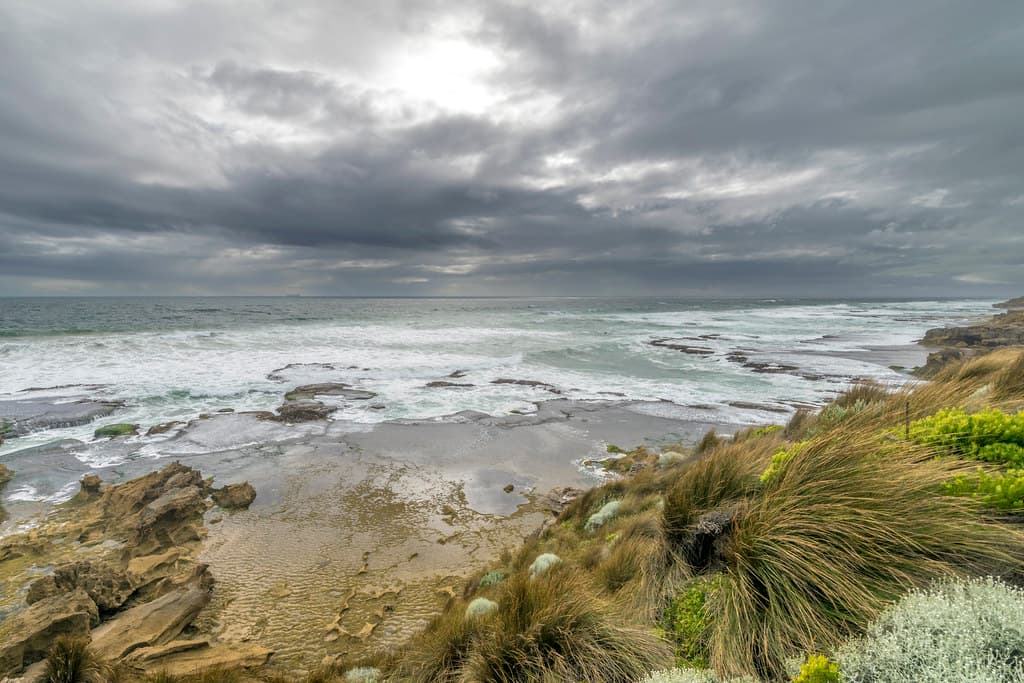
Cloudy Bay Beach is accessible year-round, with each season offering different appeal. Summer (December-February) provides the warmest weather (15-22°C) and longest daylight hours, ideal for beach walks and photography. Autumn and spring offer mild temperatures and fewer crowds. Winter can be dramatic with powerful waves and storm watching opportunities, though temperatures drop to 8-13°C. Weather on Bruny Island can change rapidly regardless of season, so bring layers and waterproof clothing. Early morning and late afternoon light provides stunning photographic conditions throughout the year.
Reaching Cloudy Bay requires taking the vehicle ferry from Kettering (30 minutes south of Hobart) to Bruny Island, then driving approximately 50km south through the island to South Bruny National Park. The final section involves a gravel road suitable for most vehicles in dry conditions. There's a designated parking area at the beach entrance with space for around 20-30 vehicles. A National Parks Pass is required for entry (daily or annual passes available). The entire journey from Hobart typically takes 2-2.5 hours including ferry wait times.
Cloudy Bay Beach has basic facilities including toilets and picnic tables at the car park, but no food vendors, cafes, or shops nearby. The beach is within South Bruny National Park, so visitors should bring all food, water, and supplies. The nearest cafes and restaurants are in Adventure Bay (approximately 20km north), including the Get Shucked oyster farm and various local eateries. Accommodation options on Bruny Island range from camping to holiday rentals and B&Bs, primarily concentrated in Adventure Bay and around the island's northern section.
While Cloudy Bay itself isn't a primary penguin viewing spot, the nearby Neck area of Bruny Island is famous for its Little Penguin colony. At dusk during breeding season (September-March), penguins return to their burrows on the sand isthmus connecting North and South Bruny. Cloudy Bay's shoreline occasionally sees penguins, along with other wildlife like dolphins, seals, and migratory shorebirds. The beach is also within the broader South Bruny National Park, which supports diverse coastal wildlife. For dedicated penguin viewing, visit The Neck at sunset.