Counting the waves…
Counting the waves…
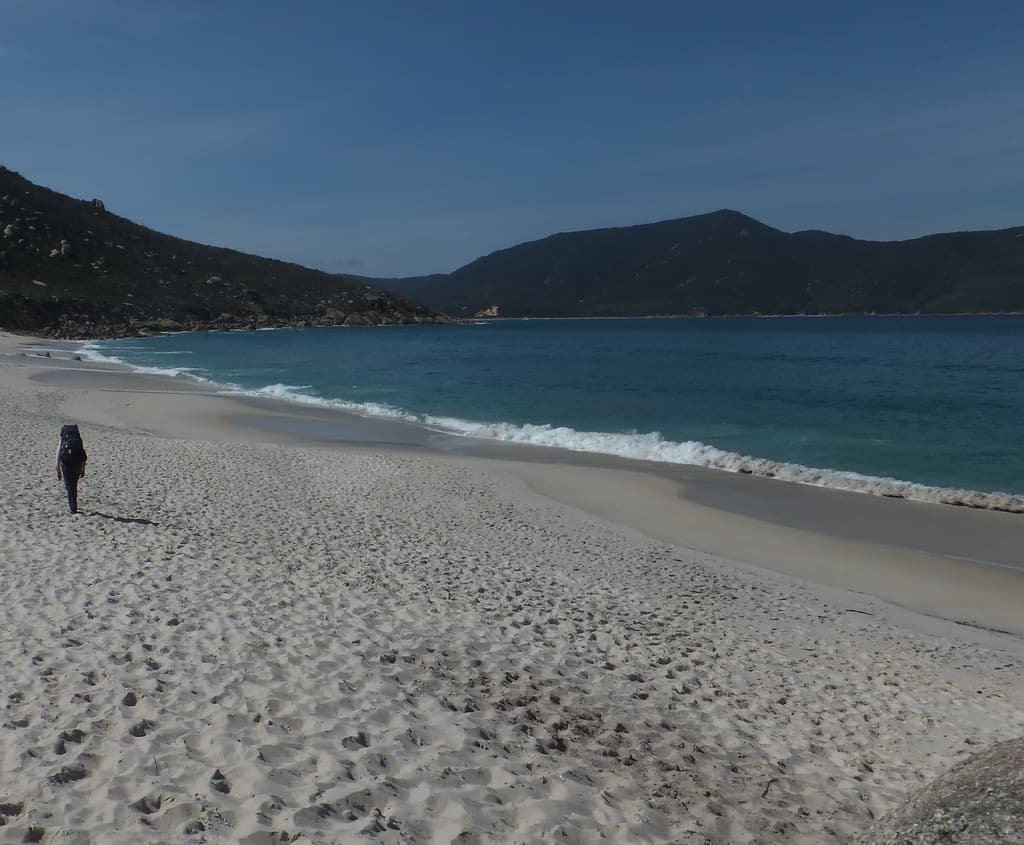
A refined fusion of water purity, environmental stability, and communal vibrancy for Whitestands Beach.
View MethodologyAnalyzed via live sensors and environmental data.
Wave height, wind, and atmospheric stability.
Live footfall and crowd balance metrics.
Community reviews and curated sentiment.
“Your feet announce every step on this stretch of compressed quartz, producing an audible squeak that rivals the calls of the crimson rosellas overhead. Tidal River's signature beach delivers powder-fine sand that stays…”
Limited recent visitor reports — live OBI telemetry is your best guide for current conditions.
You'll hear Whitestands before you see it—the chorus of children's laughter mixing with the rhythmic squeak of sand underfoot as families stake their claim on this protected crescent. The beach curves gently along Tidal River's mouth, where freshwater meets the Bass Strait in a shallow mixing zone perfect for wading toddlers and tentative swimmers. Granite boulders punctuate each end, their lichen-splashed surfaces warming in the sun as pied oystercatchers probe the rockpools.
The sand here isn't just white; it's compositionally distinct, a fine quartz powder that compresses with each step to produce that famous squeak. It clings to wet skin and towels with impressive tenacity, a small price for the softness underfoot. The shallows extend fifty meters out at low tide, creating a natural paddling pool where the water temperature climbs noticeably above the offshore chill.
 Credit: Unsplash
green trees on brown sand near body of water during daytime
 Credit: Unsplash
A reflective lake with sandy shore and forested mountains
Fifty-meter tidal paddling pool
Campground edge near beach access
Rockpools at southern point
Where it is
Whitestands Beach
Tidal River, Victoria, Australia
-39.002300°, 146.430000°
Weather
Loading…
Swell
—
Temp
Warm · Restorative
UV Index
Moderate
Wind
—
Tidal State
Last known
Max Sunlight
—
Ideal Shade
—
Jan - Dec (Peak)
Mar - Nov (Off-season)
Historical data suggests peak visibility and stable sea temperatures occur during the prime visitation window.
Near Whitestands Beach
Explore dining, stays, nightlife, and activities near Whitestands Beach in Tidal River, Australia. Every listing below is a real place linked to this beach — open a card for reviews, maps, and booking options.
Stays and lodging options near Whitestands Beach for your beach trip.
Activities, tours, and attractions near Whitestands Beach.
Select a category to load nearby places.
Unlock restaurants, luxury stays and curated maritime experiences within 2km
Swimming conditions at Whitestands Beach in Wilsons Promontory National Park are generally calmer than ocean beaches due to its sheltered location within Tidal River. However, conditions can vary with tides and weather. There are no lifeguard patrols, so swimmers should exercise caution and stay within their depth. Check with the Tidal River Visitor Centre for current conditions. The beach is suitable for families, but always supervise children closely. Be aware of changing tides and currents, particularly near the river mouth where conditions can be unpredictable.
Whitestands Beach can be enjoyed year-round, though each season offers different experiences. Summer (December-February) is most popular for swimming and beach activities, but this is peak season requiring advance bookings. Autumn and spring offer milder weather, fewer crowds, and pleasant beach conditions. Winter can be cooler but provides beautiful scenery and quieter experiences. Weather in Wilsons Promontory can change rapidly regardless of season, so pack layers. School holidays and long weekends see significantly higher visitor numbers, making weekdays and off-peak periods ideal for a more peaceful visit.
Whitestands Beach is located at Tidal River in Wilsons Promontory National Park, approximately 3 hours drive southeast of Melbourne. Access requires entering the national park (park entry fees apply). From the Tidal River settlement, the beach is a short walk from the main visitor area. Parking is available at designated car parks near Tidal River; these can fill quickly during peak periods. A Parks Victoria booking is required to visit Tidal River, whether camping or day-visiting. The final approach involves some unsealed roads within the park, suitable for most vehicles in normal conditions.
Tidal River offers the closest amenities to Whitestands Beach. A general store sells basic groceries, camping supplies, and takeaway food, though selection is limited and prices higher than mainland shops. There's no restaurant, so most visitors bring their own food. Accommodation options include Parks Victoria campgrounds and safari-style lodges at Tidal River, all requiring advance booking, especially during peak seasons. Facilities include public toilets and cold showers near the beach. The nearest towns with full services, supermarkets, and additional accommodation are Yanakie and Fish Creek, approximately 30-45 minutes drive from the park entrance.
Whitestands Beach and the surrounding Tidal River area are renowned for wildlife encounters. Kangaroos and wombats frequently graze near the beach and camping areas, particularly at dawn and dusk. The beach and estuary attract various bird species including sea eagles, parrots, and shorebirds. In coastal waters, you might spot dolphins, seals, or during migration seasons, whales in the distance. Visitors should maintain respectful distances from all wildlife, never feed animals, and secure food to avoid attracting them to campsites. The abundant wildlife is a highlight of visiting this remote beach destination.
Photos