Counting the waves…
Counting the waves…

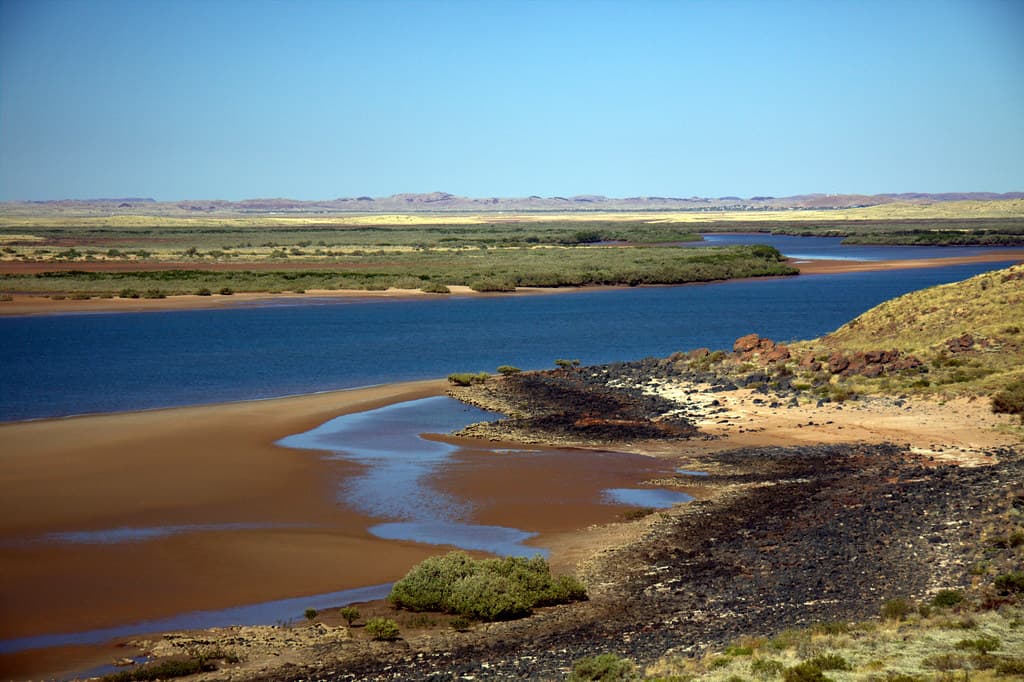
The Burrup Peninsula refuses to fit the postcard template. Red dirt tracks wind between weathered boulders etched with carvings older than the pyramids, leading you past industrial terminals and into a landscape that feels more Mars than Western Australia. When the track ends, the beach unfurls—a sweeping crescent of ochre sand backed by spinifex and saltbush, where the water shifts from jade to cobalt depending on how the light hits the reef. You'll wade into bathwater-warm shallows that stretch fifty metres before reaching your waist, perfect for children who chase dart fish between the sandbanks. The beach faces northwest, sheltered from the prevailing swells, so the water stays glassy even when the offshore rigs report three-metre seas. Tide pools trap hermit crabs and blue-spotted rays; at low tide, you can walk to exposed reef platforms where oysters cluster on volcanic rock. What makes this corner of the Pilbara essential isn't the swimming—though you'll have entire coves to yourself—it's the collision of deep time and living culture. Rock faces near the beach hold engravings of thylacines, turtles, and ancestral beings, part of the Ngarluma and Yindjibarndi heritage. You swim in the shadow of 40 millennia of continuous human presence, in water that remains largely unknown to the tour-bus circuit.
Places, rentals, tours and events within walking and driving distance of Burrup Peninsula Beach.
Photos
Swimming conditions at Burrup Peninsula Beach vary throughout the year. The water can be calm and suitable for swimming during cooler months, but always exercise caution as beaches in this remote area are unpatrolled. Be aware of strong currents, marine life including jellyfish (particularly stingers from November to May), and sharp rocks. Check local conditions before entering the water, swim during daylight hours, and never swim alone. The beach's remote nature means emergency services may take longer to reach you.
Burrup Peninsula Beach can be visited year-round, though April to September offers the most comfortable conditions with mild temperatures (20-30°C) and minimal rainfall. October to March brings intense heat (often exceeding 40°C) and high humidity, plus increased risk of tropical cyclones and jellyfish. Winter months (June-August) provide pleasant beach weather with cooler temperatures ideal for exploring. Early morning or late afternoon visits during summer help avoid extreme midday heat. The region's arid climate ensures generally sunny conditions throughout the year.
Burrup Peninsula Beach is located approximately 15-20 minutes' drive from Karratha town centre. Access requires a vehicle, as public transport doesn't service the peninsula. Take Burrup Road and follow signs toward the Burrup Peninsula; various unsealed roads lead to different beach access points. A 4WD isn't strictly necessary for main access routes, but recommended for rougher tracks. Parking is informal and limited to roadside areas near beach access points. Ensure you have sufficient fuel, water, and supplies before heading out to this remote location.
Burrup Peninsula Beach has no facilities, amenities, or food options available onsite. This is a completely undeveloped, remote beach area. Visitors must bring all supplies including water, food, sun protection, and first aid equipment. The nearest services are in Karratha, approximately 15-20 minutes away, where you'll find supermarkets, restaurants, cafes, and accommodation including hotels and caravan parks. Plan ahead and pack everything you need for a self-sufficient beach day. There are no toilets, showers, shade structures, or rubbish bins at the beach.
Yes, the Burrup Peninsula is home to one of the world's largest collections of Aboriginal rock art, with tens of thousands of petroglyphs dating back over 40,000 years. While visiting the beach, you can explore nearby rock art sites including the Deep Gorge walking trail and Murujuga National Park. These carvings depict animals, human figures, and spiritual symbols of the Yaburara and Mardudhunera peoples. Some sites are accessible via walking trails, while others require guided tours. Always respect these sacred cultural sites by not touching or climbing on rocks with engravings.