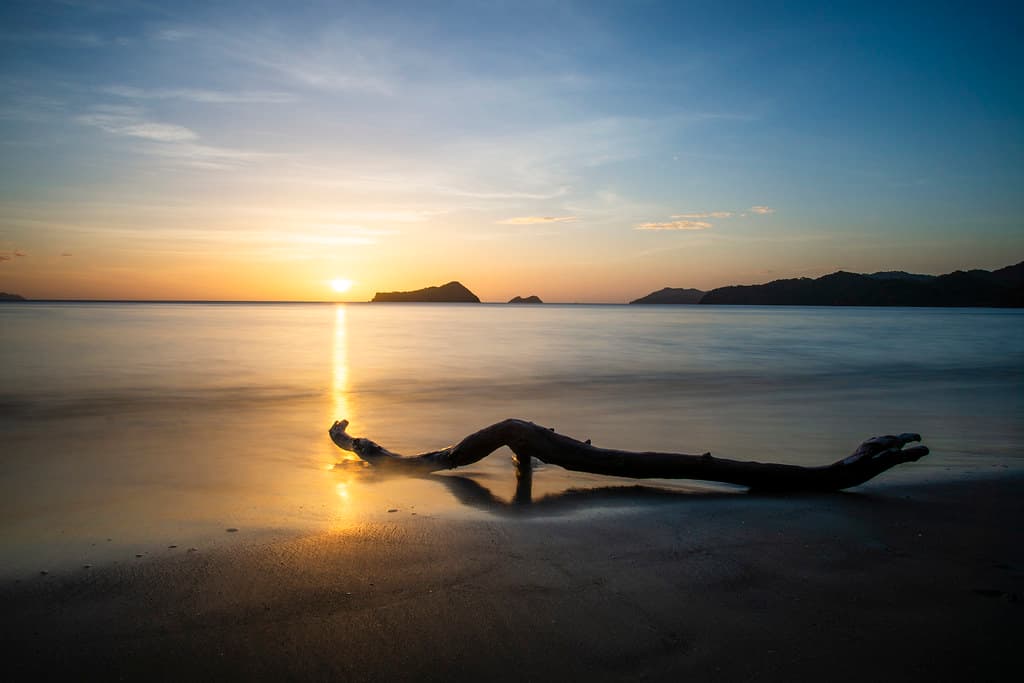
Counting the waves…
Counting the waves…
You arrive to the sound of outboard motors coughing to life, fishermen in rubber boots pushing fiberglass pangas through the shore break while pelicans wait nearby, hoping for bait scraps. The village rises behind the beach—cinderblock houses painted in fading pastels, laundry strung between posts, satellite dishes pointed skyward. This is functional coastline, where the ocean provides livelihood rather than recreation, where every boat represents a family's mortgage and groceries. The beach itself runs long and exposed, sand the color of raw umber, backed by almond trees that drop their fruit in the dry season. Dogs nap in any available shade. At the southern end, a tidal estuary cuts through the sand, its brackish water home to herons that stand motionless as sculptures, waiting to spear unwary fish. The swimming here is secondary to everything else—possible but unremarkable, the water opaque with stirred sediment. But Cuajiniquil's real value lies in what it launches you toward. From this beach, you can hire boats to the pristine, roadless shores of Santa Elena Peninsula, to dive sites where manta rays glide past volcanic pinnacles, to surf breaks so remote they remain unnamed. The village itself is the gateway, salt-weathered and authentic, a place where tourism remains incidental to the harder business of harvesting the sea.
Places, rentals, tours and events within walking and driving distance of Playa Cuajiniquil.
Photos
Playa Cuajiniquil is primarily a working beach used by local fishermen for launching boats rather than a swimming destination. Water conditions can be choppy, and boat traffic should be considered when assessing safety. The beach lacks lifeguards and tourist safety infrastructure. While locals may swim here, visitors should exercise caution and observe conditions carefully. The rocky areas and boat activity make this less ideal for swimming compared to other nearby beaches. If you do swim, stay clear of boat launch areas and be aware of currents. Ask local fishermen about current conditions before entering the water.
Visit Playa Cuajiniquil during the dry season (December-April) for the best weather and easiest road access. Early mornings offer opportunities to observe fishing activity as boats depart and return. Late afternoons provide beautiful sunset views across the water. The beach sees few tourists year-round, so crowds are not a concern. If you're using Cuajiniquil as a launch point for boat trips to remote Santa Elena Peninsula beaches, plan for dry season when seas are calmer and boat operators more readily available. Weekdays showcase authentic village life without weekend visitors.
Playa Cuajiniquil is accessed via the village of Cuajiniquil, located approximately 70km north of Liberia. From Liberia, take Route 1 north past La Cruz, then follow signs toward Cuajiniquil on gravel roads. A 4WD vehicle is recommended, particularly during rainy season when roads can become muddy and rutted. The final approach to the beach goes through the small fishing village. Road conditions can be challenging, so allow extra travel time and check locally about current conditions. The remote location means limited signage, so GPS navigation or clear directions are helpful.
Cuajiniquil is a small, authentic fishing village with very basic services. You'll find simple sodas (local restaurants) serving fresh seafood and traditional Costa Rican dishes, plus a few basic cabinas or rooms for rent. Facilities are rustic and cater primarily to locals and fishermen rather than tourists. Small shops sell basic supplies, but selection is limited. Don't expect tourist amenities, menus in English, or modern conveniences. This is ideal for travelers seeking authentic experiences, but those wanting comfort should stay in La Cruz or other developed areas and visit as a day trip.
Playa Cuajiniquil serves as an authentic working fishing village beach and the primary launch point for boat trips to remote beaches along the Santa Elena Peninsula. Unlike resort beaches, you'll experience genuine coastal Costa Rican culture and can arrange boat access to otherwise unreachable pristine coastlines within or near Santa Rosa National Park. The beach offers scenic views and excellent sunsets without commercial development. It's a jumping-off point for adventure rather than a traditional beach destination, appealing to travelers interested in exploration, fishing culture, and accessing Guanacaste's last undeveloped coastal areas.