Counting the waves…
Counting the waves…
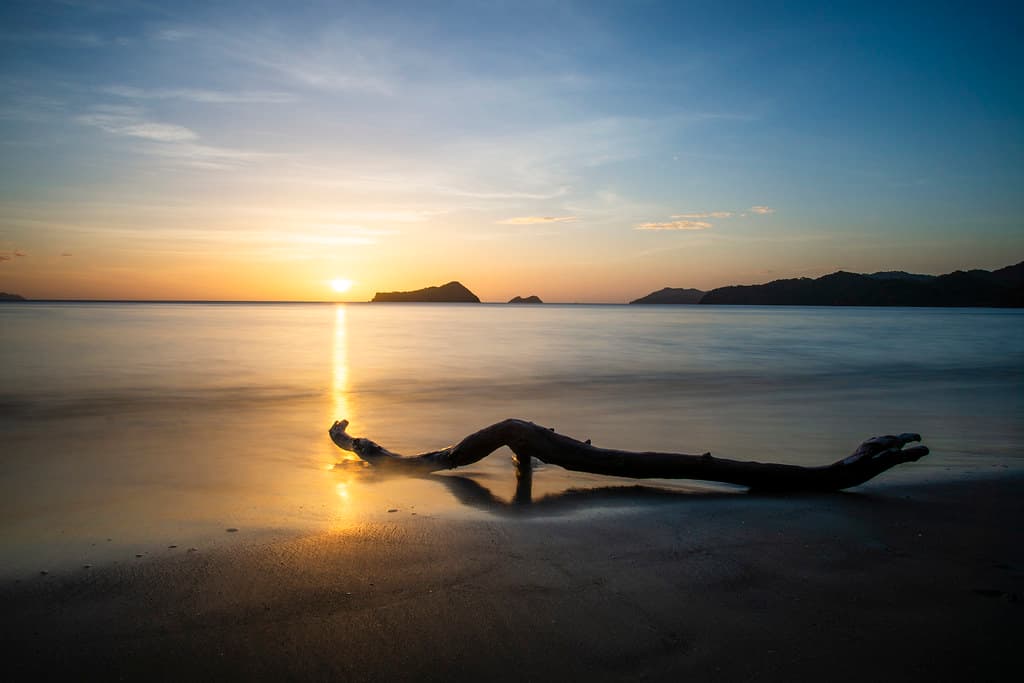
The coast fractures into dark rock just north of Cuajiniquil, where the pangas cluster like bright toys against a shore of volcanic cobble. Playa Muñecos doesn't announce itself—there's no sign, no parking lot—just a narrow track that ends where the forest meets the stone. Fishermen use the inlet to launch at high tide, dragging their boats across weed-slicked boulders when the water retreats. The beach itself is a crescent of black and gray rubble interrupted by tide pools that hold anemones and darting gobies. Waves slap rather than roar, refracted by offshore rocks into gentle surges. Frigate birds wheel overhead, and iguanas sun themselves on driftwood logs wedged between stones. The water here shifts from jade to cobalt depending on the angle of light. You reach Muñecos by boat from Cuajiniquil or by a rough overland route locals use to check their nets. Either way, you'll share the space with gulls, crabs, and the occasional fisherman coiling rope in the shade. The appeal isn't comfort—it's the raw geometry of lava meeting ocean, and the knowledge that most maps don't bother to record it.
Places, rentals, tours and events within walking and driving distance of Playa Muñecos.
Photos
Swimming at Playa Muñecos requires caution due to its rocky nature and lack of facilities or lifeguards. The beach is primarily used by local fishermen for boat access rather than as a swimming destination. Rocky surfaces and potentially sharp edges make water entry challenging and risky. Ocean conditions can be rough with currents and waves typical of this exposed coastline. The remote location means no emergency services nearby. Water shoes are essential if entering the water. The beach is better appreciated for scenery and observing local fishing activities than for swimming or water sports. If swimming, only do so during very calm conditions with extreme caution and never alone.
Visit Playa Muñecos during the dry season from December through April when access roads are most reliable and weather is predictably sunny. Mornings offer cooler temperatures and often calmer seas before afternoon heat intensifies. The area experiences significant dry-season heat with limited shade, so bring sun protection. Rainy season from May through November can make access roads muddy and challenging, especially without four-wheel drive. Early morning visits may coincide with local fishing activities, offering cultural observation opportunities. The beach sees few tourists year-round, so solitude is available any time. Ocean conditions are generally rough regardless of season. Plan visits as day trips with all necessary supplies.
Playa Muñecos is accessed from the small fishing village of Cuajiniquil on the Santa Elena Peninsula. From the Pan-American Highway, take roads toward Cuajiniquil; signage may be limited, so GPS or detailed maps are essential. The final stretches involve unpaved roads that may require four-wheel drive, especially during rainy season. Cuajiniquil itself is remote, about 90 minutes from Liberia depending on road conditions. Some visitors arrive by boat as part of coastal exploration. The beach serves local fishermen, so access points may not be obvious or well-marked. Public transportation to Cuajiniquil is extremely limited. Rental vehicles or organized tours are most practical for reaching this isolated area.
Playa Muñecos has no facilities whatsoever. Cuajiniquil, the nearest village, is a small fishing community with very limited services—perhaps basic sodas serving local food and minimal supplies, though options can be unreliable. Accommodations are essentially nonexistent in Cuajiniquil itself. Visitors typically base in La Cruz, the nearest town with basic hotels and restaurants, or travel from Liberia which has comprehensive services. Bring all necessary supplies including food, water, sun protection, and any equipment needed. The area caters to fishermen and local residents, not tourists. This is frontier territory requiring self-sufficiency and low expectations for commercial amenities. Plan as a backcountry adventure rather than a beach resort experience.
Playa Muñecos offers authentic glimpses of working coastal Costa Rica, where local fishermen launch boats and conduct daily activities relatively unchanged by tourism. The rocky beach scenery provides photographic interest different from typical sandy beaches. Its extreme remoteness and minimal visitation create genuine solitude for visitors willing to make the journey. The Santa Elena Peninsula's rugged character and proximity to Santa Rosa National Park wilderness areas give the region distinctive frontier atmosphere. For travelers interested in local culture, off-grid exploration, and places genuinely overlooked by tourism, Playa Muñecos delivers authenticity. It represents Costa Rica's working coastline rather than tourist infrastructure, offering perspective on rural coastal life and unspoiled scenery for adventurous visitors.