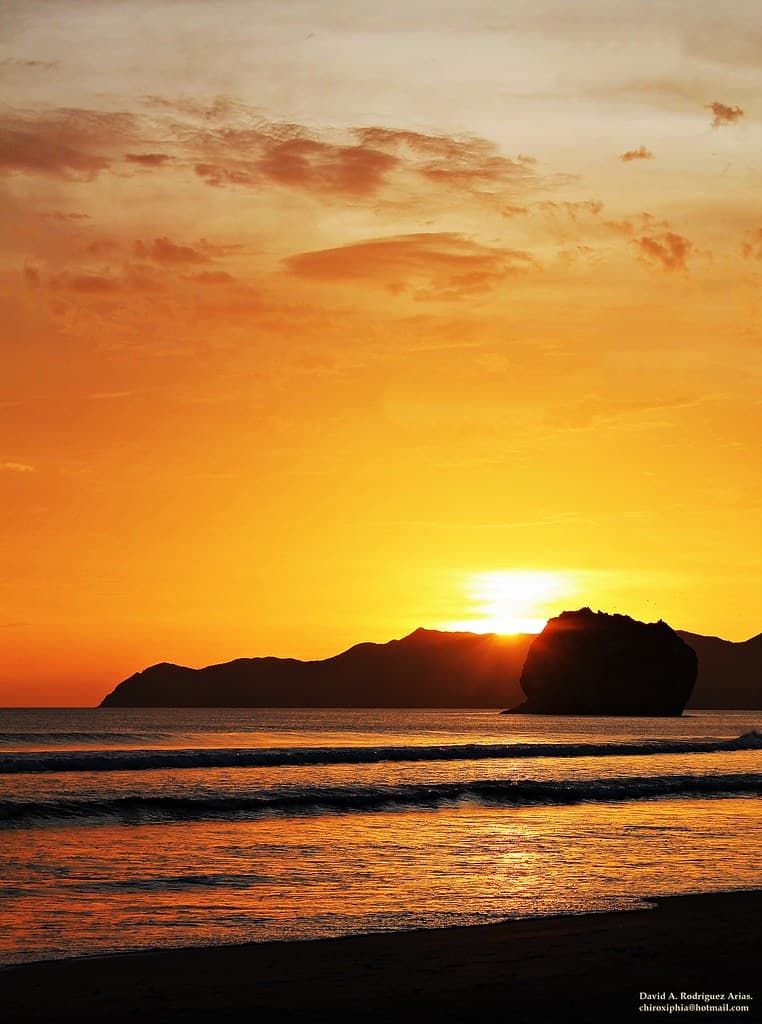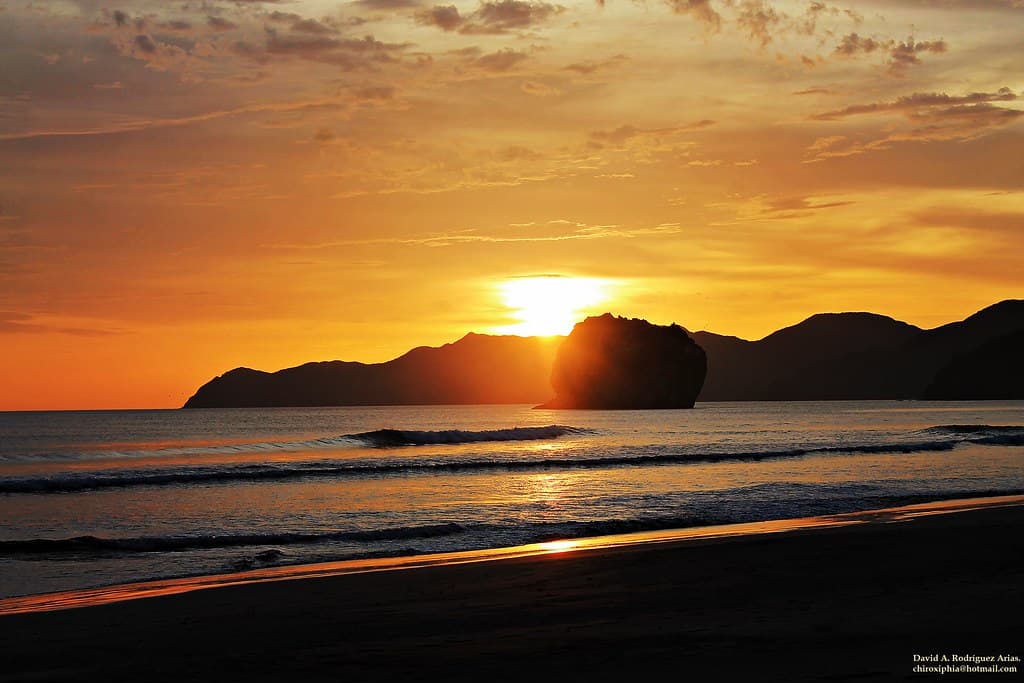
Counting the waves…
Counting the waves…

The trail from the ranger station descends through deciduous forest that crackles with drought most of the year, opening finally onto a beach that sees more turtle flippers than human footprints. Nancite curves in a gentle arc, backed by vegetation so thick it forms a wall, fronted by Pacific swells that arrive unobstructed from deep water. This is one of the world's primary arribada beaches—synchronized mass nesting events when olive ridley turtles emerge by the thousands, transforming the sand into a living, breathing organism. Outside arribada season, the beach maintains an empty grandeur. Driftwood accumulates in the backshore, sorted by size through years of wave action. The sand shows yesterday's jaguar tracks if you know where to look and arrive early enough. Frigatebirds and magnificent frigatebirds work the surf line, occasionally folding into dives that send up white plumes. The forest behind the beach harbors spider monkeys and white-faced capuchins that vocalize without the presence of humans to moderate their volume. During arribadas—concentrated between May and January—the beach becomes controlled chaos. Turtles dig nests atop previous nests, excavating and reburying each other's eggs in the frenzy to reproduce. Researchers move through the mayhem with headlamps and data sheets, tagging individuals and recording densities that approach one turtle per square meter. You watch from designated observation zones, if you've secured one of the rare research permits, understanding that your presence is tolerated only because conservation requires documentation. When the last turtle returns to the ocean and the sun rises over a beach cratered like a battlefield, you hike out carrying images that cameras can't adequately capture.
Places, rentals, tours and events within walking and driving distance of Playa Nancite.
Photos
Swimming at Playa Nancite is generally not recommended and may be restricted due to the beach's protected status as a critical sea turtle nesting site. Access to the beach is strictly controlled by Santa Rosa National Park authorities to minimize disturbance to nesting turtles, particularly during nesting seasons. Even if access is granted for research or authorized visits, activities are limited to observation and conservation work. The beach's primary purpose is wildlife protection, not recreation. Strong currents and remote location without safety services further discourage swimming. Visitors permitted to visit should prioritize conservation and follow all park regulations strictly.
Playa Nancite is famous for olive ridley turtle arribadas (mass nesting events), which typically occur during rainy season months, particularly August through November. However, public access to Playa Nancite is extremely restricted due to its high conservation value. The beach is primarily accessible to researchers, conservationists, and occasionally small authorized groups with special permits from park authorities. Access is controlled to protect nesting turtles from disturbance. If you're interested in sea turtle nesting, consider visiting other more accessible beaches in Costa Rica with conservation programs that allow responsible tourism, or inquire with Santa Rosa National Park about research volunteer opportunities.
Access to Playa Nancite is strictly controlled and requires advance permission from Santa Rosa National Park authorities. The beach is not open for casual tourism. Researchers, conservationists, and occasionally authorized educational groups may obtain permits. Access typically involves either a very challenging 12-kilometer hike through rugged terrain from the park's sector Santa Elena, or boat access from the ocean. The hike can take 4-6 hours each way through forest and requires excellent physical condition and preparation. Most visitors to the area do not have access to Playa Nancite. Contact park administration well in advance if you have legitimate research or conservation reasons for visiting.
Playa Nancite has no tourist facilities, lodging, or amenities due to its protected status within Santa Rosa National Park. The beach is maintained in its natural state for sea turtle conservation. Researchers and authorized visitors typically must be completely self-sufficient, and camping may be restricted or allowed only under specific permits. The nearest ranger stations and basic facilities are hours away by foot. Authorized overnight stays usually involve primitive camping with equipment you carry in. Most visitors to the region stay in accommodations outside the park or at campgrounds near park headquarters, nowhere near Nancite. The beach's remoteness and protection are essential to its conservation mission.
Playa Nancite is one of the most important olive ridley sea turtle nesting beaches in Costa Rica, hosting spectacular arribadas where thousands of turtles nest simultaneously. This phenomenon is rare and ecologically significant, making the beach critical for the species' survival. The beach's protected status within Santa Rosa National Park and strict access controls help ensure turtles can nest undisturbed. Scientific research conducted at Nancite has contributed significantly to understanding sea turtle biology and conservation. The beach also serves as habitat for other wildlife. Its high conservation value explains why access is so restricted—protection of this critical ecosystem takes priority over tourism.