Counting the waves…
Counting the waves…
A refined fusion of water purity, environmental stability, and communal vibrancy for Playa Blanca.
View MethodologyAnalyzed via live sensors and environmental data.
Wave height, wind, and atmospheric stability.
Live footfall and crowd balance metrics.
Community reviews and curated sentiment.
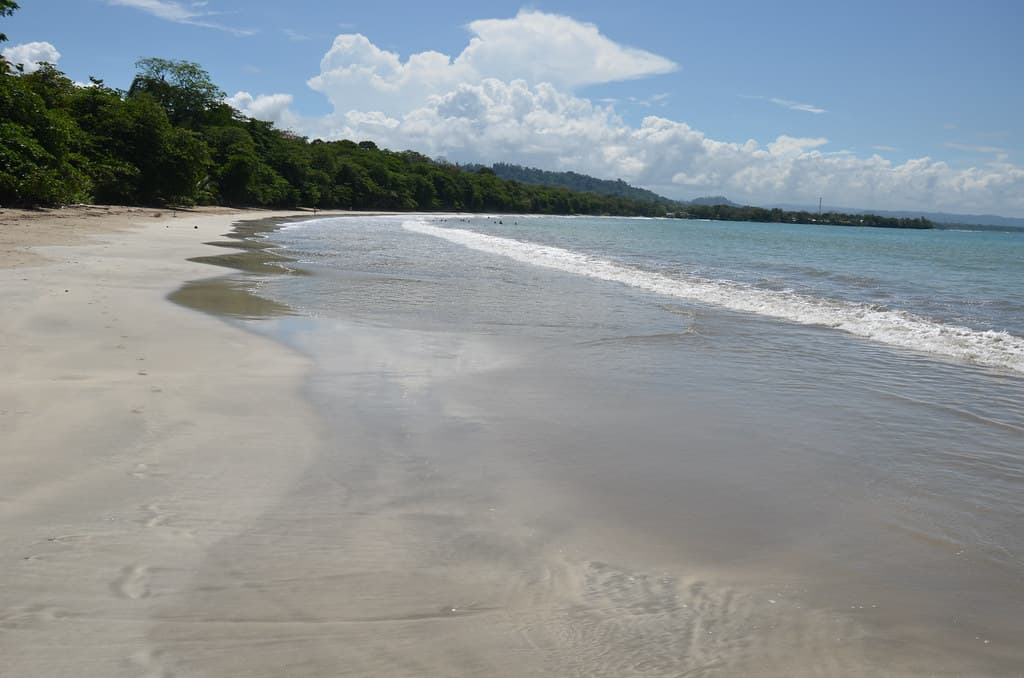
“You'll wade into bathwater shallows where sergeant majors dart between elkhorn coral branches. The beach curves for nearly two kilometers, bordered by almond trees that drop shade across powder-fine sand.”
Limited recent visitor reports — live OBI telemetry is your best guide for current conditions.
You step from jungle trail onto flour-soft sand that squeaks beneath your feet, the kind formed from millennia of coral grinding itself into the shore. Sea grape leaves rattle overhead as you scan the water—bands of turquoise deepen to cobalt where the reef begins, perhaps thirty meters out. Howler monkeys bark from the canopy behind you while brown pelicans fold their wings and plunge into the surf.
The snorkeling here rewards patience more than athletism. You float above brain coral the size of washing machines, watching parrotfish scrape algae with audible clicks. The reef runs parallel to shore, creating a natural aquarium where green sea turtles surface for breath and spiny lobsters retreat into crevices. Between February and April, the Caribbean calms to near-stillness, turning the water gin-clear.
 Credit: Unsplash
a group of people standing on top of a sandy beach
 Credit: Unsplash
People surfing and swimming at a sunny beach
Elkhorn coral thirty meters offshore
Sloths and monkeys overhead
Coatis forage through almond trees
Prime Visitation
Best Weather|Less Crowds
Where it is
Playa Blanca
Cahuita, Limón Province, Costa Rica
9.736600°, -82.820400°
Weather
Loading…
Swell
—
Temp
Warm · Restorative
UV Index
Moderate
Wind
—
Tidal State
Last known
Max Sunlight
—
Ideal Shade
—
Jan - Dec (Peak)
May - Nov (Off-season)
Best Weather|Less Crowds
Near Playa Blanca
Explore dining, stays, nightlife, and activities near Playa Blanca in Cahuita, Costa Rica. Every listing below is a real place linked to this beach — open a card for reviews, maps, and booking options.
Food, cafés, and dining close to Playa Blanca — curated from places linked to this beach.
Select a category to load nearby places.
Unlock restaurants, luxury stays and curated maritime experiences within 2km
Swimming at Playa Blanca is generally safe in calm conditions, but always assess the water before entering as there are no lifeguards. The protected reef offshore can create calmer conditions near the beach. However, avoid swimming directly over or near the coral reef to protect this fragile ecosystem and prevent injury from sharp coral. Currents can strengthen during certain seasons, particularly when waves are higher. The shallow waters near shore are suitable for wading and cooling off. Snorkeling is popular here but requires calm seas for safe conditions and good visibility.
Playa Blanca can be visited year-round, though the Caribbean coast experiences rain throughout the year with drier periods generally from February to April and September to October. For fewer crowds, visit on weekdays rather than weekends, and arrive early in the morning when the beach is most peaceful. The beach is located within Cahuita National Park, accessible via a coastal trail, so visitor numbers are naturally moderated. Mornings also offer the best conditions for snorkeling with clearer water and calmer seas before afternoon winds pick up.
To reach Playa Blanca, enter Cahuita National Park at the Kelly Creek station in Cahuita town and walk the coastal trail. The beach is approximately 1.5-2 kilometers from the entrance, taking 30-45 minutes at a leisurely pace. The flat, well-maintained trail runs through coastal forest with ocean views. The park operates on a donation basis at the Kelly Creek entrance. Alternatively, you can enter from the Puerto Vargas side, though this requires longer walking. Wear comfortable walking shoes and bring water for the hike along the scenic coastal path.
Playa Blanca is located within Cahuita National Park and has no commercial facilities, restaurants, or vendors on the beach itself. Visitors should bring their own food, water, and supplies for the day. Basic restrooms are available at the park entrance stations. The nearest restaurants and shops are in Cahuita town, about a 30-45 minute walk back along the trail. Pack out all trash to protect the park environment. Many visitors prepare a picnic to enjoy on the beach. Bring sun protection, as shade is limited on the beach itself.
Playa Blanca is renowned for its stunning white sand and position beside Cahuita's protected coral reef, creating crystal-clear turquoise waters ideal for snorkeling. The beach represents the classic Caribbean postcard image with white sand, palm trees, and brilliant blue water. Its location within the national park ensures a pristine, undeveloped setting free from commercial development. The combination of accessible snorkeling, beautiful scenery, and protected natural environment makes it highly photogenic and popular with visitors seeking an authentic Caribbean beach experience in a conservation area.
Photos