Counting the waves…
Counting the waves…
A refined fusion of water purity, environmental stability, and communal vibrancy for Playa San Francisco.
View MethodologyAnalyzed via live sensors and environmental data.
Wave height, wind, and atmospheric stability.
Live footfall and crowd balance metrics.
Community reviews and curated sentiment.
“You reach San Francisco by following the canal north from Tortuguero, past fishing canoes and clotheslines, until the village reveals its beach—a quiet stretch where families gather and the tourist trail hasn't quite…”
Limited recent visitor reports — live OBI telemetry is your best guide for current conditions.
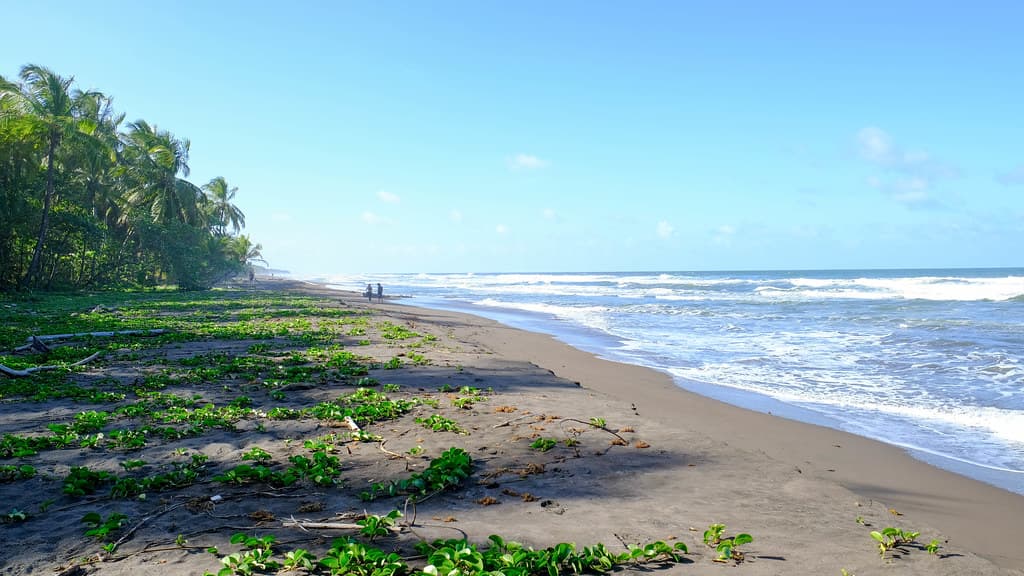
San Francisco de Tortuguero sits on the thin strip of land between canal and Caribbean, a community where houses face the water traffic—canoes paddled by hand, pangas loaded with plantains and rice sacks, the occasional tourist boat buzzing toward Barra. But walk through the village to the ocean side and you find the beach: a neighborhood shore where laundry flaps on lines strung between coconut palms, soccer goals made from driftwood anchor each end, and the sound of merengue drifts from someone's kitchen.
The sand here is the same volcanic tan that runs the length of Tortuguero, fine-grained and dark when wet. You'll see turtle tracks during nesting season—green turtles mostly, their flipper marks like paired parentheses leading up the beach. But unlike the heavily patrolled sections near Tortuguero village, here the beach belongs first to the residents: women shelling beans in the shade of sea grape trees, men mending nets, children shrieking in the shorebreak while their grandmother watches from a plastic chair.
 Credit: Unsplash
a sandy beach with waves coming in to shore
 Credit: Unsplash
A sandy beach with crashing waves below a rocky coastal cliff under blue sky
Gentle shorebreak and warm water
Rice, beans, and fresh fish
Paddle village waterways
Prime Visitation
Best Weather|Less Crowds
Where it is
Playa San Francisco
San Francisco de Tortuguero, Limón, Costa Rica
10.577500°, -83.523900°
Weather
Loading…
Swell
—
Temp
Warm · Restorative
UV Index
Moderate
Wind
—
Tidal State
Last known
Max Sunlight
—
Ideal Shade
—
Jan - Dec (Peak)
May - Nov (Off-season)
Best Weather|Less Crowds
Select a category to load nearby places.
Unlock restaurants, luxury stays and curated maritime experiences within 2km
Swimming at Playa San Francisco requires caution as this Caribbean beach experiences strong currents, large waves, and undertows typical of the Tortuguero coast. There are no lifeguards or safety services. The beach is relatively remote with limited emergency access. Local residents generally avoid swimming due to dangerous conditions. The beach is more appreciated for walks, wildlife observation, and its scenic beauty rather than swimming. If you enter the water, stay in very shallow areas, never swim alone, and be aware that conditions can change quickly. Rip currents are a serious hazard along this coastline.
The driest months are typically February through April and September through October, though rain occurs year-round on this Caribbean coast. For fewer crowds, almost any time works as this small community sees minimal tourism compared to Tortuguero village. Green sea turtle nesting season runs July through October, while leatherbacks nest February through July, making these periods special for turtle enthusiasts. Wildlife viewing in the canals and forests is excellent year-round. Consider that the wettest months, November through January and May through July, can bring heavy rainfall affecting travel comfort.
Access to San Francisco de Tortuguero is primarily by boat through the canal system, as no roads connect this area. Visitors typically travel from La Pavona or Moín by public or private boat, passing through Tortuguero village and continuing north along the canals. The journey from La Pavona takes approximately two to three hours total. Some arrive via Tortuguero village and arrange local boat transport. A few small airstrips in the region serve charter flights. Local boats may offer transport from Tortuguero village for a fee. The canal route provides scenic wildlife viewing opportunities during transit.
San Francisco de Tortuguero is a small, local community with very limited tourism infrastructure. Accommodation options are minimal, typically consisting of basic family-run guesthouses or homestays offering simple rooms and home-cooked meals. A few small sodas serve traditional Caribbean-Costa Rican food like rice and beans, fish, and plantains. Options are rustic and authentic rather than tourist-oriented. Most visitors use this area as a quieter alternative to Tortuguero village or as part of canal exploration. Bring cash as card payments are not accepted. Advance arrangements are recommended.
Playa San Francisco offers a more authentic, less touristic experience than Tortuguero village, with genuine local Caribbean culture and fewer visitors. The area provides access to similar turtle nesting beaches and canal ecosystems but in a quieter setting. It's ideal for travellers seeking to escape crowds while still experiencing the Tortuguero region's natural wonders. The canal-side location offers excellent wildlife viewing with less boat traffic. Visitors experience daily life in a traditional canal community. It's suitable for families wanting a peaceful base or those interested in community-based tourism rather than resort-style experiences.
Photos