
Counting the waves…
Counting the waves…

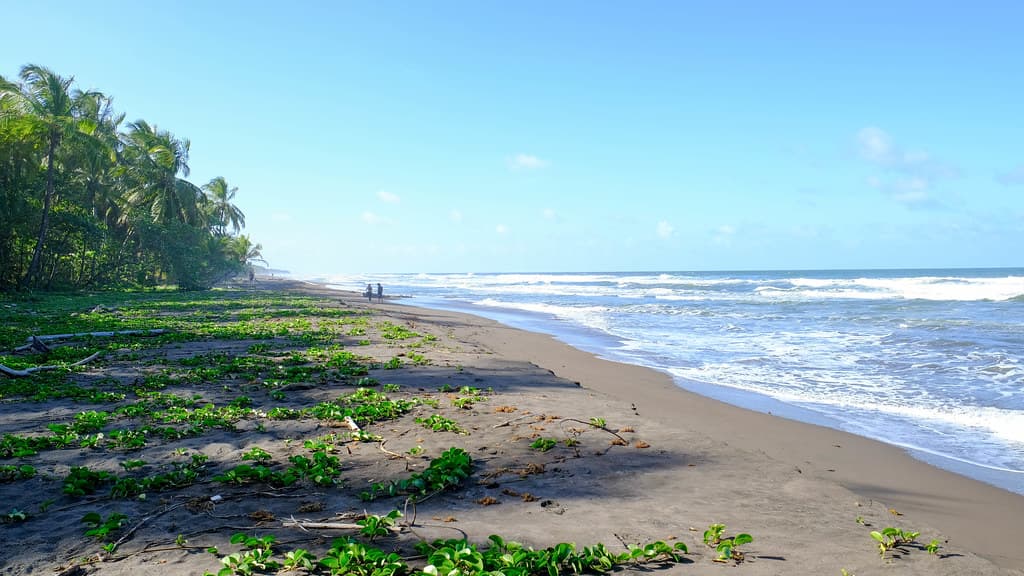
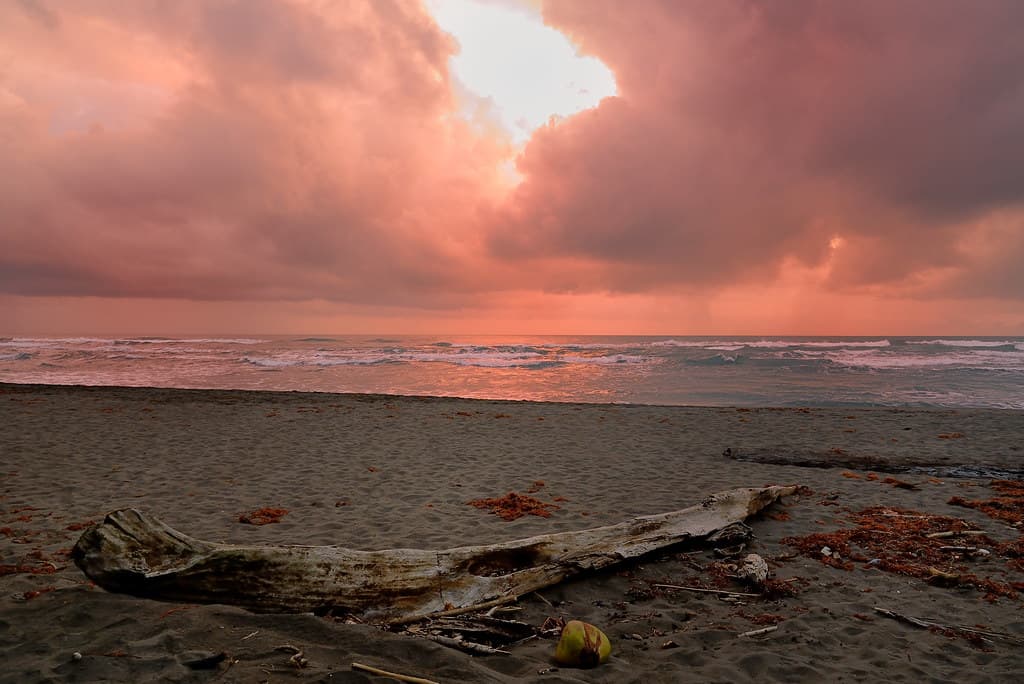
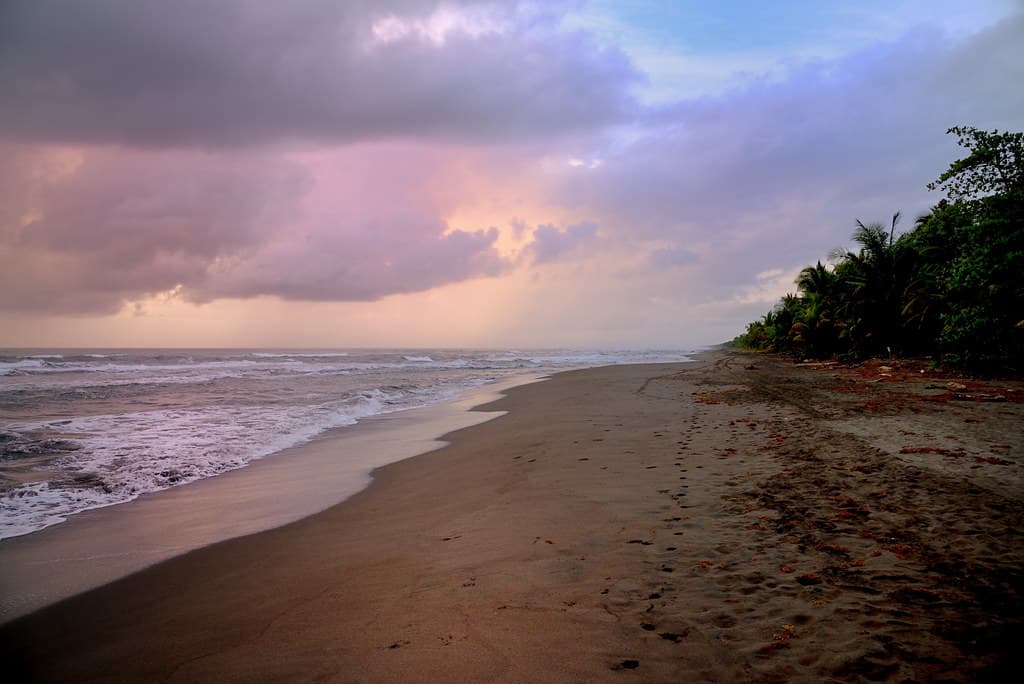
The transition is abrupt: one moment you're navigating day-trippers photographing iguanas near the village landing, the next you're alone on sand the color of gunmetal, your footprints the only marks between driftwood mountains and the surf. The beach runs north for miles, arrow-straight, backed by dense rainforest that exhales humid, green breath. Waves arrive in rhythmic sets, their foam the brightest white against charcoal sand. This northern extension sees perhaps a tenth of the village beach's traffic, because reaching it requires intention—a sweaty forty-minute walk or a boat drop-off with a prearranged pickup time. The sand is coarser here, embedded with fragments of volcanic rock and coral rubble that massage your bare feet. You'll spot crab burrows pocking the upper beach like miniature craters, and if you're quiet, basilisk lizards sprinting on hind legs into the undergrowth. Come at dawn and you'll have the sunrise entirely to yourself, tangerine light spilling across water that's been rough-chopping since the wind started at four a.m. The almendro trees drop heavy, brown pods that crack open to reveal nuts parrots covet. In the distance, the village's tin roofs catch the light—a reminder of civilization that feels suddenly, wonderfully irrelevant.
Places, rentals, tours and events within walking and driving distance of Playa Tortuguero Norte.
Photos
Swimming at Playa Tortuguero Norte is not recommended due to strong currents, rough surf, and the complete absence of lifeguard services. The Caribbean waters here are known for powerful undertows that can be hazardous regardless of swimming ability. The beach serves primarily as a nesting site for sea turtles and a scenic walking destination. Wading in ankle-deep water is generally safe, but avoid going deeper. Always supervise children closely and heed any warnings from local guides or lodge staff.
Visit during the drier months of February through April for the most pleasant weather, though rain is possible year-round in this tropical region. For fewer crowds, the northern stretch naturally sees less traffic than beaches near the main village throughout the year. Turtle nesting season from March to October draws more visitors, particularly July to September. Early morning walks offer the best chance of encountering wildlife and seeing fresh turtle tracks. Avoid October, the wettest month with heavy afternoon downpours.
Reach Tortuguero village by boat from departure points like La Pavona, Caño Blanco, or Moín, as no roads connect to Tortuguero. From the village, Playa Tortuguero Norte is accessible via walking trails heading north along the beach or through parallel forest paths. The walk from central Tortuguero takes 20-45 minutes depending on your destination along the northern stretch. Some lodges located on the northern canals offer closer access. Guided beach walks are available and recommended for navigation.
Accommodation options are concentrated in Tortuguero village to the south, with lodges ranging from basic to upscale ecolodges. Some properties along the northern canals provide closer proximity to this beach section. Most lodges offer meal plans featuring local and international cuisine. The village has several restaurants serving Caribbean-Costa Rican dishes. No facilities exist directly on the beach, so bring drinking water and snacks. Multi-day packages including meals, lodging, and guided tours are commonly offered and convenient.
Playa Tortuguero Norte offers a quieter, more secluded beach experience compared to areas near the main village access points. You'll encounter fewer tourists, making it ideal for contemplative walks, undisturbed wildlife observation, and peaceful beach time. The northern stretch maintains the same wild beauty and turtle nesting activity but with more solitude. It's perfect for visitors seeking to escape crowds while still enjoying Tortuguero's remarkable coastal ecosystem. The walk itself through coastal forest adds adventure to the experience.