Counting the waves…
Counting the waves…
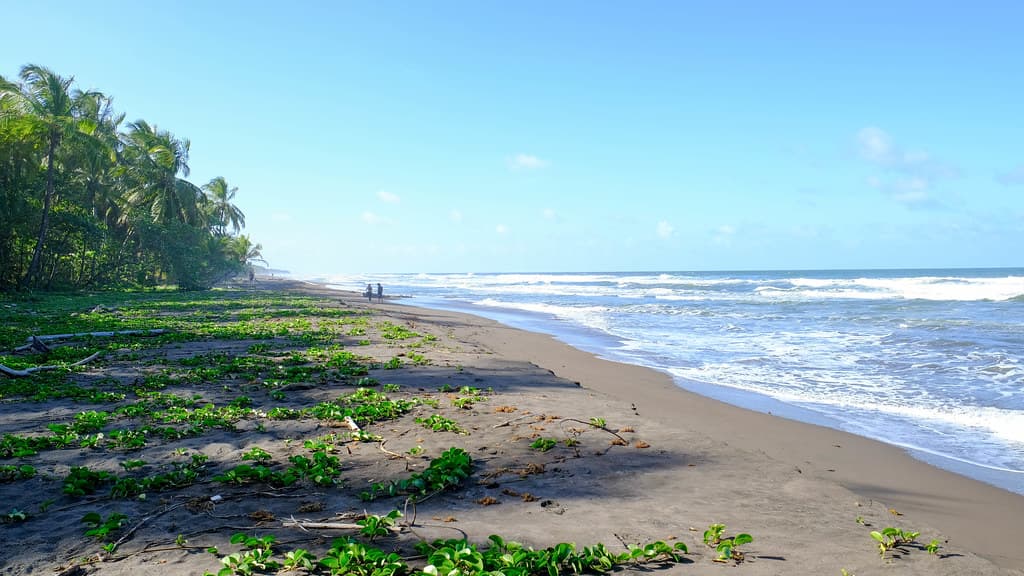
The hill is ancient volcanic remnant, its slopes dense with secondary forest that hosts toucans, poison-dart frogs, and three-toed sloths visible even from the beach below. When you stand on the sand and look up, the verticality feels improbable in this otherwise pancake-flat region—a geological punctuation mark where coastal plain meets Caribbean Sea. The beach here benefits from the hill's shelter, creating a microclimate slightly calmer than the exposed stretches north and south. Photographers arrive at dawn to capture the hill's silhouette against pastel skies, the foreground anchored by driftwood logs or turtle tracks depending on the season. The sand is quintessential Tortuguero—charcoal volcanic material flecked with shell fragments—but here it spreads wider than elsewhere, offering space that feels less hemmed by jungle. Waves collapse in measured sets, their sound echoing subtly off the hillside. You'll find fewer people here than near the village landing, though it's far from undiscovered. A trail switchbacks up Cerro Tortuguero's northern face, rewarding sweaty climbers with views across the coastal plain and out to sea. Below, the beach appears as a dark ribbon between green and blue, fishing boats reduced to white specks offshore. The descent returns you to sand level where the hill's shadow lengthens through afternoon, cooling the beach earlier than exposed sections catch.
Places, rentals, tours and events within walking and driving distance of Playa Cerro Tortuguero.
Photos
Swimming at Playa Cerro Tortuguero is generally not recommended due to strong currents, powerful waves, and the absence of lifeguards. The Caribbean coastline here experiences year-round surf and undertows that can be dangerous even for experienced swimmers. The beach is better suited for walking, wildlife observation, and photography. If you do enter the water, stay in shallow areas and never swim alone. Local guides can advise on current conditions during your visit.
For fewer crowds, visit during the shoulder seasons of May-June or November, though expect afternoon rain showers. The area receives significant rainfall year-round, but February through April are relatively drier. Turtle nesting season runs from March to October, with July to September being peak months. Early mornings offer the best light for photography against the rainforest backdrop. The beach is accessible year-round, but trails may be muddier during heavy rain periods.
Access to Playa Cerro Tortuguero typically involves boat travel to Tortuguero village, followed by a walk or guided hike. Most visitors arrive in Tortuguero via boat from Caño Blanco, La Pavona, or Moín. From the village, you can walk along beach trails northward or arrange guided tours that include this more secluded stretch. The beach lies near Cerro Tortuguero hill, which can serve as a landmark. Some lodges offer specific excursions to this quieter section.
Accommodations are available in nearby Tortuguero village, ranging from budget hostels to mid-range ecolodges. Most lodges are located along the canals rather than directly on the beach. Restaurants in the village serve Caribbean-influenced Costa Rican cuisine, including fresh seafood and traditional casados. Many lodges offer meal plans as part of package deals. The beach itself has no facilities, so bring water and snacks for beach visits. The village has small shops for basic supplies.
This beach offers exceptional photo opportunities with its dramatic rainforest-to-ocean transition, where dense jungle vegetation meets wild Caribbean shoreline. The backdrop of Cerro Tortuguero hill adds topographical interest rare along this flat coastline. Driftwood, crashing waves, and frequently overcast skies create moody, atmospheric compositions perfect for Instagram. Wildlife including seabirds, occasional monkeys, and turtle tracks during nesting season provide additional subjects. Early morning and late afternoon light enhance the jungle's green canopy against dark sand.