Counting the waves…
Counting the waves…
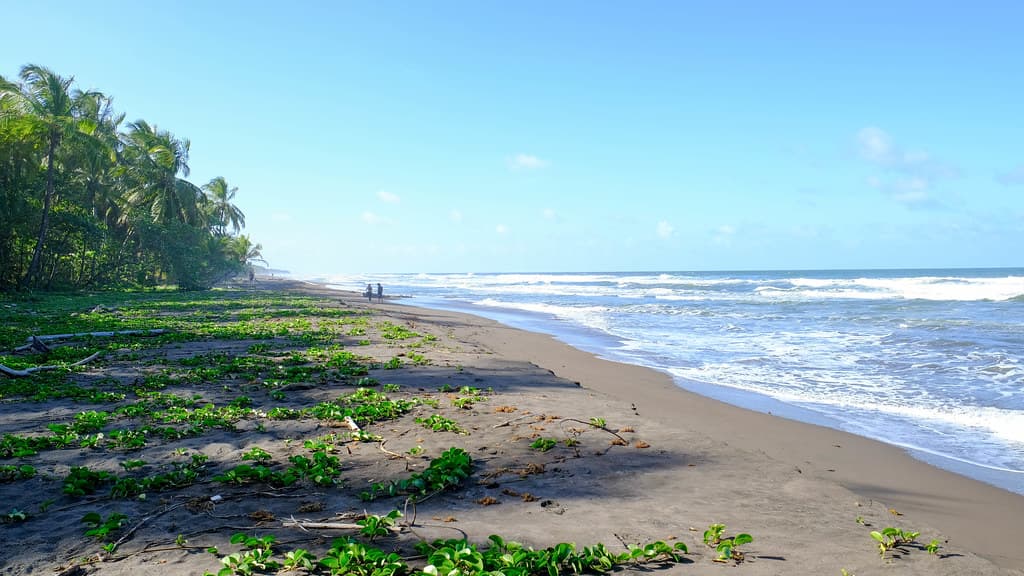
You walk onto Playa Tortuguero from the village, a ten-minute stroll down a sandy path that spills you onto a beach stretching north and south until it blurs into haze. The surf here is relentless—steep, churning, the kind that sounds like distant traffic even from a hundred meters inland. Coconut palms lean at drunken angles, and the sand is littered with the debris of the jungle: seed pods, branches, the occasional caiman skull bleached white by sun. This is not a postcard beach; it's a working landscape, shaped by tides and storms and the patient excavations of endangered reptiles. During nesting season—roughly March through October—the beach transforms after dark. Guided night walks are the only legal way to witness it: a female green or leatherback turtle hauling herself up the slope, choosing her spot with mysterious precision, then digging a flask-shaped chamber with her hind flippers. She lays a hundred eggs or more, covers them with meticulous sweeps of sand, and drags herself back to the waves. You watch in red-filtered flashlight glow, close enough to hear the rasp of her breathing, and the encounter feels both intimate and humbling. By morning the beach is empty again, the nest invisible, the ocean grinding on. But you carry the image—the turtle's barnacled shell, the wet tracks, the sense of witnessing something that predates tourism, predates the village, predates almost everything.
Places, rentals, tours and events within walking and driving distance of Playa Tortuguero.
Photos
Swimming at Playa Tortuguero is generally not recommended due to strong currents, undertows, and powerful waves. The beach has a steep drop-off and unpredictable surf conditions that can be dangerous even for strong swimmers. There are no lifeguards present. Most visitors enjoy the beach for walks, wildlife watching, and turtle nesting observations rather than swimming. If you must enter the water, stay in very shallow areas and never go alone. The village and lodges typically emphasize the canal and lagoon systems for safe water activities instead of ocean swimming.
Green sea turtle nesting season runs from July through October, with peak activity in August and September. Leatherback turtles nest from March through May. For the best overall experience combining turtles and weather, visit in July, August, or September. Guided nighttime turtle tours must be booked through authorized operators to protect nesting turtles. The village is accessible year-round, but the Caribbean coast receives significant rainfall throughout the year. Drier periods typically occur in February-April and September-October, though turtle activity varies. Book tours and accommodation well in advance during peak turtle season.
Tortuguero has no road access—you must travel by boat or small plane. Most visitors take a bus or shuttle from San José to La Pavona or Caño Blanco, then board a boat through the canal system (1-2 hours). Many lodges include round-trip transport in packages. Small planes fly from San José to Tortuguero airstrip in about 30 minutes but cost significantly more. Once in the village, everything is walkable, and the beach is a short stroll from most accommodations. The boat journey through canals offers excellent wildlife viewing and is part of the experience.
Tortuguero offers diverse lodging from budget hostels and guesthouses in the village to upscale eco-lodges in the surrounding area. Many lodges offer all-inclusive packages with meals, guided tours, and transport. The village has numerous small restaurants serving Caribbean-influenced Costa Rican cuisine, fresh seafood, and international dishes. Several sodas and cafés provide casual dining. No cars exist in Tortuguero—everything operates on foot or by boat. Book accommodation ahead during turtle season and holidays. Village options tend to be more affordable than remote lodges but offer less seclusion.
Playa Tortuguero is one of the most important green sea turtle nesting sites in the Western Hemisphere, hosting thousands of nests annually. The beach and adjacent Tortuguero National Park protect critical habitat for endangered sea turtles, along with incredible biodiversity in the canals and rainforest. Dr. Archie Carr's pioneering turtle research here in the 1950s helped establish global sea turtle conservation. The combination of accessible turtle viewing, rich wildlife, canal ecosystems, and Afro-Caribbean village culture creates a unique destination. It represents successful community-based conservation and sustainable eco-tourism in Costa Rica.