Counting the waves…
Counting the waves…
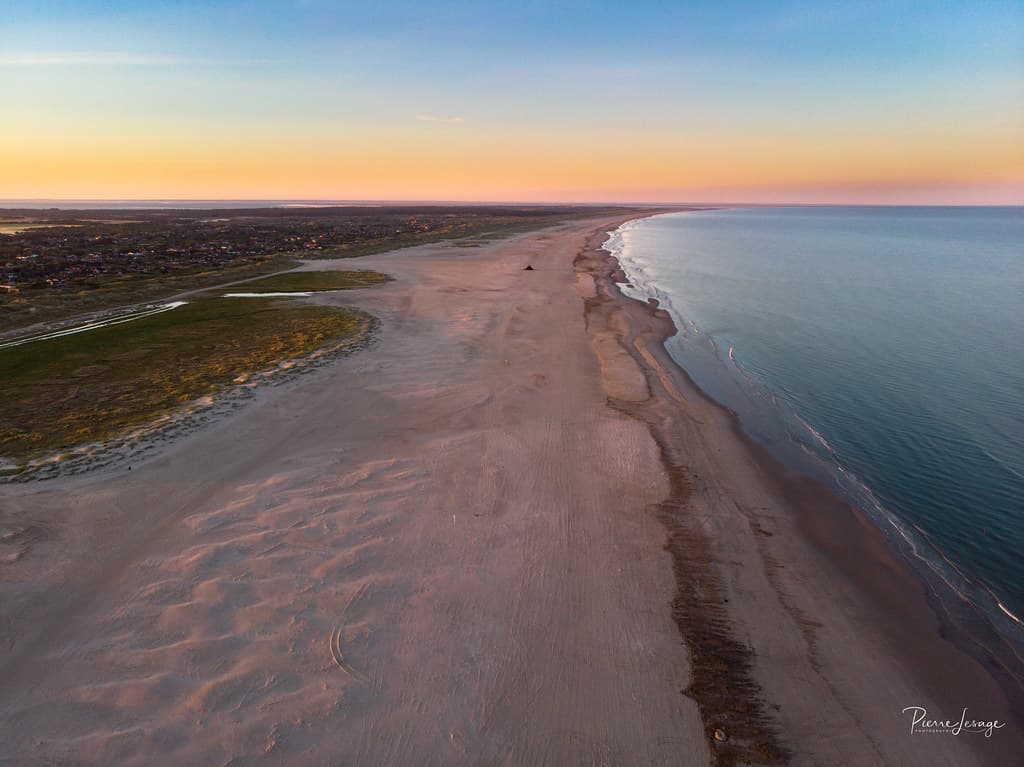
The moment your tyres meet the sand, you realize this beach operates by different rules. Cars roll confidently along the hardpack at low tide, headlights piercing the mist on grey mornings, picnic baskets strapped to roof racks. Fanø Strand stretches the entire western spine of this Danish barrier island, a sixteen-kilometre ribbon where ocean, sky, and sand blur into a single elemental palette. Marram grass shivers on the dunes behind you; ahead, the North Sea churns in shades of slate and pewter. Families stake flags beside beach wagons loaded with blankets and thermoses. Dogs—off-leash and ecstatic—tear after gulls and each other, their prints erased by the next wave. Even in July, the wind demands layers: fleece under windbreakers, scarves knotted tight. But the cold sharpens everything. You taste salt on your lips, feel fine sand sting your calves, watch the light change from pewter to gold in fifteen minutes flat. The beach empties as you walk south toward Sønderho, past beached timber and tide pools silvered with jellyfish. No vendors hawk sunscreen; no jetskis whine offshore. Just the percussion of surf, the call of oystercatchers, and the satisfying crunch of mussel shells underfoot. When the tide turns, you'll drive back north, your tracks already vanishing behind you.
Places, rentals, tours and events within walking and driving distance of Fanø Strand.
Photos
Fanø Strand is generally family-friendly, with wide sandy beaches and gradual slopes in many areas. However, North Sea conditions require caution—currents can be strong and water is cold even in summer. Supervise children closely at all times. The beach has no lifeguards, so assess conditions yourself. The wide beach allows children to play safely on the sand. The western exposure means wind and waves can pick up quickly. Choose calmer days for swimming and stay in shallow areas.
Fanø Strand is enjoyable year-round, with each season offering different experiences. June through August brings warmest weather and long daylight hours, ideal for families and sunbathing, though it's busiest then. May and September offer pleasant temperatures with fewer crowds. Spring and autumn provide excellent beachcombing and dramatic skies. Winter visits appeal to those seeking solitude and raw coastal beauty. Dogs are welcome year-round. The west-facing beach offers spectacular sunsets any season.
Reach Fanø by ferry from Esbjerg on Denmark's west coast. Ferries run regularly year-round, with increased frequency in summer—the crossing takes about 12 minutes. You can bring cars, bikes, or walk on. Once on the island, Fanø Strand is accessible from all settlements via marked paths through dunes or by driving on designated beach sections. Biking is extremely popular and practical. The entire island is small, making anywhere easily reachable from the ferry port in Nordby.
Fanø island offers diverse accommodation across its settlements—Nordby, Fanø Bad, Rindby, and Sønderho—all within easy reach of the beach. Options include hotels, guesthouses, holiday homes, and apartments. Book ahead for summer visits. Restaurants and cafés serve Danish cuisine and fresh seafood in each village. Grocery stores allow self-catering. Fanø Bad has the most dining options. Most accommodations are within 1-2 kilometers of the beach, easily accessed by bike or short walk through dunes.
Fanø Strand's fame comes from its exceptional length, width, and pristine white sand stretching along the island's entire west coast. The beach culture here is unique—cars are allowed on much of it, creating a distinctive Danish tradition. Its consistent quality, family-friendly nature, and dog-friendly policies make it beloved by locals and visitors. The combination of accessibility, natural beauty, and the charming historic villages just behind the dunes creates an iconic Danish coastal experience that has drawn visitors for generations.