Counting the waves…
Counting the waves…
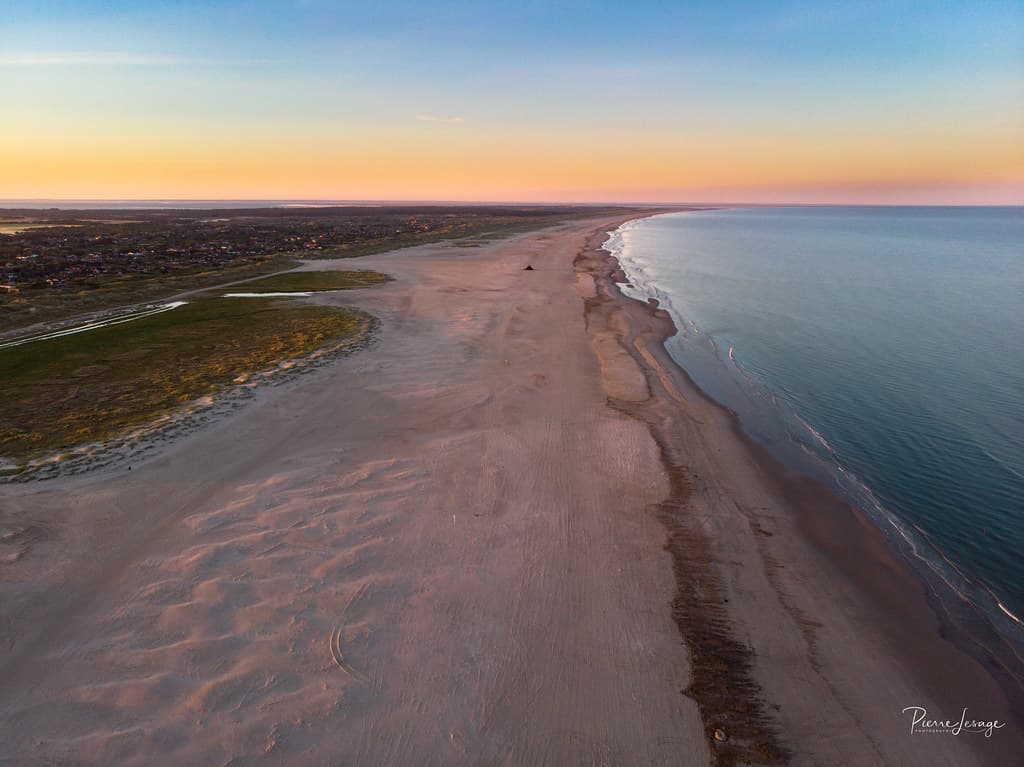
The first thing you notice at Fanø Vesterstrand is the sky. It dominates everything—a hemisphere of weather streaming in from the North Sea, gray-blue and shifting, backlit during late afternoons when the sun sinks toward the Wadden Sea tides. The beach runs for kilometers, wide enough that even on summer weekends you can walk twenty minutes and claim your own patch of Denmark. The sand is firm underfoot, pale gold darkening to wet amber where the surf crawls in, and the tideline is littered with razor shells, sea glass, and the occasional amber fragment. Families anchor themselves with colorful windbreaks—striped canvas panels stabbed into the sand to block the relentless westerlies. Children in rubber boots chase the shallow waves while parents sip coffee from thermoses, bundled in fleece even in July. The wind here isn't an inconvenience; it's the point. It flattens the dune grasses, fills kites, and carries the clean brine smell that settles into your clothes and hair. As evening arrives, the beach empties slowly. The light goes honeyed, then rose, stretching your shadow across ribbed sand. Oystercatchers work the tide pools. The horizon becomes a study in minimalism—three horizontal bands of sand, sea, and sky, each bleeding into the next. You'll drive back across the island with grit in your shoes and salt on your lips, already planning when you'll return.
Places, rentals, tours and events within walking and driving distance of Fanø Vesterstrand.
Photos
Fanø Vesterstrand requires supervision for children due to North Sea conditions including currents, tides, and waves. The beach has no permanent lifeguards, so parents must watch children constantly. Shallow tidal areas can be suitable for paddling, but depths and conditions change with tides. Water temperatures remain cool even in summer. The wide beach provides plenty of space for safe play on the sand. Many families prefer beach activities like kite-flying and sand play over extensive swimming. Always check weather and tide information before visiting.
June through August offers the best weather for Fanø Vesterstrand, with warmest temperatures and longest daylight hours, though it can still be windy and cool by Mediterranean standards. May and September provide fewer crowds while maintaining reasonable weather for beach walks and outdoor activities. The west-facing beach delivers spectacular sunsets throughout the year. Spring and autumn attract nature enthusiasts for bird migration viewing. Winter visits suit storm-watchers and those seeking dramatic coastal scenery, but require appropriate cold-weather gear for the exposed conditions.
Access Fanø Vesterstrand by taking the ferry from Esbjerg to Nordby on Fanø island; the crossing takes approximately 12 minutes and operates year-round with frequent departures. Ferries accommodate vehicles, bicycles, and foot passengers. Once on Fanø, Vesterstrand is reachable by car, bicycle, or on foot depending on your location. The island is small and flat, making cycling popular. Some sections of Vesterstrand allow beach driving in designated areas. Buses connect Nordby with other island settlements. Book vehicle ferry space in advance during peak summer season.
Fanø offers varied accommodation including hotels, guesthouses, holiday cottages, and campgrounds in Nordby, Sønderho, and Rindby. Many properties are within cycling distance of Vesterstrand. Nordby, the main town, has restaurants, cafés, and grocery stores for supplies. Seasonal beach pavilions operate during summer months along Vesterstrand. Sønderho village offers charming dining options in a historic setting. Self-catering is popular given the abundance of holiday rentals. Book accommodation well ahead for July and school holidays when Danish families traditionally visit.
Fanø Vesterstrand stands out for its remarkable big-sky scenery and the sense of space created by miles of uninterrupted sandy coastline facing the North Sea. The beach combines natural beauty with Fanø's distinctive island culture, including traditional villages and historical connections to maritime heritage. The long, straight beach provides excellent conditions for kite-flying, land-sailing, and beach walks. Unlike mainland beaches, Fanø's island setting creates a distinct sense of escape. The combination of accessible facilities and expansive natural areas makes it suitable for various visitor preferences.