Counting the waves…
Counting the waves…
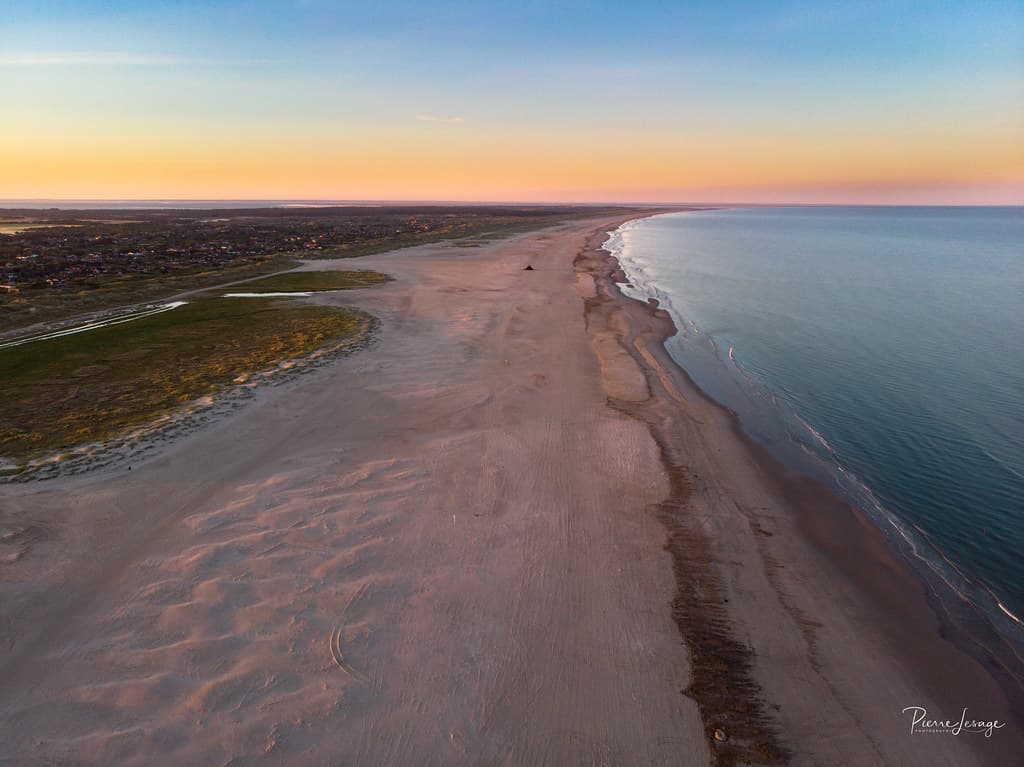
The bicycle path from Rindby village cuts through Fanø Klitplantage—a pine plantation that gives way abruptly to wild dunes tufted with marram grass. You leave your bike against a wooden fence post and walk the final hundred meters over sand that shifts beneath your feet, rising to meet the highest dune system on Fanø. From the crest, the North Sea spreads gray-green to the horizon, unbroken except for the white signatures of breaking waves. Pælebjerg Strand runs for kilometers without a single beach bar or rental kiosk. The sand is fine and blonde, compacted firm where the tide has retreated, soft and dry where it meets the dune slack. In summer, families claim small territories with windbreaks—canvas panels lashed to wooden stakes—but even in high season you can walk ten minutes south and find yourself alone with sanderlings and the rhythmic crash of shore break. The water temperature hovers around seventeen degrees Celsius in August; you will gasp when you wade in. Sunset here is a studied ritual. The light turns amber, then copper, painting the dune faces and illuminating every ripple in the tidal flats. Locals arrive on foot from cottages hidden in the plantation, thermoses in hand, and settle into the leeward side of a dune to watch the sun drop into the sea. By the time darkness arrives, the only sounds are wind in the pines and the tireless percussion of waves on sand.
Places, rentals, tours and events within walking and driving distance of Pælebjerg Strand.
Photos
Swimming at Pælebjerg Strand is possible but requires awareness of typical North Sea conditions. The beach has no lifeguards, so swimmers must assess conditions independently. Currents can be strong, especially when winds pick up, and water remains cold year-round. The west-coast exposure means waves can build quickly. The beach's less-crowded nature means fewer people around if help is needed. It's best suited for confident swimmers who respect the sea. Paddling and playing in shallows is safer than deep swimming.
Visit during weekdays and shoulder seasons for the quietest experience, as this beach is less developed than Fanø's main stretches. Late spring through early autumn offers the best weather, while summer provides warmest temperatures but more visitors. The west-facing orientation makes it exceptional for sunset viewing—evening visits are particularly rewarding. Surfers may prefer autumn and winter when North Sea swells are larger. Early mornings year-round offer solitude and beautiful light over the dune-backed landscape.
Pælebjerg Strand is located on Fanø's west coast near Fanø Klitplantage plantation. After taking the ferry from Esbjerg to Fanø, head toward the western beaches via paths through the dunes or along designated driving routes. The beach is accessible by bike or car from the island's main settlements. Look for access points near the plantation area and high dunes. Biking through the dune landscape is scenic and practical. The specific stretch is less marked than main beaches, adding to its hidden character.
Pælebjerg Strand itself is undeveloped with no facilities, reflecting its more remote character. The nearest accommodations and services are in Fanø Bad and Rindby, both within a few kilometers. These villages offer holiday homes, hotels, restaurants, and shops. The lack of development at this beach section means bringing your own supplies for the day. Most visitors base themselves in one of Fanø's villages and bike or drive to this quieter stretch for its scenic dune-backed setting and relative solitude.
Pælebjerg Strand distinguishes itself through its dramatic dune-backed setting near Fanø Klitplantage and the island's highest dunes. The landscape is more rugged and less developed than central beach areas, offering a wilder coastal experience. The combination of plantation, high dunes, and wide beach creates diverse scenery. It attracts surfers when conditions are right and sunset photographers drawn to its westward views and dramatic backdrops. The relative quiet and natural setting appeal to those seeking a more secluded Fanø beach experience.