Counting the waves…
Counting the waves…
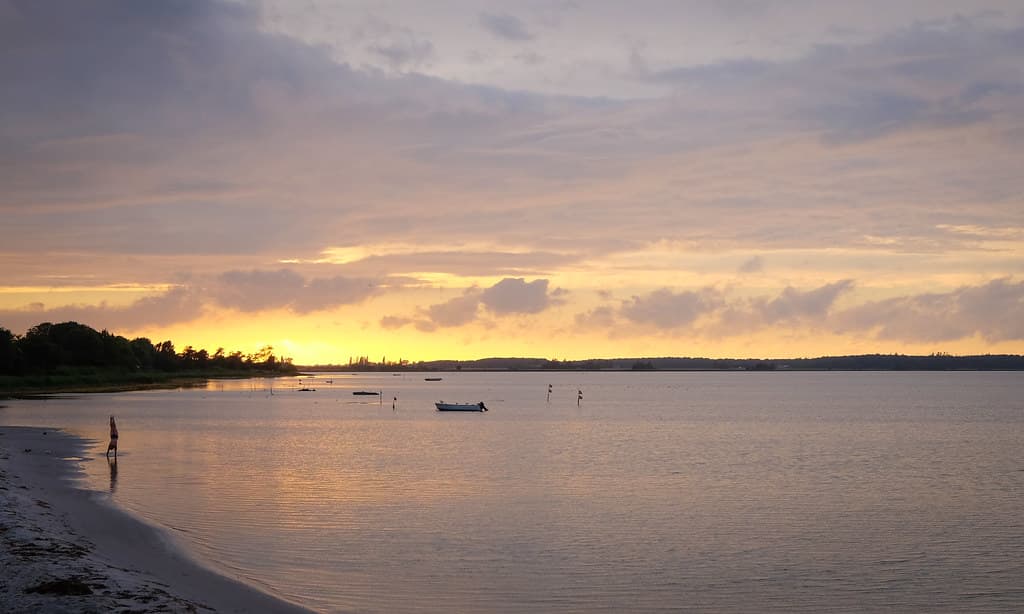
The ferry from Kragenæs takes forty minutes, cutting through the pewter waters of Smålandsfarvandet while you stand at the rail watching cormorants dive. Once ashore on Fejø, you pedal past orchards and half-timbered farmhouses, the smell of cut hay drifting across fields no larger than a city block. The island holds fewer than 500 year-round residents, and the beach reflects that sparse arithmetic—stretches of blonde sand interrupted only by weathered groynes and the occasional overturned rowboat. Fejø Strand curves along the southern shore, backed by low marram grass and wild roses that bloom shocking pink in June. The water is Baltic-calm, tea-dark from tannins, warming to surprising temperatures by July when local children leap from the old wooden jetty. You'll spread your towel on sand that squeaks underfoot, the kind that holds the impression of your body long after you've stood to swim. Oystercatchers work the tideline; sailboats tick past on the horizon, their hulls white as chalk marks. There are no beach clubs, no loudspeakers, no prefab snack bars—just a bench beneath a wind-gnarled apple tree and the kind of quiet that makes you notice the creak of your own knees. This is a beach for reading thick novels, for falling asleep to the metronome of small waves, for remembering what an afternoon used to feel like before you learned to measure it in increments.
Places, rentals, tours and events within walking and driving distance of Fejø Strand.
Photos
Fejø Strand is generally very safe for swimming, with calm, shallow waters typical of Denmark's protected coastal areas. The sandy bottom and gentle slope make it ideal for families with children. As a small island beach, there are no lifeguards on duty, so supervise children at all times. Water quality is typically excellent, and the sheltered location means currents are minimal. The beach is uncrowded, allowing plenty of space for safe play and relaxation.
The best time to visit Fejø Strand is from late May through August when temperatures are warmest and daylight extends into the evening. July and August offer the best beach weather with water temperatures reaching 17-20°C. However, June and early September provide fewer crowds while still maintaining pleasant conditions. The island's quiet nature means even peak summer months rarely feel overcrowded. Avoid winter months when ferry services may be reduced and facilities limited.
Fejø Strand is accessed via passenger ferry from Kragenæs on Lolland, operated by Færgen. The ferry journey takes approximately 25 minutes and runs multiple times daily during summer, with reduced winter schedules. Once on the island, the beach is reachable by bicycle or on foot, as Fejø is only about 16 square kilometers. Cars can be brought on the ferry but aren't necessary. Check ferry schedules in advance, especially outside peak season, as service frequency varies.
Fejø offers limited but adequate facilities for a small island. Accommodation includes holiday homes for rent, a few bed-and-breakfasts, and basic guesthouse options, primarily booked through local rental agencies. The island has a small grocery store and seasonal café serving simple Danish fare. For more dining variety, bring supplies from the mainland. The village has essential services but caters to quiet, self-sufficient tourism. Advance booking is strongly recommended during summer months.
Fejø Strand offers an authentic small-island experience increasingly rare in Denmark. The island's population of around 500 residents creates a genuine local atmosphere absent from tourist-heavy destinations. The beach provides unspoiled natural scenery with minimal development, perfect for slow travel and digital detox. Its relative obscurity means you'll share the sand with locals rather than tour groups. The combination of accessibility via regular ferry and genuine remoteness creates a unique balance for travelers seeking tranquility.