Counting the waves…
Counting the waves…
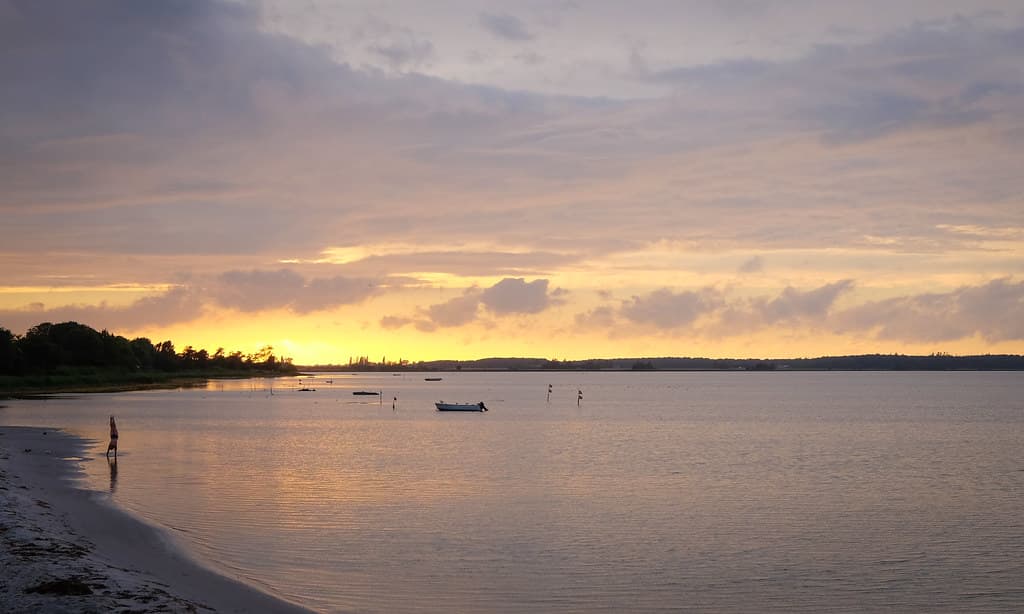
The beach unfolds in a gentle arc where Kragenæs village meets the sea, its sand fine-grained and pale blonde, punctuated by tufts of marram grass bending in the northeast wind. Families spread blankets near the dune line while children wade through ankle-deep water that stretches fifty meters before reaching swimming depth. The ferry to Fejø and Femø chugs past twice each afternoon, close enough that you can see passengers leaning on the rail, a reminder that this is working waterfront as much as leisure ground. Beech trees edge the landward side, their canopy filtering midday sun into dappled coins on the picnic benches below. Local fishermen haul small boats onto the shingle, sorting flatfish and eel in blue plastic crates. The strand lacks the manicured tidiness of resort beaches—here you'll find driftwood sculptures left by winter storms, a hand-painted sign directing walkers toward the coastal path, a faded lifeguard tower that sees use only in July. When the last ferry departs and day-trippers drive south toward Nakskov, the beach returns to its essential stillness. Oystercatchers probe the tide line. The low sun turns the water pewter, then rose. You realize this strand never tries to be more than it is: a quiet margin where an island community meets the sea, functional and lovely in equal measure.
Places, rentals, tours and events within walking and driving distance of Kragenæs Strand.
Photos
Kragenæs Strand offers relatively safe swimming conditions suitable for families, with sandy bottom and gentle slopes typical of northern Lolland beaches. The beach faces the protected waters between Lolland and the smaller islands of Fejø and Femø, which generally means calmer conditions than exposed coastal areas. However, no lifeguards are present, so swimmers should exercise normal caution. The clear, shallow water near shore is ideal for children under supervision. Always check local weather conditions before swimming, as wind can affect water conditions.
The optimal time to visit Kragenæs Strand is during the summer months from June to August when Denmark experiences its warmest weather and longest days. July typically provides the best combination of warm air and water temperatures for swimming and sunbathing. The scenic qualities of this beach make it attractive even during spring and early autumn for walks and photography, though swimming may be too cold. Summer weekends can see more visitors, particularly locals and holiday-home owners, but the beach rarely feels overcrowded.
Kragenæs is located on the northern coast of Lolland island and is best reached by car. From Copenhagen, drive approximately 140-150km south via motorway E47 and then local roads to Kragenæs village (roughly 2 hours). The beach is accessible from the small village center near the ferry terminal. Public transportation is limited, though buses connect larger towns like Nakskov and Maribo with some coastal areas. Parking is available near the beach. The village's ferry terminal serves boats to Fejø and Femø islands.
Kragenæs is a small village with limited but adequate amenities for beach visitors. Basic provisions can be found locally, though larger supermarkets are available in nearby towns. Dining options are modest, with occasional seasonal cafes or small restaurants serving traditional Danish fare. Accommodation primarily consists of holiday homes and cottages available for rent, typical of Danish coastal areas. For hotels and more extensive restaurant choices, visitors often stay in larger towns like Nakskov or Maribo, both within reasonable driving distance.
Kragenæs Strand's unique appeal lies in its position as a gateway to the car-free islands of Fejø and Femø, creating a distinctive island-hopping atmosphere. The scenic views across the water to these islands provide exceptional photographic opportunities and a sense of coastal exploration. The beach combines small-village charm with access to Denmark's lesser-known island communities. Its location on the protected northern coast offers calmer waters while maintaining authentic Danish coastal character, making it particularly appealing to those seeking peaceful, scenic beach experiences away from tourist crowds.