Counting the waves…
Counting the waves…
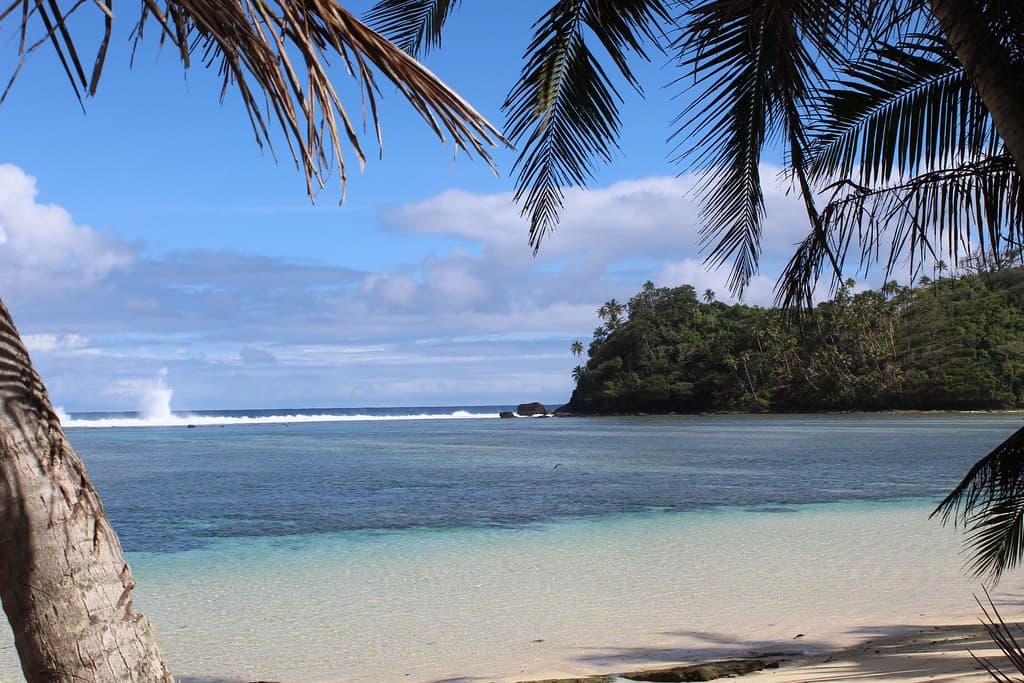
This is Rotuma at its most open, least sheltered. The reef lies perhaps half a kilometer offshore, which means the lagoon here deepens quickly and the water takes on a darker, more serious blue. You'll feel the difference when you wade in: cooler temperature, stronger pull of current, the sense that you're entering ocean rather than paddling pool. The sand is fine and pale, almost white where the sun has bleached it, marked by delicate tracks from ghost crabs that emerge at night to scavenge the tide line. By late morning, the wind arrives—not the gentle trade breeze that cools other beaches, but a sustained southerly that kicks up whitecaps beyond the reef and sends sand skittering across the beach in stinging clouds. This wind shapes everything: the coconut palms lean permanently northward, their fronds tattered and sun-bleached. The village houses near the beach are built low and solid, with tin roofs weighted by old fishing nets and coral rocks. You'll find shelter behind driftwood logs worn smooth as bone, watching the wind patterns shift across the lagoon surface. During calmer mornings or late afternoons when the wind drops, the beach reveals a different character. The water clears to remarkable visibility. Small reef sharks patrol the shallows—blacktips no longer than your arm, hunting in inches of water with dorsal fins exposed. You'll see their shadows before you see them, dark torpedoes sliding across the sand with startling speed. They're harmless, intent on smaller prey, but their presence reminds you this beach connects directly to deeper water, to the open Pacific that surrounds Rotuma like a moat.
Places, rentals, tours and events within walking and driving distance of Pepjei South Beach.
Photos
Swimming conditions at Pepjei South Beach vary with weather and ocean swells. The south-facing coast of Rotuma can experience stronger currents and waves, especially during the wet season. Always check local conditions before entering the water, and speak with villagers in Pepjei who know the shoreline well. Reef cuts and uneven seafloor are common around Rotuma's beaches. There are no lifeguards or formal safety services, so swim cautiously and never alone.
The best time to visit is during Rotuma's dry season from May to October, when you'll encounter fewer crowds and calmer seas. The south coast can be rougher than the north, so opt for dry-season months when swells are generally lower. Rotuma receives very few tourists year-round, making this beach especially peaceful. Avoid the wet season (November-April) when heavy rain and storms can make access difficult and ocean conditions unpredictable.
Reaching Pepjei South Beach requires flying to Rotuma from Suva, Fiji, on infrequent flights (typically once or twice weekly). From the airstrip, you'll need local transport to Pepjei village, arranged through your accommodation or village contacts. The beach itself is accessed by foot from the village. There are no car rentals or taxis in the traditional sense; transportation is community-based. Advance planning and permission from local authorities is essential before visiting Rotuma.
Accommodation on Rotuma is extremely limited and typically arranged through government guesthouses or homestays with local families in villages like Pepjei. There are no hotels or resorts. Meals are usually provided by your hosts, featuring fresh fish, root vegetables, and tropical fruits. No restaurants or shops exist for tourists. You must arrange all lodging and meals in advance through Rotuma's administration before arrival, as independent tourism infrastructure is virtually non-existent on the island.
Pepjei South Beach offers a distinct south-coast perspective of Rotuma, facing the open Pacific with potentially more dramatic wave action and ocean energy compared to sheltered northern shores. This location provides a different coastal character and scenic experience. The beach is tied closely to Pepjei village life, offering authentic cultural immersion in one of Fiji's most remote communities. Its isolation and lack of tourism development mean you'll experience Rotuman coastal life as locals do, completely unspoiled by commercial activity.