Counting the waves…
Counting the waves…

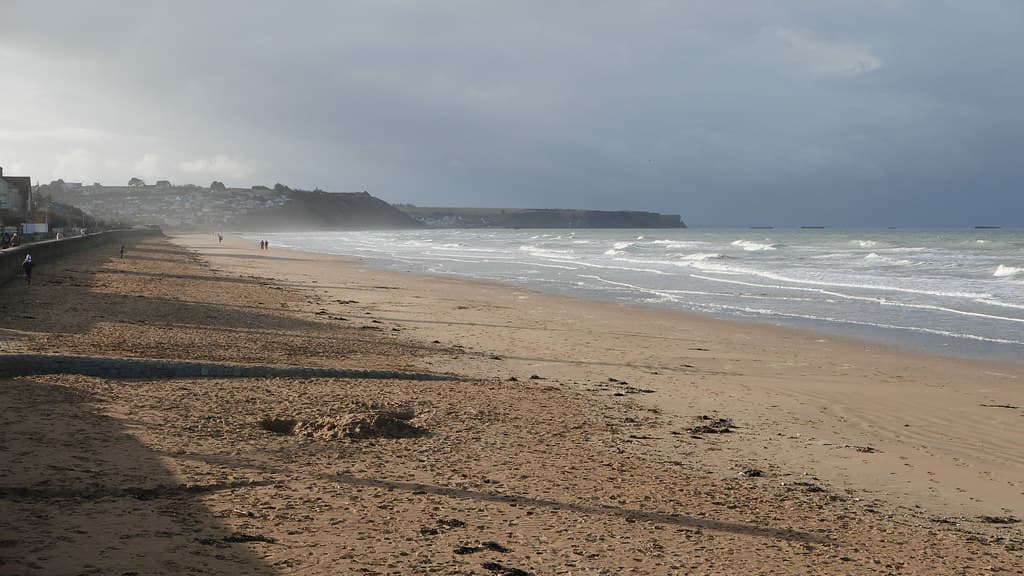
The beach at Longues-sur-Mer sits in deliberate quiet between the better-known landing zones, a sliver of grey pebbles where history presses close but the tour buses rarely idle. You'll park near farmland that slopes toward the sea, then walk down a chalky track flanked by wildflowers in spring and wind-sculpted hawthorn. The shore itself is narrow, the stones smooth and difficult to walk on barefoot, the kind that clatter and shift with each retreating wave. Gulls wheel overhead; the air smells of salt and kelp. Above the beach, the Longues-sur-Mer battery remains astonishingly intact—four German casemates still house their original guns, aimed seaward as they were on June 6, 1944. You can walk among them, touch the cold concrete, peer through the firing slits at the same horizon Allied ships crowded eighty years ago. The juxtaposition is jarring: pastoral Normandy above, martial architecture frozen mid-battle, and below, the indifferent rhythm of the tide. Come in late afternoon when the sun slants low across the water, gilding the cliffs and throwing long shadows from the bunkers. The beach empties early; you'll often have the stones to yourself as the light fades and the Channel turns pewter. There's no café, no lifeguard, no concession to leisure—just the insistent memory of war and the equally insistent work of the sea, smoothing edges, one wave at a time.
Places, rentals, tours and events within walking and driving distance of Plage de Longues-sur-Mer.
Photos
Swimming conditions at Plage de Longues-sur-Mer require caution due to strong currents, rocky areas, and significant tidal variations typical of the Normandy coast. There are no lifeguards on duty at this small, unsupervised beach. Check tide times before visiting, as the beach can disappear at high tide. The water is cold year-round, even in summer. This beach is better suited for scenic walks and exploration rather than swimming. Always supervise children closely and stay aware of changing conditions along this exposed coastline.
Plage de Longues-sur-Mer is accessible year-round, with each season offering different experiences. Late spring through early autumn (May-September) provides the mildest weather for beach walks and exploring nearby German bunkers. However, the beach is particularly stunning at sunset throughout the year, with dramatic skies over the English Channel. Visiting during low tide allows maximum beach exploration. Weekdays and off-season months see fewer visitors, making it ideal for those seeking solitude. The area can be windy, so bring layers regardless of season.
Plage de Longues-sur-Mer is located between Arromanches and Port-en-Bessin in Calvados. By car, take the D514 coastal road and follow signs to Longues-sur-Mer; free parking is available near the famous Longues-sur-Mer battery. The beach access involves a short walk from the parking area. Public transportation is limited in this rural area, so a car is strongly recommended. The beach is approximately 15 kilometers west of Bayeux and can be combined with visits to other D-Day sites along the coast.
Plage de Longues-sur-Mer has no facilities directly on the beach—no restaurants, toilets, or shops. The small village of Longues-sur-Mer nearby has limited services. For dining and amenities, head to Port-en-Bessin (5 kilometers east) which offers seafood restaurants and shops, or Arromanches-les-Bains (6 kilometers west). Accommodation options include chambres d'hôtes and gîtes in Longues-sur-Mer village, with more choices in Bayeux (15 kilometers). Bring food, water, and supplies as you would for a remote beach visit.
The famous Longues-sur-Mer battery—four German gun casemates and a command post—sits on the clifftop overlooking the beach and is managed by the French government as a free, open-air historic site. You can easily walk from the beach parking area to explore these remarkably preserved World War II fortifications, which still contain their original guns. The battery offers panoramic views of the Normandy coast and Gold Beach. Interpretive panels provide historical context about the site's role during D-Day, making it an essential complement to your beach visit.