Counting the waves…
Counting the waves…
A refined fusion of water purity, environmental stability, and communal vibrancy for Plage de Gradelle.
View MethodologyAnalyzed via live sensors and environmental data.
Wave height, wind, and atmospheric stability.
Live footfall and crowd balance metrics.
Community reviews and curated sentiment.
“You'll navigate a winding maquis trail to reach this crescent of polished stones, where the only soundtrack is the hiss of waves dragging smooth cobbles. The amphitheater of rust-streaked headlands blocks most wanderers.”
Limited recent visitor reports — live OBI telemetry is your best guide for current conditions.
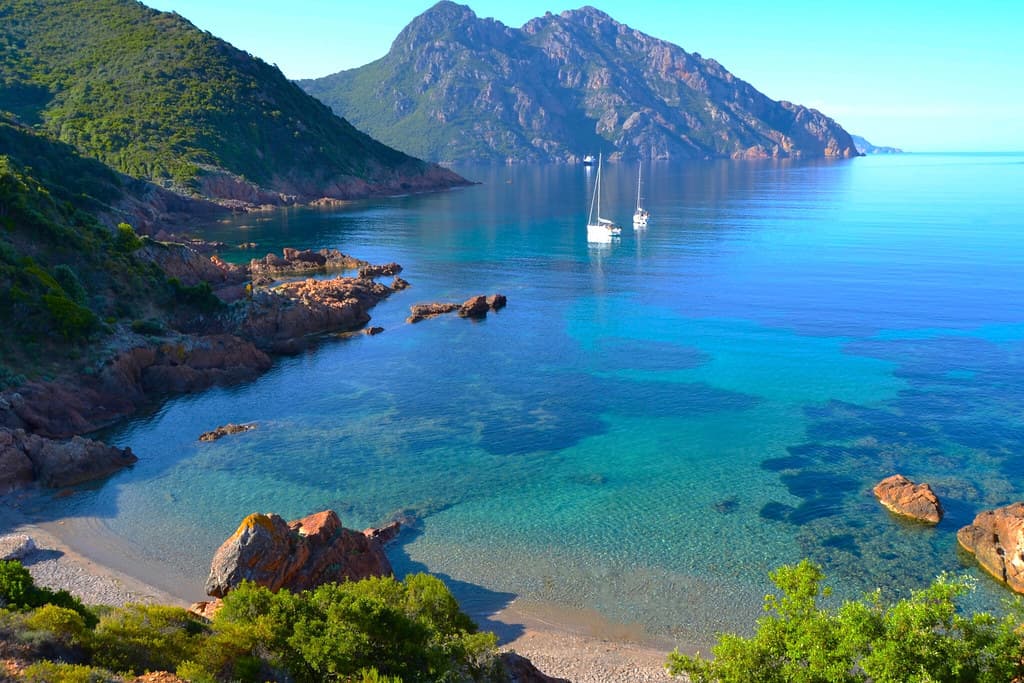
The descent through thickets of myrtle and rockrose delivers you onto a shoreline of wave-worn pebbles that click and rattle with every surge. Gradelle sits in the shadow of the Scandola Reserve's volcanic ramparts, their rust-orange faces streaked with lichen and carved into organ pipes by millennia of winter storms. The water shifts from jade near the stones to deep indigo where the shelf drops away.
Few visitors commit to the approach, so you're likely to claim a stretch of shore bordered only by driftwood and the occasional gull. The stones radiate heat by midday, their surfaces too hot for bare feet, forcing you into the surf. Underwater, boulders create channels where wrasse and damselfish patrol in the filtered light.
 Credit: Unsplash
a view of a beach from a hill overlooking the ocean
 Credit: Unsplash
A view of a beach and ocean from a hill
Scramble over volcanic shelves
Rapid drop-off past pebbles
Rust-streaked volcanic columns
Prime Visitation
Best Weather|Less Crowds
Where it is
Plage de Gradelle
Osani, Corse-du-Sud, France
42.330300°, 8.609600°
Weather
Loading…
Swell
—
Temp
Warm · Restorative
UV Index
Moderate
Wind
—
Tidal State
Last known
Max Sunlight
—
Ideal Shade
—
May - Sep (Peak)
Jan - Dec (Off-season)
Best Weather|Less Crowds
Select a category to load nearby places.
Unlock restaurants, luxury stays and curated maritime experiences within 2km
Plage de Gradelle offers swimming opportunities, though conditions vary with weather and season. The pebble beach slopes into clear waters, but there are no lifeguards or safety services due to its remote location. Swimmers should assess conditions carefully, as western Corsican beaches can experience swells and currents. The rocky seabed requires water shoes for comfort and safety. Calm summer days provide the best swimming conditions, while spring and autumn may bring rougher seas. Always check forecasts before visiting and never swim alone in isolated locations. Strong swimmers will find it rewarding.
Plage de Gradelle naturally attracts fewer visitors than more accessible beaches, but for maximum solitude visit during May-June or September-October. These shoulder months offer pleasant weather with minimal crowds, though water may be cooler in spring. Even during peak July-August, this wild beach remains relatively quiet compared to developed areas, especially on weekdays. Early mornings provide the most privacy and best light for appreciating the rugged scenery. The beach's remote character and limited facilities naturally discourage mass tourism, making it appealing for those seeking tranquility year-round.
Plage de Gradelle is accessed via the D81 coastal road near Osani, though the final approach typically requires a hike or boat access depending on the specific beach location. Road access in this area can be limited, with some sections involving unpaved tracks requiring careful driving. A vehicle with good clearance is advisable. Alternatively, some visitors reach the beach by boat or kayak from nearby points. The journey involves navigating winding mountain roads with spectacular scenery but requires confident driving skills. Check local conditions and access points before departing, as routes may vary seasonally.
Plage de Gradelle is a wild, undeveloped beach with no facilities, restaurants, or services on-site. Visitors must bring all supplies including water, food, sun protection, and shade. The nearest village with basic amenities is Osani, though options are limited. For more comprehensive services, restaurants, and accommodations, Porto is approximately 15-20 kilometers south along the coast. The lack of development preserves the beach's natural character but requires self-sufficiency. Pack out all rubbish to maintain the pristine environment. Consider day-tripping from Porto or nearby villages where lodging and dining are available.
Plage de Gradelle offers dramatic wilderness scenery characteristic of the Scandola-Porto coastline, with rugged mountains plunging into crystalline waters. Its proximity to the UNESCO-listed Scandola Nature Reserve means stunning geological formations and exceptional natural beauty. The beach's wild, undeveloped state provides an authentic escape from commercialized tourism, rewarding those who make the effort to reach it. Its relative fame among nature enthusiasts contrasts with actual low visitor numbers due to limited access. The combination of spectacular scenery, clear waters, and tranquility makes it ideal for visitors seeking Corsica's untamed coastal character.
Photos