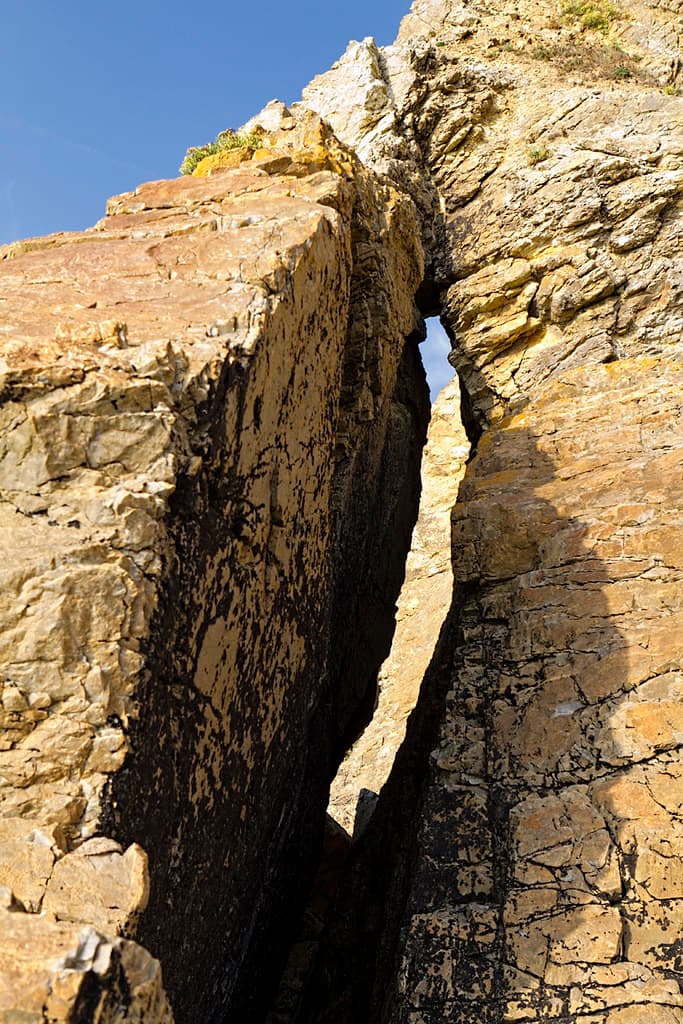
Counting the waves…
Counting the waves…

The name stops you cold: Baie des Trépassés. Yet this wide crescent tucked beneath the cliffs of Cap Sizun hums with life—surfers waxing boards in the gravel lot, hikers descending the coastal path, families spreading blankets despite the ever-present wind. The beach curves gently between headlands, its firm sand rippled by tides that swing seven meters twice daily. Breakers march in from the open Atlantic, their foam white against water that shifts from pewter to jade depending on the light. You arrive at low tide and walk half a kilometer out, tide pools glinting, the sand hard-packed and cool beneath bare feet. Behind you, the handful of stone cottages and the single beach bar seem dwarfed by the amphitheater of grass-topped dunes and moorland. Surfers dot the line-up where the Baie de Trépassés meets the Baie des Trépassés reef, their silhouettes sharp against the horizon. On days when westerlies howl, spray salts the dune grass; on rare still evenings, the sun drops into the sea and sets the cliffs ablaze. This is Finistère—land's end—in its purest form: windswept, dramatic, and utterly indifferent to comfort. You come not for shelter but for the raw edge of the continent, where every wave has crossed an ocean to meet you.
Places, rentals, tours and events within walking and driving distance of Baie des Trépassés.
Photos
Swimming at Baie des Trépassés requires caution due to strong currents, powerful waves, and unpredictable Atlantic conditions. The beach is popular with experienced surfers but can be dangerous for casual swimmers, especially during high tide or rough weather. There's no lifeguard supervision outside summer months (typically July-August). The bay's name, meaning 'Bay of the Dead,' references historical shipwrecks and drownings. If you're not an experienced ocean swimmer, it's safer to enjoy the dramatic scenery from shore or wade in shallow areas during calm conditions at low tide.
Baie des Trépassés offers different experiences year-round. Summer (June-August) brings warmer weather, calmer seas, and lifeguard supervision, ideal for families and beach activities. Autumn and winter attract surfers seeking powerful Atlantic swells and photographers chasing dramatic storm light. Spring offers fewer crowds and milder weather. The beach faces west, making it exceptional for sunset viewing throughout the year. For surfing, autumn through spring provides the best waves. Visit during low tide to access the full expanse of sand. Weather in Finistère is changeable, so bring layers regardless of season.
Baie des Trépassés is located about 40km west of Quimper. By car, follow D784 toward Cléden-Cap-Sizun, then take D43 and follow signs to the beach. A large free parking area sits directly above the beach, though it fills quickly in summer and on sunny weekends. The closest towns are Cléden-Cap-Sizun (5km) and Plogoff (8km). Public transport is limited; regional buses serve nearby villages but don't reach the beach directly. Most visitors arrive by car or bicycle. The remote location means planning ahead is essential.
The beachfront Hôtel de la Baie des Trépassés offers accommodation, dining, and a bar with panoramic ocean views—convenient for watching sunsets and storms. The hotel's restaurant serves traditional Breton cuisine and seafood. For more options, nearby villages like Plogoff and Cléden-Cap-Sizun (both within 10km) have crêperies, cafés, and small hotels. Camping is available at nearby sites. The area is remote, so self-catering accommodations are popular. Stock up on supplies in larger towns like Audierne (15km away) before arriving, especially if visiting outside peak season when some establishments close.
Baie des Trépassés sits at the westernmost tip of Brittany, surrounded by wild, rugged headlands and facing the full force of the Atlantic Ocean. Its amphitheatre-like setting between tall cliffs creates spectacular scenery, especially during storms when massive waves crash against the shore. The beach offers views toward Pointe du Raz and Île de Sein. Its remote location on the edge of continental Europe, combined with Brittany's Celtic mystique and the bay's evocative name, contributes to an atmosphere of raw, untamed beauty that draws photographers, artists, and nature lovers seeking dramatic coastal landscapes.