Counting the waves…
Counting the waves…
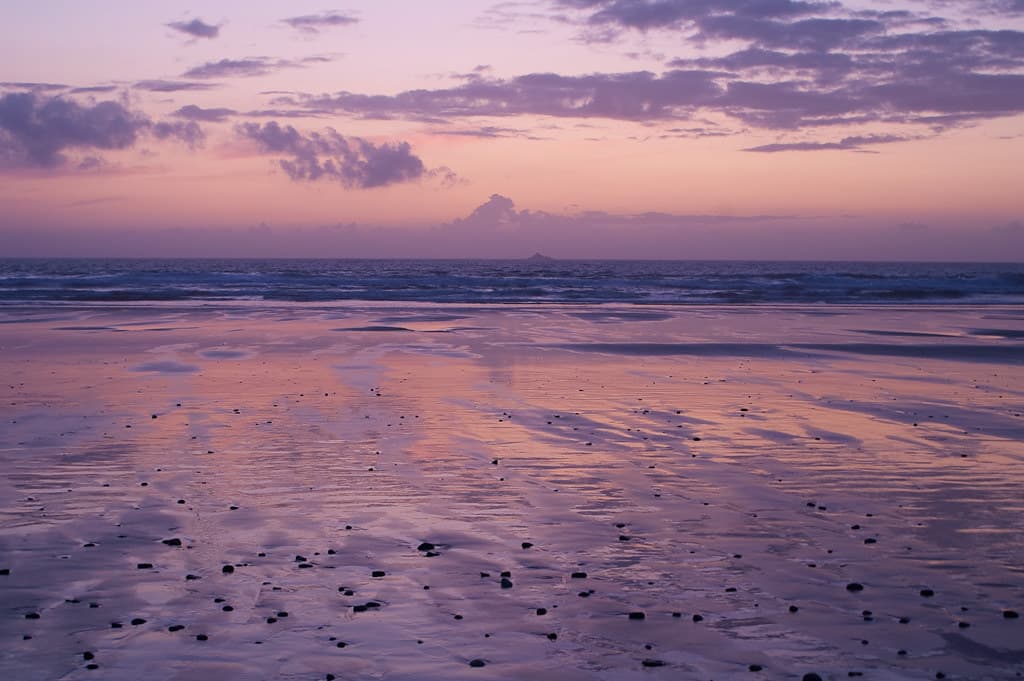
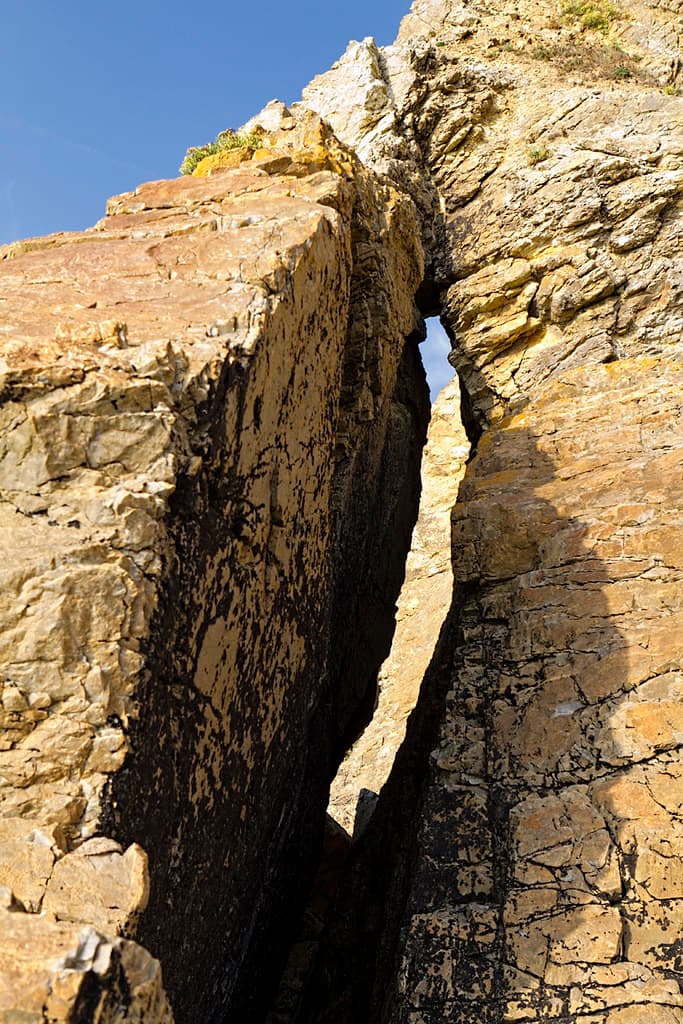
The approach tells you everything. Past the hamlet of Saint-Tugen, a narrow lane drops through farmland stippled with hydrangeas before the coast reveals itself—not gradually, but all at once. Below, the beach stretches in a taut arc, its sand the color of old honey, framed by black rock that juts into Audierne Bay like broken teeth. On big swell days, white water detonates against the northern headland; on calm mornings, the bay turns pewter and gulls work the tideline for crabs. This is Cap Sizun at its most elemental. You won't find beach bars or striped umbrellas. What you will find: consistent reef and beach breaks that peel left across the bay, kelp-draped boulders at low tide, and a horizon uninterrupted save for the silhouette of Île de Sein. Locals arrive with wetsuits already on, scan the sets, and paddle out without ceremony. By late afternoon, the sun drops behind Pointe du Raz, painting the cliffs copper and rose. The beach empties as quickly as it fills. Fishermen pack up their rods, surfers towel off beside hatchbacks, and the wind—always the wind—erases the day's evidence. You drive back through stone-walled fields, tasting salt on your lips, already planning your return when the swell forecast ticks upward.
Places, rentals, tours and events within walking and driving distance of Plage de Saint-Tugen.
Photos
Plage de Saint-Tugen is primarily a surf beach with strong Atlantic currents and powerful waves, making it challenging for casual swimming. There are no lifeguards on duty, so swimming is at your own risk. The beach is more suitable for experienced surfers than families with young children. Conditions can change rapidly along this wild Finistère coastline, with rip currents common. Always check weather forecasts before visiting, avoid swimming alone, and stay close to shore if you're not an experienced ocean swimmer.
Plage de Saint-Tugen offers year-round appeal depending on your interests. Summer (June-August) brings milder weather and calmer seas, ideal for beach walks and sunsets, though it can still be breezy. Spring and autumn provide excellent surfing conditions with consistent swells and fewer visitors. Winter attracts experienced surfers seeking powerful waves but brings harsh weather. The beach faces west, making it spectacular for sunset viewing throughout the year. Even in peak summer, this remote location rarely feels crowded compared to more accessible Brittany beaches.
Plage de Saint-Tugen is located near Primelin in the Pointe du Raz area of western Finistère. By car, take the D784 toward Primelin, then follow local signs toward Saint-Tugen chapel and the beach. A small, unpaved parking area is available near the beach access, though spaces are limited. The final approach involves a short walk down to the shore. Public transport options are extremely limited in this rural area, making a car essential. The nearest larger towns are Audierne (10km) and Douarnenez (25km).
Plage de Saint-Tugen has no facilities directly on-site—no restaurants, cafés, or shops. The tiny village of Primelin (2km away) has very limited services. For dining and accommodation, head to Audierne, a fishing port 10km away with restaurants serving fresh seafood, crêperies, hotels, and vacation rentals. The larger town of Douarnenez offers more extensive options. Many visitors base themselves in these towns or at nearby campsites and make Saint-Tugen a day trip. Bring food, water, and supplies, as you won't find amenities at this remote beach.
Plage de Saint-Tugen stands out for its wild, undeveloped character along Finistère's dramatic Pointe du Raz coastline. Unlike the region's family-friendly beaches, this remains genuinely remote and raw, attracting surfers seeking uncrowded waves and nature lovers appreciating rugged coastal scenery. The beach sits beneath ancient cliffs with minimal human intervention—no beach clubs, no development. Its isolation means you'll often have long stretches to yourself, especially outside summer. The westward orientation delivers spectacular sunsets over the Atlantic, and nearby Saint-Tugen chapel adds historical interest to the wild landscape.