Counting the waves…
Counting the waves…

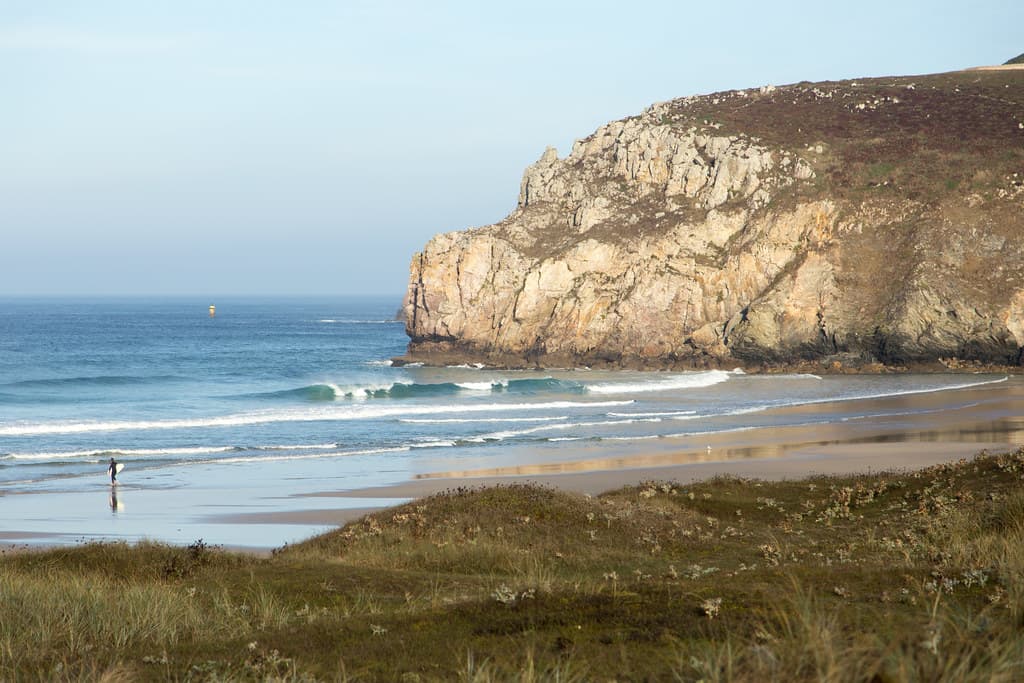
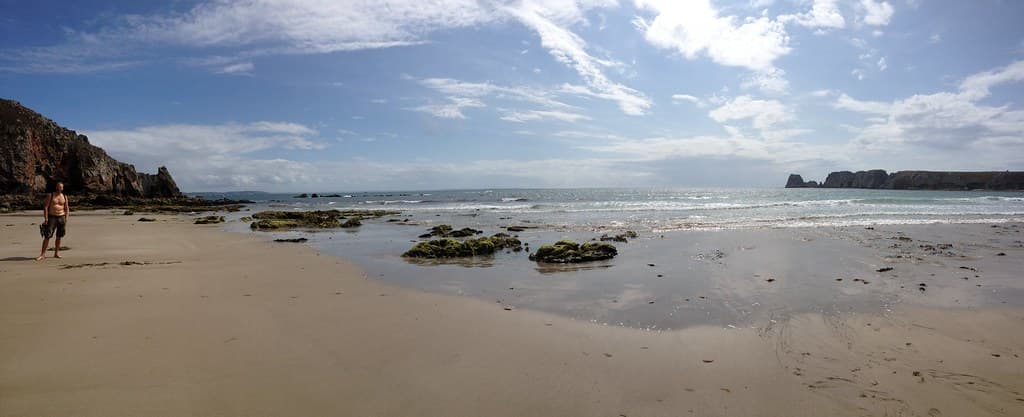
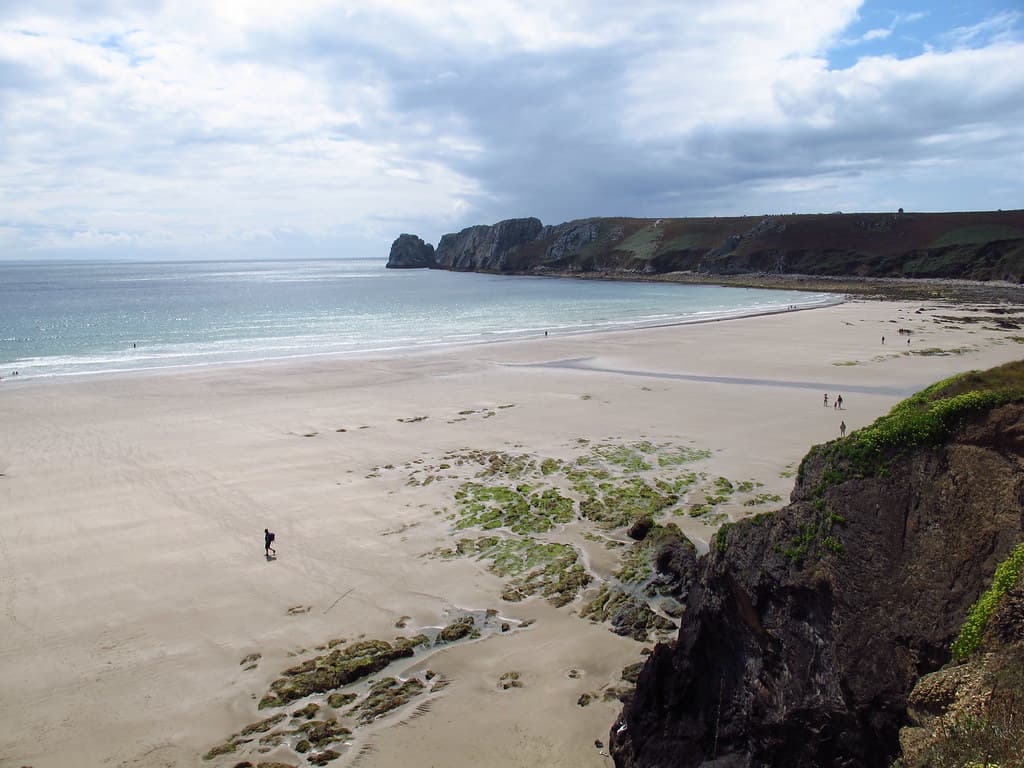
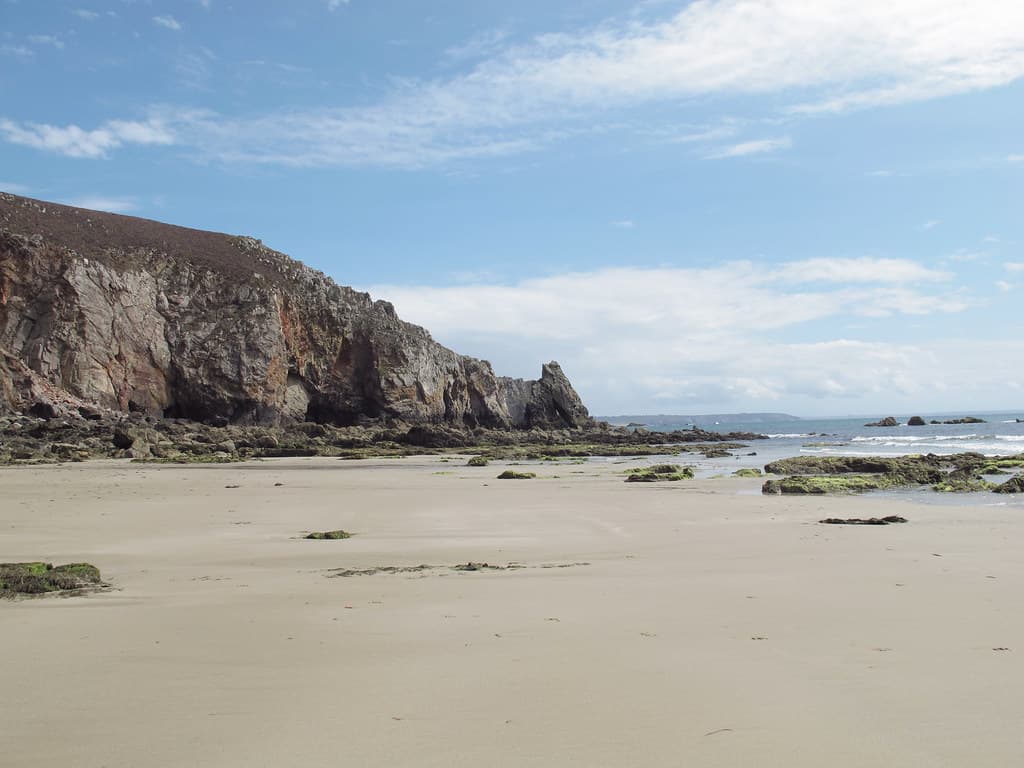
Plage du Veryac'h sits in the kind of coastal fold that guidebooks miss—a small arc of coarse sand and smooth pebbles cupped between dark granite outcrops, facing the sheltered waters where the Crozon Peninsula meets the Brest roadstead. The beach reveals itself slowly: first the scent of salt and iodine, then the sight of fishing boats anchored in the bay, their hulls swaying in the tidal current. At low tide, bands of ochre seaweed drape the rocks, and shallow pools trap starfish and periwinkles. The light here behaves differently than on Brittany's ocean-facing beaches. Because you're looking east across the roadstead toward the Presqu'île de Plougastel, afternoon sun warms the granite to amber, and evening brings a softer, horizontal glow that turns the water pewter and rose. Wooden footpaths thread along the shore toward neighboring coves, passing patches of gorse and blackthorn. In any season, wind braids the surface of the bay, and the air carries the faint diesel tang of working harbors mixed with wild thyme. There's no beach bar, no striped umbrellas. A small gravel parking area serves a handful of cars. The few visitors you encounter are Roscanvel residents walking dogs or checking crab pots, and the quiet feels intentional, protected by the village's geographic remoteness at the peninsula's tip. You leave with sand in your shoes and the sense of having slipped through a crack in the tourism machine.
Places, rentals, tours and events within walking and driving distance of Plage du Veryac'h.
Photos
Plage du Veryac'h is generally safe for swimming during calm weather, but conditions can vary. The beach is sheltered within the Brest roadstead, offering some protection from Atlantic swells. However, there are no lifeguards on duty, so swimmers should exercise caution and assess conditions before entering the water. Check tide times, as the beach changes significantly between high and low tide. Currents can be stronger near the rocky outcrops. Always supervise children closely and avoid swimming in rough weather or strong winds.
Plage du Veryac'h is accessible year-round, with each season offering distinct appeal. Summer (June-August) provides warmest weather for swimming and sunbathing, though the beach remains relatively quiet even in peak season. Spring and autumn offer milder temperatures ideal for coastal walks and photography, with fewer visitors. The beach is particularly renowned for spectacular sunsets, best viewed during late spring and summer when the sun sets over the Crozon Peninsula. Winter visits appeal to those seeking solitude and dramatic seascapes, though weather can be unpredictable.
Plage du Veryac'h is located in Roscanvel, on the Crozon Peninsula in Finistère. By car from Brest, take the D55 toward Roscanvel; follow local signs to the beach. Limited roadside parking is available near the beach access point. The beach requires a short walk from the parking area. Public transport options are limited in this rural area, so having a car is strongly recommended. The nearest larger town is Crozon, approximately 15 kilometers away. Roads are narrow and winding, typical of coastal Brittany.
Plage du Veryac'h has no on-site facilities, so come prepared with food, water, and supplies. The village of Roscanvel, a short drive away, offers basic shops, bakeries, and a few restaurants serving traditional Breton cuisine. For more dining and shopping options, head to Camaret-sur-Mer or Crozon. Accommodation options in Roscanvel include vacation rentals and chambres d'hôtes (bed and breakfasts). Larger hotels are available in nearby Camaret-sur-Mer and Crozon. Pack essentials for a beach day, as the nearest facilities are not within walking distance.
Plage du Veryac'h's west-facing orientation and location within the Brest roadstead create ideal conditions for sunset viewing. The beach offers unobstructed views across the water toward the Crozon Peninsula, where the sun descends behind dramatic coastal cliffs. Unlike busier beaches on the peninsula, Plage du Veryac'h remains relatively undiscovered, meaning fewer crowds for sunset photography. The combination of rocky outcrops, calm waters, and changing tidal landscapes provides varied foreground interest. The sheltered position often means clearer skies when other Atlantic-facing beaches are shrouded in mist.