Counting the waves…
Counting the waves…

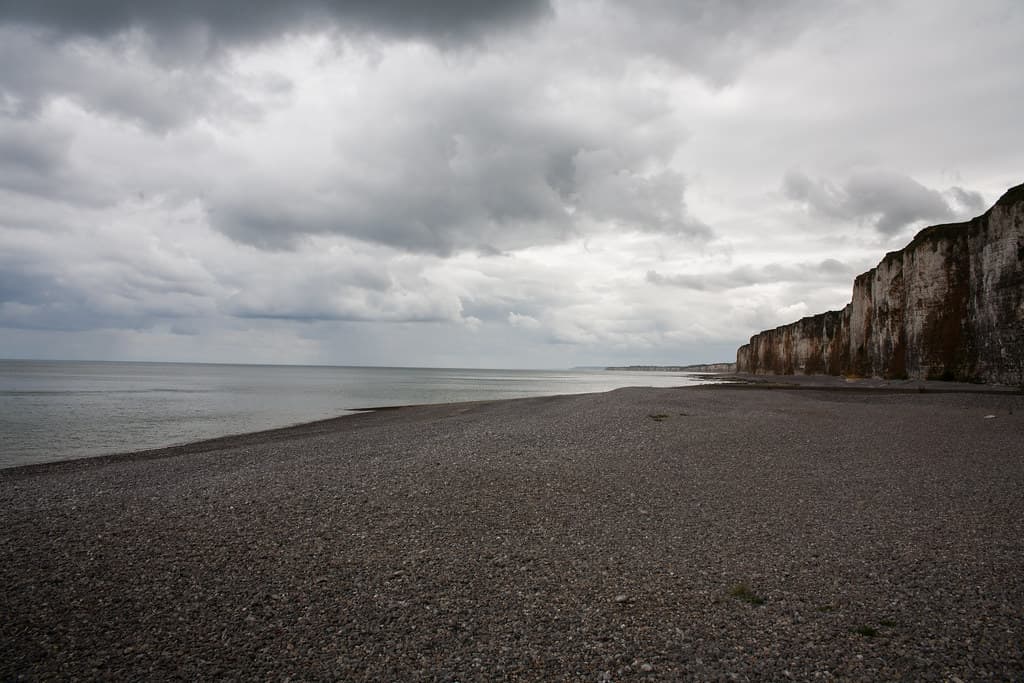
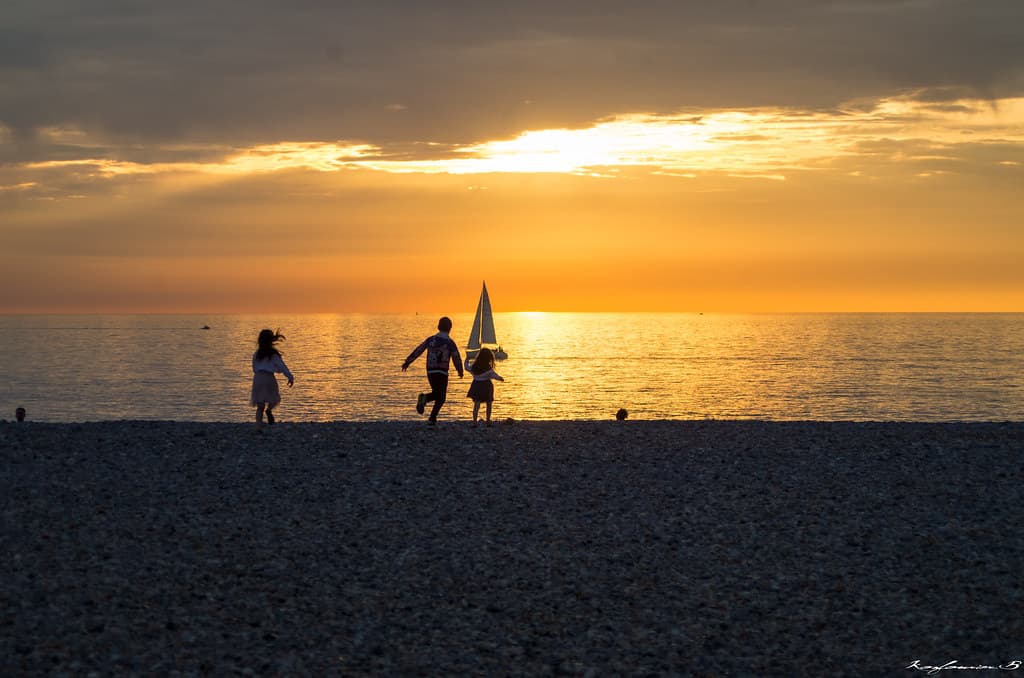
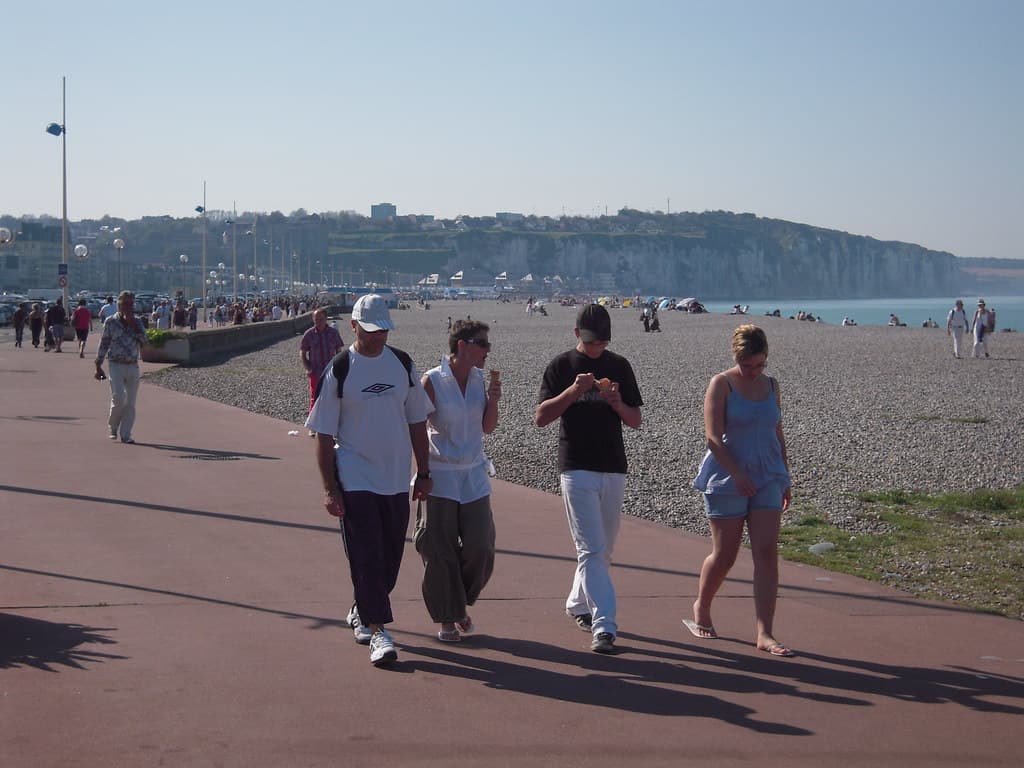
Dieppe's beach stretches nearly a mile along the Normandy coast, a broad expanse of grey and white pebbles that clatter and hiss with each retreating wave. Behind you, Belle Époque villas and a reconstructed seafront promenade recall the town's heyday as France's oldest seaside resort, when the Paris-Dieppe railway brought aristocrats here in 1848. Today the town remains unapologetically Norman—fishing boats still unload mackerel and scallops at the port, and locals speak of the beach as an extension of their living rooms, not a postcard. The pebbles are the first thing every visitor remembers. Bring sandals; the stones range from marble-sized to fist-sized and grow hot under summer sun. At low tide, shallow pools collect between the rocks, warming enough for children to paddle while their parents unfold striped deck chairs. The water stays bracing even in July—this is the Channel, after all—but swimmers wade in regardless, gasping and laughing as they adjust to the cold. Sunset here is a quiet, amber affair. The light turns the chalk cliffs at Puys and Pourville—just visible at either end of the bay—into soft gold, while kite-flyers and evening joggers trace the long curve of the shore. Fishing boats chug back to harbour, and the scent of mussels steaming in white wine drifts from the quayside bistros. You came for the beach, but you'll remember the town around it.
Places, rentals, tours and events within walking and driving distance of Plage de Dieppe.
Photos
Plage de Dieppe is generally safe for swimming during summer months when lifeguards are on duty, typically from June to September. The beach features a pebble shoreline and can have strong currents and tides, so always check local conditions and warning flags before entering the water. Swimming is supervised in designated areas during peak season. The cooler English Channel waters are best enjoyed July through August. Outside supervised periods, exercise caution and avoid swimming alone. The beach is family-friendly, but children should be closely monitored near the water.
Summer (June to September) offers the warmest weather for beach activities, with temperatures reaching 18-22°C, though the water remains cool. July and August are busiest with full amenities and events. Spring and autumn provide quieter visits with pleasant temperatures for coastal walks and exploring Dieppe's fishing port and markets. The beach is accessible year-round and beautiful during off-season for bracing walks and dramatic seascapes. Weekends and French school holidays see larger crowds. Sunset visits are particularly scenic, as the beach faces west over the English Channel.
Plage de Dieppe is easily accessible from Paris by car via the A13 and A150 motorways (approximately 2 hours). Regular trains run from Paris Saint-Lazare to Dieppe, taking about 2 hours, with the beach a 10-minute walk from the station. Several paid parking areas are available along Boulevard de Verdun and near the waterfront, including Parking du Casino and Parking Aguado. Parking fills quickly in summer, so arrive early. The beach is also walkable from Dieppe's town centre, and local buses serve the seafront area.
The beachfront Boulevard de Verdun features numerous seafood restaurants and cafés serving fresh catch from Dieppe's fishing fleet, including Les Voiles d'Or and La Marmite Dieppoise. The nearby pedestrian streets offer crêperies, bistros, and markets. For accommodation, beachfront hotels include Hôtel de la Plage and Hôtel Aguado with sea views. Budget options and vacation rentals are available in the town centre, a short walk away. The Saturday morning market at Place Nationale is excellent for local produce, cheese, and seafood. Amenities include beach cabins, showers, and seasonal beach clubs.
Plage de Dieppe was the site of the Dieppe Raid on August 19, 1942, a significant but costly Allied operation during World War II, primarily involving Canadian forces. Memorials along the seafront, including the Canadian War Memorial and monuments on the promenade, honour those who fought. The distinctive pebble beach still shows traces of wartime defences. The town's Castle Museum features exhibitions about the raid. Beyond military history, Dieppe was also a fashionable 19th-century seaside resort frequented by Parisian society and impressionist painters, contributing to its cultural heritage.