Counting the waves…
Counting the waves…

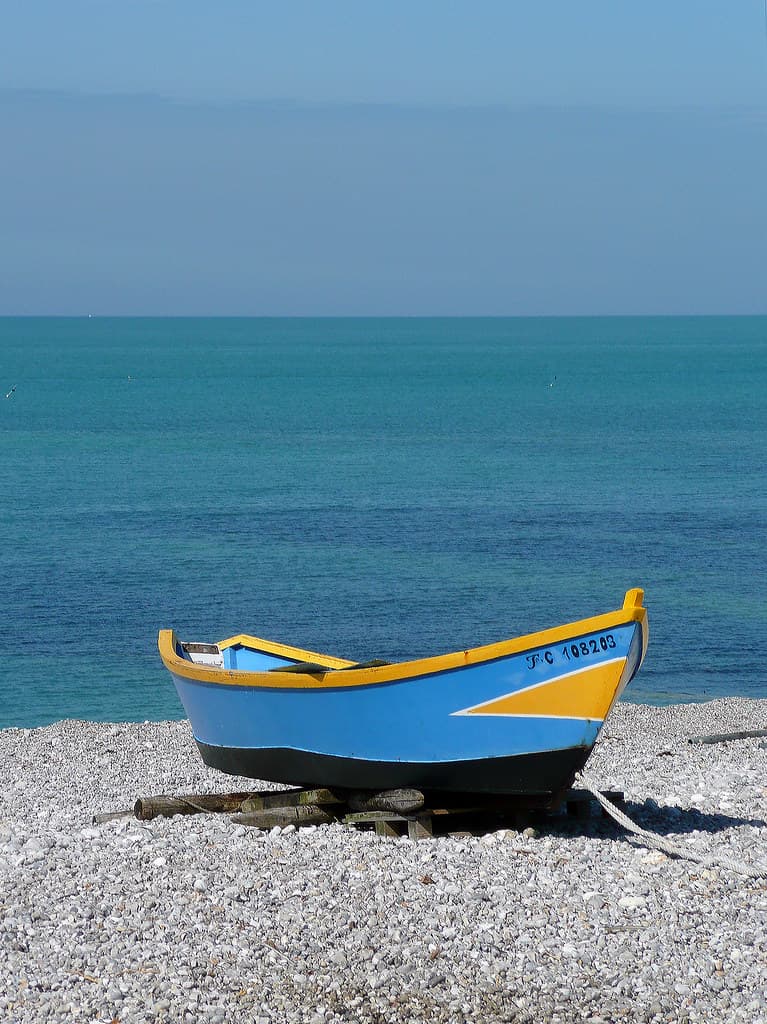
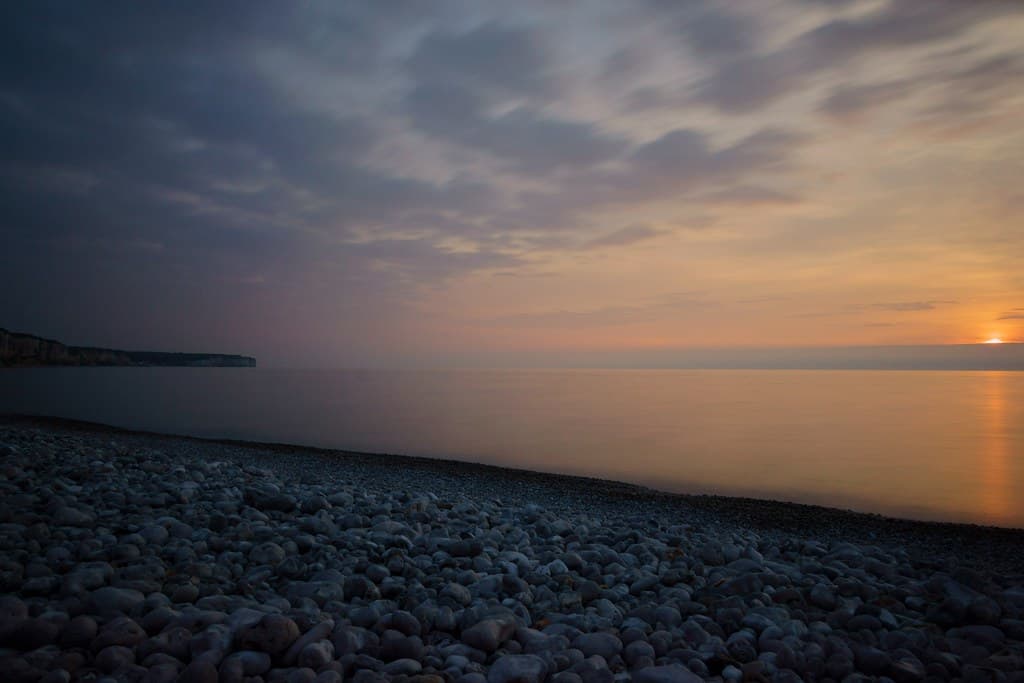
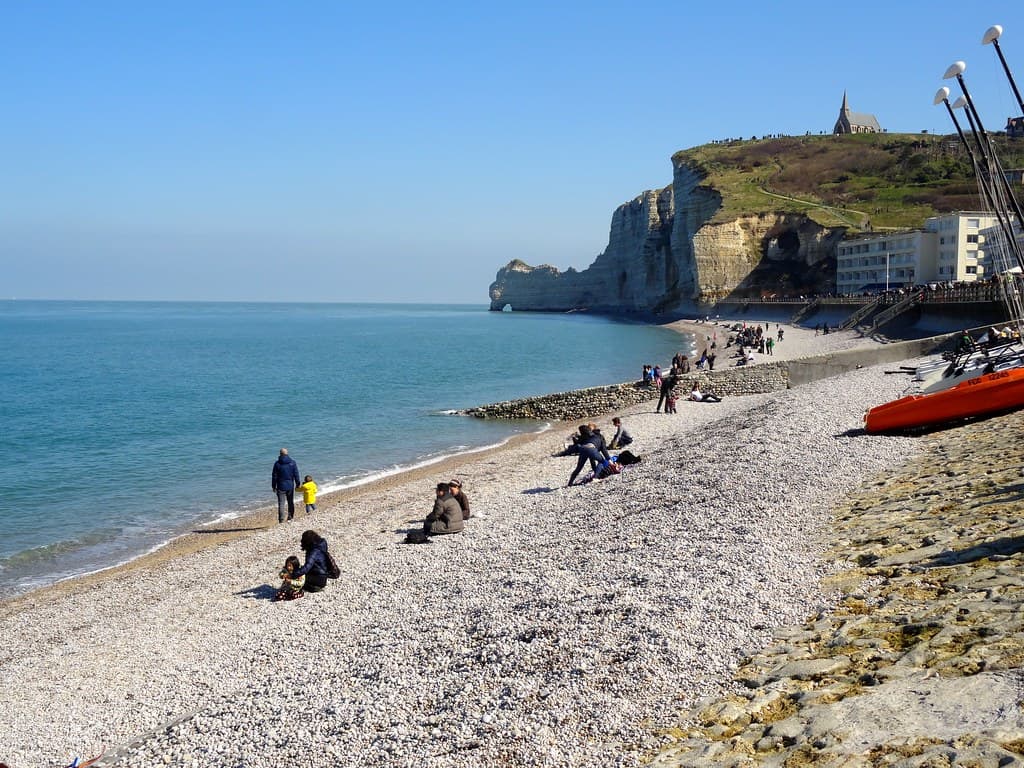
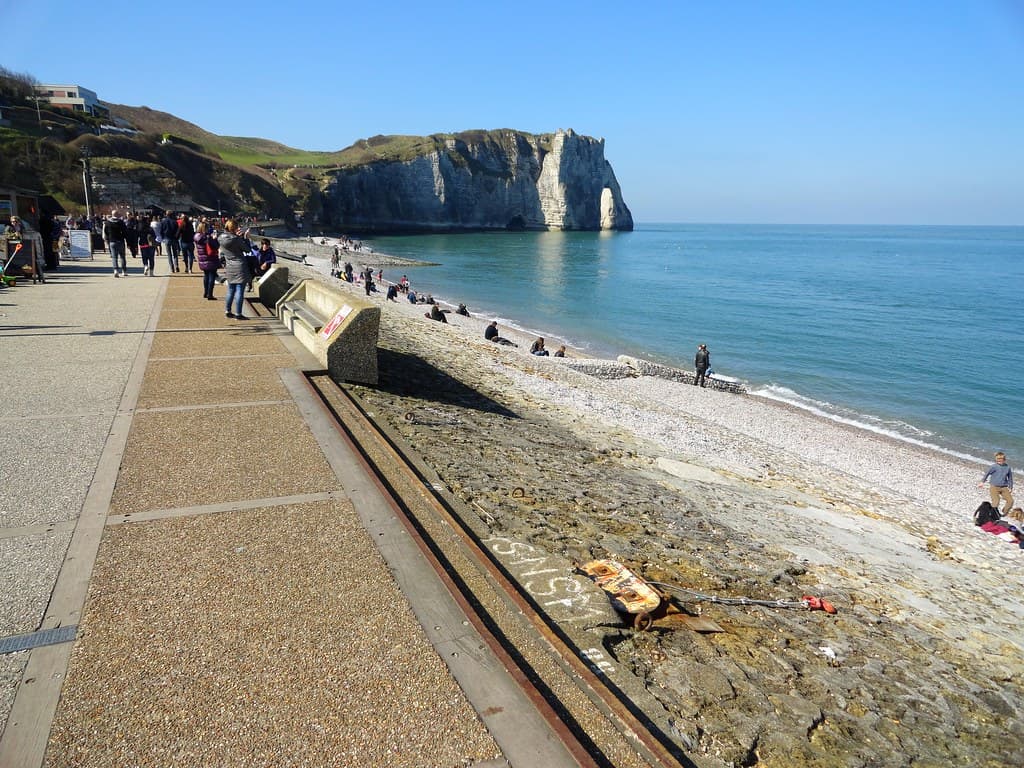
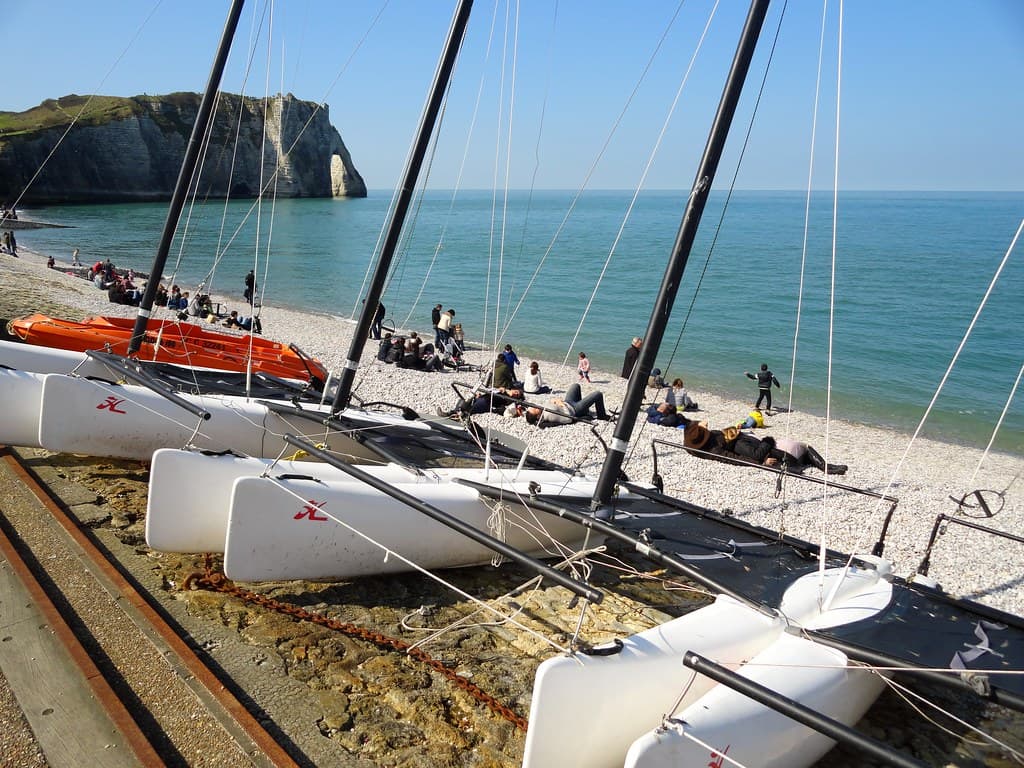
The Atlantic crashes against pale limestone formations so theatrical they border on implausible: three natural arches flanking a pebble shore, their surfaces pocked and sculpted by millennia of salt spray. You navigate the beach on smooth oval stones that massage your feet through thin-soled shoes, each step accompanied by a soft clatter. Seaweed tangles around driftwood at the high-tide line, releasing iodine into the cool coastal air. Moored fishing boats tilt on the incline between tides, their painted hulls bright against the white cliffs. The Falaise d'Aval arch to your right frames the Aiguille—a seventy-meter limestone needle standing offshore like a cathedral spire toppled seaward. Families spread blankets in the rare sand pockets; children build fragile castles that last only until the tide returns. Above, hikers thread along cliff-top paths toward panoramas that pull out phones and watercolorists alike. Low tide exposes rock pools stippled with barnacles and hermit crabs. The water temperature rarely climbs above fifteen degrees Celsius even in August, but locals plunge in regardless, emerging pink-cheeked and exhilarated. Evening light turns the chalk faces amber, then rose, then violet—the exact progression that drew Monet here with his easel, chasing the same ephemeral colors you're watching now.
Places, rentals, tours and events within walking and driving distance of Plage d'Étretat.
Photos
Swimming at Plage d'Étretat requires caution. The beach has strong currents, particularly near the famous chalk cliffs and natural arches. The pebble beach slopes steeply into deep water, and there are no lifeguards on duty year-round. Swimming is generally safer during calm summer days at low to mid-tide. Always check local tide times and weather conditions before entering the water. Many visitors prefer to enjoy the beach for its stunning scenery rather than swimming. Keep children closely supervised near the water's edge.
Plage d'Étretat is beautiful year-round, but each season offers different experiences. Summer (June-August) brings warmer weather and longer days, though crowds peak during this period. Spring and autumn offer milder temperatures and fewer visitors, ideal for cliff walks and photography. Winter visits can be dramatic with stormy seas, but dress warmly for strong coastal winds. For optimal lighting to photograph the iconic cliffs, visit during golden hour at sunrise or sunset. Check tide schedules regardless of season, as low tide reveals more beach area.
Étretat is located approximately 200km northwest of Paris and 30km north of Le Havre. By car, take the A29 then D940 to Étretat; the journey from Paris takes about 2.5 hours. Several paid parking lots are available near the beach, including along Avenue George V and near the town center. Parking fills quickly in summer, so arrive early. By train, take the SNCF to Le Havre, then bus line 24 to Étretat (about 1 hour). The beach is a short walk from Étretat's town center.
Étretat offers numerous dining and lodging options within walking distance of the beach. The town center features seafood restaurants, crêperies, cafés, and bistros serving fresh local cuisine. Beachfront establishments offer sea views while dining. Accommodation ranges from charming boutique hotels and guesthouses to vacation rentals. The Dormy House, perched on the clifftop, provides upscale lodging with panoramic views. Book accommodations well in advance during summer months. Several bakeries and small markets in town provide picnic supplies for beach visits.
Yes, you can walk along the beach to view the iconic chalk cliffs and natural arches, including the famous Porte d'Aval and L'Aiguille (the Needle). At low tide, you can walk across the pebble beach for closer views. For spectacular panoramic perspectives, take the clifftop walking paths accessible via stairs on either side of the beach. The trails offer dramatic viewpoints looking down at the arches and across the Alabaster Coast. Wear sturdy footwear and stay on marked paths, as cliff edges can be dangerous.