Counting the waves…
Counting the waves…

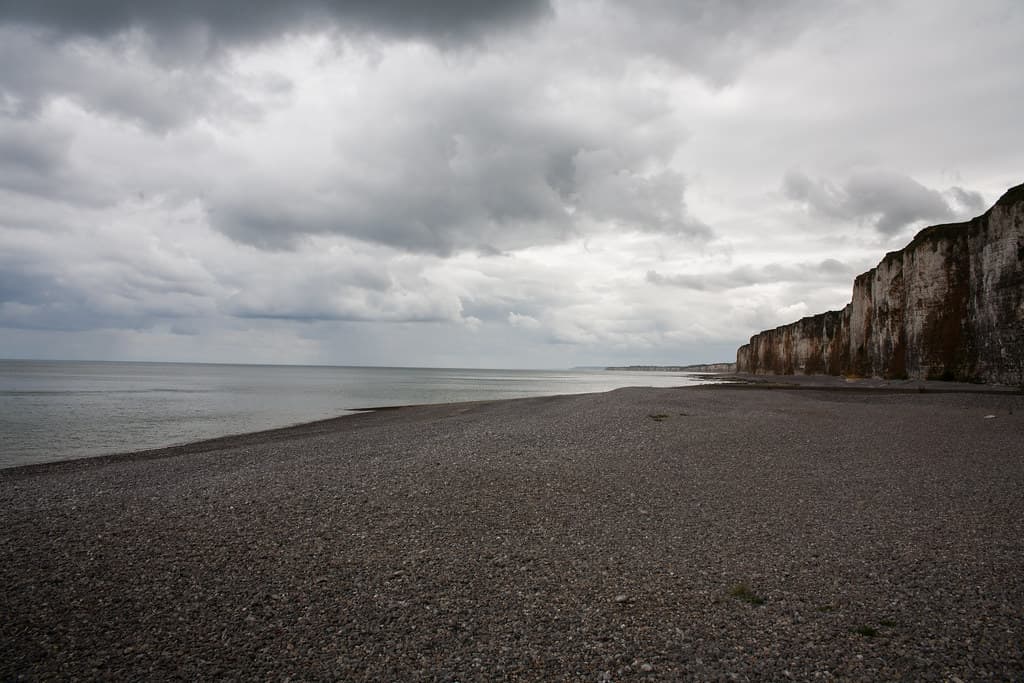
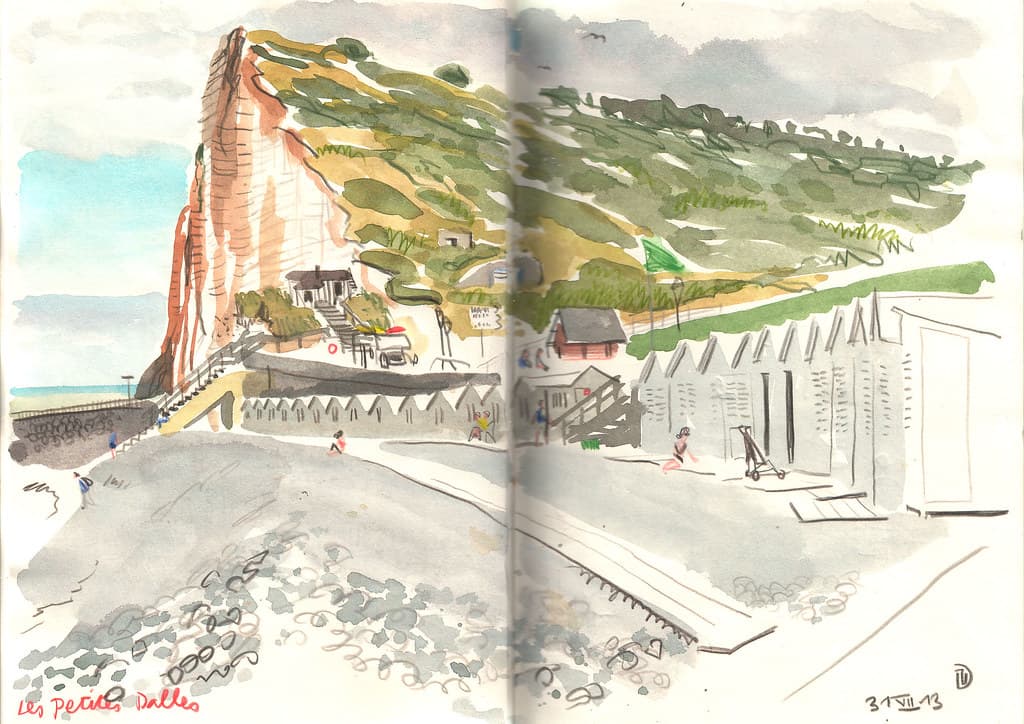
The beach curves in a neat arc between two chalk headlands, east and west, that the locals call the falaises. You walk across smooth galets—palm-sized flint pebbles—that clatter underfoot and shift with each retreating wave. Wooden cabines de plage line the upper shore, painted in faded blues and greens, their owners hauling folding chairs down at low tide to claim patches of drier stone. At the western end, the casino and its Art Deco façade anchor the promenade, while fishing boats rest on trailers near the slipway. The town keeps its maritime rhythm: trawlers unload before noon at the quay just behind the beach, and you can buy sole and turbot straight off the boats. The water stays bracing even in August—fifteen degrees Celsius is a warm day—but families wade in regardless, children shrieking at the shock. Sunset here is a study in pastels. The chalk cliffs catch pink and apricot light, and the pebbles glow like old bone. You settle onto the stones with a bottle from the cave coopérative and watch the tide creep in, erasing footprints, smoothing the beach back to its original geometry. By dusk the fishing boats return, their lights blinking against the deepening blue of the Channel.
Places, rentals, tours and events within walking and driving distance of Plage de Saint-Valery-en-Caux.
Photos
Plage de Saint-Valery-en-Caux is generally safe for swimming during calm weather, with lifeguard supervision typically available in summer months. The beach is a pebble beach sheltered by dramatic white cliffs, which provides some protection from winds. However, swimmers should be aware of tidal currents and check local conditions before entering the water. The beach slopes relatively quickly, so children should be supervised closely. Check tide times and weather forecasts, and look for any posted warnings or flags indicating current conditions before swimming.
Summer (June to September) offers the warmest weather and full beach amenities, with temperatures ranging from 18-22°C, ideal for swimming and sunbathing. However, Saint-Valery-en-Caux is worth visiting year-round for different experiences. Spring and autumn provide milder weather perfect for coastal walks along the cliffs with fewer crowds. The beach is renowned for spectacular sunsets throughout the year, particularly dramatic in autumn and winter when storm clouds create stunning backdrops. Off-season visits offer a peaceful atmosphere and lower accommodation prices while still enjoying the scenic beauty.
Saint-Valery-en-Caux is accessible by car via the D925 coastal road, approximately 60km from Le Havre and 50km from Dieppe. The beach is centrally located in town with several parking options nearby. There's a main seafront parking area along the promenade (Rue du Phare), which can fill quickly in summer. Additional parking is available in town streets within a short walk of the beach. By public transport, regional buses connect to Fécamp and other coastal towns, though service may be limited outside summer. The nearest major train station is in Yvetot, requiring an onward bus connection.
Saint-Valery-en-Caux offers excellent seafood restaurants along the waterfront and in the town center, many specializing in fresh local catch. You'll find traditional French bistros, crêperies, and cafés within walking distance of the beach. The town has several hotels, vacation rentals, and camping options for overnight stays. Beach amenities typically include public restrooms and seasonal facilities. The town center, just steps from the beach, has bakeries, grocery stores, and shops for supplies. A weekly market offers local produce and regional specialties. The working fishing port adds authentic charm and ensures fresh seafood availability.
The beach is framed by magnificent white chalk cliffs similar to those at Étretat, creating a stunning natural amphitheater around the bay. The eastern cliff, Falaise d'Aval, and western cliff, Falaise d'Amont, rise dramatically from the pebble beach and are part of the Alabaster Coast (Côte d'Albâtre). Coastal paths along the cliff tops offer spectacular panoramic views of the English Channel and are popular for hiking. These cliffs provide excellent photo opportunities, especially at sunset when the chalk faces glow golden. The geological formations showcase millions of years of natural history unique to this Normandy coastline.