Counting the waves…
Counting the waves…
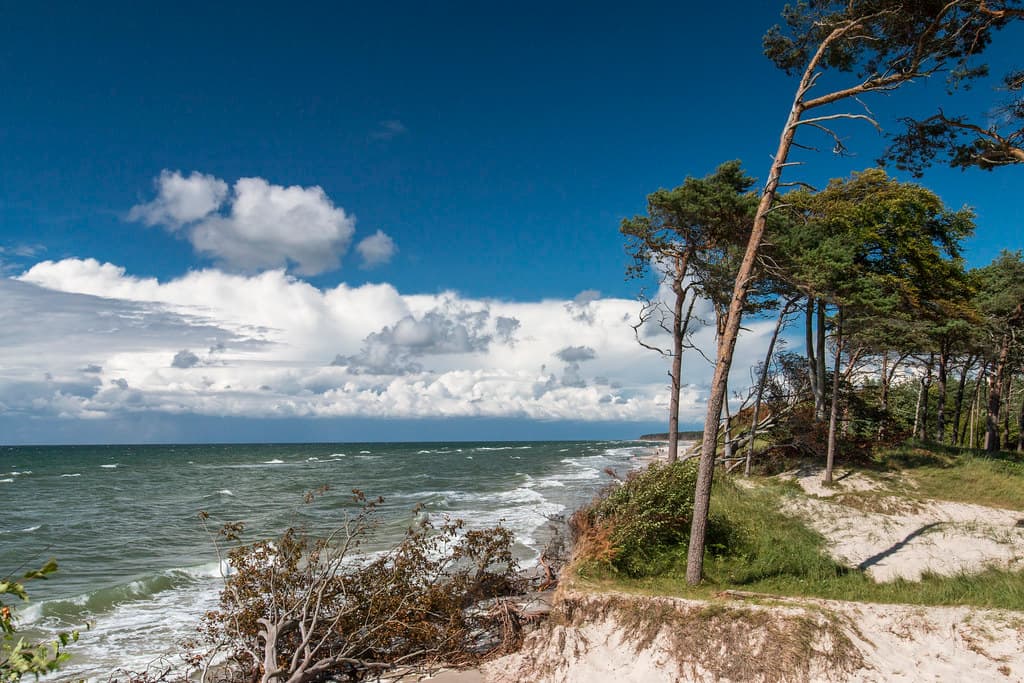
The lighthouse at Darßer Ort rises 35 meters above the flat landscape, its beacon visible far out into the Baltic. You'll spot it from a distance while walking the beach, a navigational marker that's guided ships through these waters since 1848. The surrounding area holds national park designation, which means the beach exists without infrastructure—no parking lots, no seasonal restaurants, no Strandkorb rentals. Just sand meeting forest, with the lighthouse standing as the only permanent human structure. The hike from Born am Darß takes you through mixed coastal forest—oak, birch, pine, and wind-pruned bushes that grow at angles suggesting the prevailing westerlies. The trail emerges onto the beach in stages, offering glimpses of gray-green water through trees before opening fully onto the shore. You'll pass reed beds and shallow pools where wading birds hunt, and in autumn, the path becomes muddy enough that waterproof boots qualify as essential gear. The beach itself spreads wide and clean, scattered with shells and the occasional piece of driftwood, wave-smoothed and bleached pale. Few visitors make the journey, which means you'll have substantial stretches of shoreline to yourself. The water temperature remains bracing year-round—upper fifties Fahrenheit in summer, icy in shoulder seasons. Swimming here feels more like a polar plunge than leisurely recreation. But the solitude and the quality of light—filtered through maritime haze, constantly shifting—reward those willing to commit to the access requirements.
Places, rentals, tours and events within walking and driving distance of Darßer Ort Beach.
Photos
Swimming at Darßer Ort Beach requires caution due to its remote, unsupervised location within the national park. No lifeguards patrol this wilderness beach. Baltic currents can be strong, particularly near the peninsula's northern tip. Submerged deadwood from coastal erosion occasionally washes into shallow areas, presenting hazards. The beach's isolation means emergency help is distant. Strong swimmers comfortable in unmonitored natural environments may swim, but families with children should exercise extreme caution. Always check weather and sea conditions before entering the water. This beach suits exploration and nature appreciation more than recreational swimming.
Late spring through early autumn (May-September) offers the most accessible conditions, with trails through the national park forest remaining passable. Summer provides warmest temperatures but brings more hikers and cyclists. Early morning visits any season maximize solitude and wildlife viewing opportunities. Autumn delivers dramatic lighting and migrating bird activity. Winter visits create atmospheric experiences with stormy seas and empty landscapes, though trails can be muddy and facilities closed. Low season (September-May) reduces crowds significantly. Time visits for low tide when wider beach areas become explorable, and consider weather forecasts given the exposed coastal position.
Access requires hiking or cycling through Western Pomerania Lagoon Area National Park from Prerow (approximately 4-5 kilometers) or Born am Darß. Private vehicles cannot reach the beach—national park regulations protect this wilderness area. Well-marked forest and coastal trails lead northward; allow 1-2 hours walking or 30-45 minutes cycling. The route passes through mixed forest before emerging at coastal landscapes. Bicycle rental is available in Prerow and Born. Alternatively, seasonal boat services occasionally operate from Prerow harbor to the lighthouse area. Wear sturdy footwear and bring water, as no facilities exist along the route.
Darßer Ort Beach lacks commercial facilities entirely, preserving its wilderness character within the national park. No restaurants, kiosks, toilets, or shops exist at the beach itself. The historic lighthouse occasionally houses a small exhibition and café with limited hours (primarily summer weekends), but don't rely on this. Visitors must bring all food, water, and supplies from Prerow or Born am Darß before hiking in. The nearest accommodations, restaurants, and services are in these villages, requiring the return journey. Pack out all rubbish—leave-no-trace principles apply throughout this protected natural area.
Darßer Ort Beach offers rare wilderness remoteness on Germany's developed Baltic coast. Accessible only by foot or bicycle through national park forest, it rewards effort with pristine, crowd-free landscapes. The dramatic setting near the historic Darßer Ort lighthouse features wild beaches, windswept coastal forest, and exceptional birdwatching in protected habitats. Coastal dynamics continuously reshape the beach through natural erosion and deposition, creating ever-changing scenery with ghostly dead trees emerging from sand and surf. This authentic wilderness experience contrasts sharply with the peninsula's developed resort beaches, appealing to nature lovers and solitude seekers.