Counting the waves…
Counting the waves…
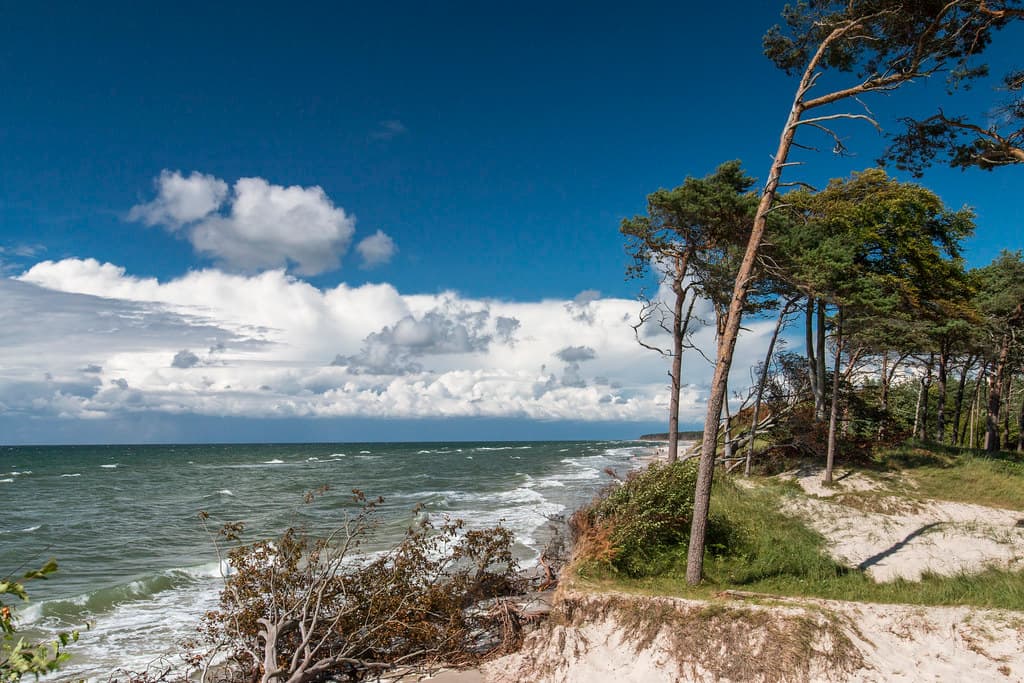
The forest surrenders to the beach at Weststrand in slow motion—pine trees lean toward the water at improbable angles before toppling onto sand that swallows them gradually, season by season. You'll navigate around these silvered casualties, some still rooted in the dune face, others fully beached and polished smooth by wind and salt. This is coastal erosion as sculptural process, the land losing meters to the Baltic each decade while simultaneously depositing new sand downcurrent. The dunes here rise in theatrical ridges, their faces marked with wind ripples that form fresh patterns overnight. Marram grass holds the slopes in place, and narrow footpaths thread through blowouts where the vegetation has failed. You reach the beach after a twenty-minute walk from Prerow's edge or a forty-minute trek from the northern parking area, the distance ensuring that only deliberate visitors arrive. No Strandkörbe, no seasonal snack bars, no lifeguard towers—just sand and water and sky meeting in compositions that change with the light and weather. Photographers arrive before sunrise to catch the dead trees silhouetted against pink skies. Families claim territories in the dune hollows where windbreaks form naturally. You'll see textile-free sunbathers here more commonly than at the developed beaches—the remoteness and lack of infrastructure create an unspoken permissiveness. By evening, the westward orientation delivers sunsets that turn the Baltic amber and rose, the light catching on wave crests and making the wet sand glow.

Places, rentals, tours and events within walking and driving distance of Weststrand Darß.
Photos
Swimming at Weststrand Darß is generally safe during summer months, though conditions can vary. The beach is undeveloped and lacks lifeguard stations in many areas, so swimmers should exercise caution. Pay attention to warning flags when present, and be aware that currents can strengthen during windy conditions. The Baltic Sea here has a gentle slope and relatively calm waters in good weather. Families with children should stay in designated swimming areas closer to access points where supervision is easier.
The best time to visit is June through September for warmest weather and comfortable swimming temperatures. July and August offer peak conditions but attract more visitors. For fewer crowds while maintaining pleasant weather, visit in May, June, or September. The beach is particularly stunning during golden hour for sunset photography. Early autumn can offer mild temperatures and solitude. Winter visits appeal to nature lovers seeking windswept landscapes and seal-watching opportunities, though swimming is only for the hardy.
Weststrand Darß is accessed from Prerow village. Park at designated lots near the western edge of town, then walk or cycle through protected forest paths to reach the beach. The main access point requires a roughly 20-30 minute walk through scenic woodland. Bicycles can be rented in Prerow and are highly recommended for easier access. During summer, parking fills quickly, so arrive early. The peninsula is car-accessible via the B105 road, though some areas have vehicle restrictions to protect the natural environment.
Prerow village, the nearest settlement, offers various accommodation options including hotels, guesthouses, holiday apartments, and campgrounds. Book well ahead for summer visits as this is a popular resort area. The beach itself has no facilities, being completely undeveloped. All restaurants, cafes, and shops are located in Prerow, about 1-2 kilometers from beach access points. Pack your own food and water for beach days, as there are no vendors on-site. Prerow has supermarkets and bakeries for self-catering.
Weststrand Darß stands out for its complete absence of development—no beach bars, no buildings, just pristine sand, forest, and sea. It's part of the Vorpommersche Boddenlandschaft National Park, ensuring protection of its wild character. The beach features dramatic windswept trees and ancient forest meeting the shoreline, creating unique photographic opportunities. Its western orientation provides exceptional Baltic Sea sunsets. The combination of white sand, turquoise waters, and untouched dune landscapes consistently earns it rankings among Germany's most beautiful natural beaches.