Counting the waves…
Counting the waves…
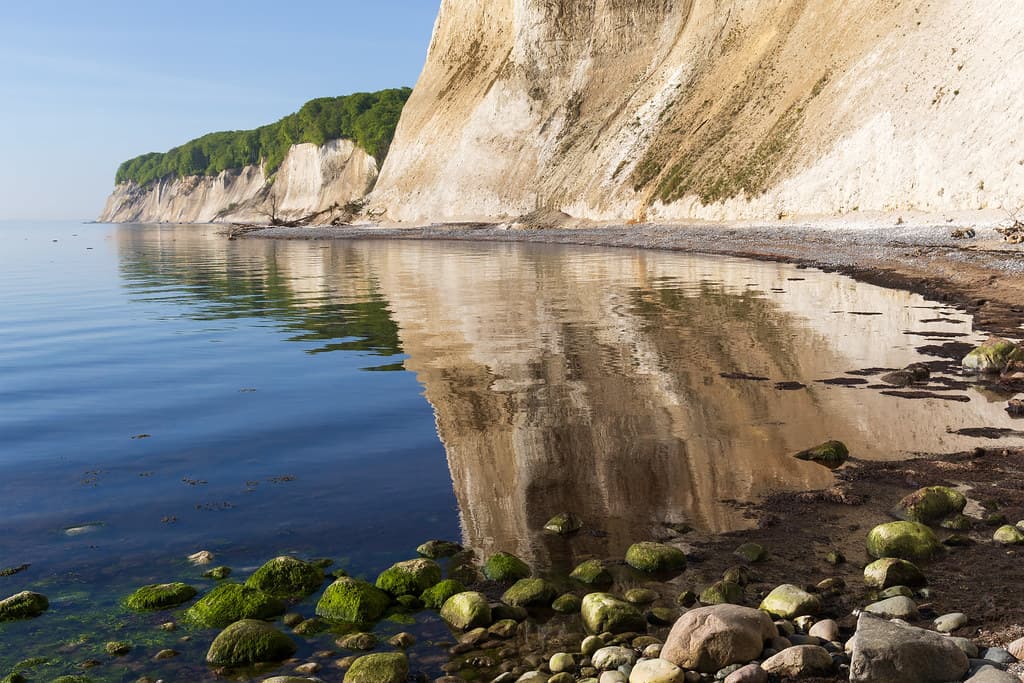
The ferry terminal rises to the south, its cranes and loading ramps a functional interruption of the coastline, but the beach itself curves northward into relative wilderness—a kilometer of pebble shore backed by sparse coastal scrub and the occasional concrete remnant from the GDR era. The stones shift and click underfoot as you walk, a sound like distant applause, and finding stable footing requires attention and strong ankles. The water here is deeper and colder than Rügen's sandy beaches, darkening from bottle-green to near-black as the bottom drops away. No gradual wading entry—you're swimming within three strides of the shore. Jellyfish pulse past in August, translucent moon jellies trailing gossamer tentacles. The view across the bay takes in the white cliffs of Jasmund to the north, their chalk faces bright against the darker beech forests that crown the heights. Few people make the effort to reach this beach when Binz and Sellin offer easier access and softer landings, which means you'll share it mainly with locals walking their dogs and the occasional geology student collecting glacial erratics. The ferry horns sound at intervals throughout the day—long, mournful blasts that echo off the cliffs—and at night the terminal lights paint orange streaks across the black water. It's not picturesque in any conventional sense, but it possesses a stark, unmannered beauty that grows on you.
Places, rentals, tours and events within walking and driving distance of Mukran Beach.
Photos
Mukran Beach is generally safe for swimming during calm weather, though the pebble surface can be uncomfortable underfoot and the Baltic Sea remains cool even in summer. There are no lifeguards on duty, so swimmers should exercise caution and be aware of changing conditions. The proximity to the ferry port means occasional boat traffic, so stay close to shore. Check local weather forecasts before entering the water, as Baltic conditions can change quickly.
The best time to visit is during late spring through early autumn (May to September) when temperatures are mild and daylight hours are long. For fewer crowds, visit during weekdays or outside July and August peak season. The beach offers particularly beautiful sunset views, making early evening visits rewarding. Weather on Rügen Island can be unpredictable, so bring layers even in summer. Winter visits are possible for scenic walks but too cold for swimming.
Mukran Beach is located near the Mukran ferry port, easily accessible from Sassnitz by car or bicycle. From Sassnitz town center, it's approximately 5 kilometers north. Public buses serve the area, connecting to Sassnitz and other parts of Rügen Island. If arriving by ferry from Scandinavia, the beach is within walking distance of the port. Parking is available near the beach access points. The area is well-signposted from main roads.
Mukran Beach itself has limited facilities, being less developed than resort beaches. The nearby town of Sassnitz, just a few kilometers south, offers a full range of restaurants, cafés, and accommodation options including hotels, guesthouses, and vacation rentals. Some basic refreshments may be available near the ferry terminal. For a wider selection of dining and lodging, Sassnitz provides better infrastructure while keeping you close to the beach for day visits.
Unlike Rügen's popular sandy resort beaches, Mukran features a pebbly shore that attracts fewer tourists, offering a quieter coastal experience. Its location near the ferry port gives it an industrial backdrop yet maintains spacious natural views across the Baltic. The beach provides an authentic, less commercialized atmosphere perfect for peaceful walks and sunset watching. It's ideal for travelers seeking solitude rather than beach amenities and entertainment found at busier Rügen destinations.